How Google Cloud Tech Helps Formula E to Recover EV Power
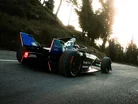
Formula E’s GENBETA car, created in partnership with Google Cloud, descends a 1,000-metre alpine route with no power assistance — harvesting enough energy through regenerative braking to complete a lap of Monaco.
It’s not just a story about motorsport. It’s a demonstration of how cloud, mobile AI and telco-aligned technologies can radically reshape energy systems and sustainable performance across industries.

Regeneration by design: gravity, braking and a full lap of Monaco
The Mountain Recharge initiative pushes the GENBETA prototype — developed in collaboration with ABB and powered by Google Cloud — into a real-world test of regenerative technology.
From the summit of Col de Braus, test driver James Rossiter steers the vehicle down a challenging Alpine descent without motor power, relying entirely on gravity and regenerative braking.
The outcome: 2kWh of electricity recovered — enough to complete a 3.337km lap of the Monaco Grand Prix circuit.
James Rossiter, formerly Maserati MSG Racing’s team principal, starts with only a minimal charge, just enough to activate the car’s systems.
The descent regenerates electricity using advanced energy capture technology integrated into the front and rear axles.
In Formula E race mode, the car can regenerate up to 600kW (250kW fron/350kW rear), making this test more than just a spectacle — it’s a measurable proof of how electric mobility is evolving through software, data and design.
Alex Aidan, Vice President of Marketing at Formula E, explains: "This isn't just another attention-grabbing racing story.
"It's a case study in how high-efficiency regeneration and cloud-based AI can transform how we think about mobility, energy optimisation and sustainability."
Cloud computing meets regenerative mobility
The collaboration isn’t just between engineers and drivers — it includes deep integration of Google Cloud’s technology stack.
Real-time data flows between the vehicle and cloud, monitored through Chromebooks and Pixel devices and analysed using a suite of enterprise-grade AI and analytics platforms.
The aim: to optimise every second of the descent and every joule of energy reclaimed.
Google AI Studio and Gemini API provide data modelling capabilities to analyse braking angles, gravitational force and weight distribution in real time
BigQuery, Google’s serverless analytics platform, processes telemetry data on the go, enabling engineers to validate regeneration performance across various terrain and speed thresholds
Firebase supports a mobile dashboard tailored for live feedback, deployed directly to team devices at the trackside
NotebookLM, Google’s AI-supported assistant, consolidates all documentation and collaborative planning into a unified workspace.
These tools collectively reflect a convergence of mobile technology, AI and edge-connected analytics.
It’s not only about Formula E — it’s a framework applicable to networked infrastructure, connected mobility systems and AI-powered telco platforms.
Guillaume Roques, Senior Director of EMEA Marketing at Google Cloud, says: "Google Cloud thrives on helping partners solve unique challenges with data and AI.
"The Mountain Recharge project is a fantastic demonstration of how AI can tackle complex, real-world challenges.
"This isn't just about race cars, it's about turning data into actionable insights across industries."
Telco and AI implications beyond the track
The project extends beyond motorsport into telecommunications, logistics and energy.
By recapturing and reallocating energy with machine learning, GENBETA mirrors the challenges telcos face when scaling smart city solutions or managing 5G rollout.
Telecom operators today juggle the power demands of remote base stations, edge servers and fibre networks.
Concepts like intelligent energy regeneration, seen in this Formula E demonstration, provide useful models for energy resilience in mobile and distributed systems.
The real-time decision-making enabled by cloud platforms could translate into predictive energy balancing across network grids, reducing waste and supporting sustainable digital infrastructure.
ABB’s involvement further signals industrial crossover.
Known for electrical systems and automation in infrastructure, ABB helps embed the regenerative technologies demonstrated in GENBETA into sectors that rely on scalable, energy-efficient solutions.
Whether it's managing telco towers, data centres or urban mobility networks, the same principles apply.
At its core, this initiative showcases the fusion of high-efficiency hardware with intelligent, cloud-based software.
By aligning data analysis, regenerative systems and mobile AI, the GENBETA project provides a testbed for innovations that speak directly to the future of energy-conscious technology deployment, especially for telco ecosystems and connected industries.
The story of Mountain Recharge isn’t about a single car on a single hill. It’s a broader signal that sustainable innovation lies at the intersection of intelligent design and digital infrastructure.
Explore the latest edition of Technology Magazine and be part of the conversation at our global conference series, Tech & AI LIVE.
Discover all our upcoming events and secure your tickets today.
Technology Magazine is a BizClik brand