Microsoft: Mapping Renewables Worldwide with AI & Satellites
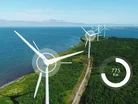
As the renewable sector continues to boom, the energy industry is continually turning to technology solutions to accelerate its rollout.
This comes as the world's energy consumption increased at a rapid pace in 2024.
According to the International Energy Agency (IEA), there's an urgent need to escalate the production of all energy forms, including renewables, to meet demand.
Given that renewables made up 38% of the global energy supply growth, there are renewable assets scattered all over the world to support this shift.
But how much energy are renewable assets creating worldwide? And where are they?
This is a question Microsoft is answering with its AI and satellite technology.
Introducing Global Renewables Watch

Global Renewables Watch (GRW) is setting new standards by being a first-of-its-kind “living atlas”, aiming to map and measure every utility-scale solar and wind installation across the globe.
This is done using cutting-edge AI and satellite imagery.
Launched in 2022 by Microsoft, Planet Labs and The Nature Conservancy, GRW serves as a tool to assess the progress of the clean energy transition and spot trends in real-time.
The project is spearheaded by Microsoft’s CVP and Chief Data Scientist Juan Lavista Ferres, Will Marshall, Co-Founder and CEO of Planet Labs and The Nature Conservancy’s CEO Jennifer Morris.
“Each of the partners brings unique knowledge and value-add to this initiative,” Will said on the project’s launch.
“You can’t manage what you can’t measure, so by combining Microsoft’s AI and cloud computing capabilities, Planet’s comprehensive and high-resolution satellite imagery and The Nature Conservancy’s deep subject-matter expertise, we hope to build a powerful platform for surfacing — and democratising access to — renewable energy data.”
Juan added: “The world needs access to data in order to make responsible environmental decisions.
“The Global Renewables Watch will serve as a critical tool for understanding humanity’s progress toward fulfilling the goals of the Paris Climate Agreement and meeting the United Nations’ Sustainable Development Goal (SDG) 7 to ensure access to affordable, reliable, sustainable and modern energy for all.”
More than two years post-launch, GRW's dataset is now available to the public.
Juan says: “At a time when we need to increase energy production, Global Renewables Watch marks a significant milestone.
“Accelerating renewable energy efforts requires a strategic approach that not only unlocks new energy generation but also protects natural areas and aligns with community goals.
“We could not deploy GRW effectively without the speed and scale AI provides.”
The initiative began by mapping solar and wind energy installations in Germany and India and has since expanded to offer a comprehensive view of the global clean energy landscape.
“By mapping and measuring renewable energy installations worldwide, Global Renewables Watch offers valuable insights into progress and trends of clean energy,” he continues.
“Access to this data is crucial for the public and private sectors to power growing economies and manage key resources.
“I’m grateful to our partners, The Nature Conservancy and Planet Labs PBC, for their expert guidance and invaluable contribution of data to build this digital public good.”
Advantages of GRW
GRW is more than a information point on renewable energy projects.
It offers several substantial benefits:
- Years of mapping: With global models, GRW delivers precise and up-to-date insights into renewable energy installations, dating back to 2018
- Regional knowledge: GRW provides regional analysis of renewable energy production and development trends by country, furnishing renewable data at both subnational and national levels
- Publicly available: Now fully accessible to the public, GRW enables researchers, policymakers and the general public to utilise the data to effect positive changes.
These benefits have led to important findings.
- The world’s solar land coverage has tripled over the past seven years
- Onshore wind turbines have more than doubled, with 375,000 online as of midway through 2024
- The US and China lead in total wind turbine installations, while European countries lead per capita
- More than half of Europe’s wind turbines are concentrated in five countries: Germany, Spain, France, the UK and Italy
Jennifer said on its launch: “Global Renewables Watch is exactly the kind of action we need to see.
“This will be a publicly accessible resource to help researchers and policymakers understand current capacities and gaps so that decision-makers can scale much-needed renewable energy resources in a responsible, nature-friendly way.”
In just two years, GRW has done what it set out to do — and will continue to provide data to encourage the ongoing uptake of renewable projects and the shift away from fossil fuels.
Explore the latest edition of Technology Magazine and be part of the conversation at our global conference series, Tech & AI LIVE.
Discover all our upcoming events and secure your tickets today.
Technology Magazine is a BizClik brand