
How Nvidia's NVLink Fusion Marks a Strategic Pivot in AI
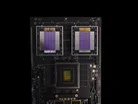
Nvidia’s rise to the top of the semiconductor industry, driven by the explosive demand for AI hardware, now faces a pivotal moment as spending trends evolve across the sector.
Following two years of extraordinary growth powered by a global race to build AI infrastructure, major cloud providers and governments are beginning to recalibrate their investment priorities, introducing new uncertainties for the industry’s dominant player.
The initial surge in AI infrastructure saw corporations and nations pour hundreds of billions of dollars into data centres loaded with Nvidia’s specialised processors.
As these facilities come online and prove their capabilities, buyers are showing greater caution and discernment in their procurement strategies.
Leading cloud operators such as Microsoft, Google and Amazon — which collectively operate vast data centre networks — have signalled intentions to moderate their AI hardware expenditures going forward.
This shift comes as the market transitions from the initial build-out phase to a more mature stage focused on optimising and scaling existing systems.
In response, Nvidia has introduced technology enabling companies to integrate custom chips into its AI platforms — a strategic pivot designed to address the prospect of slowing AI hardware purchases from its largest cloud customers.
This move reflects Nvidia’s effort to maintain its leadership as the competitive landscape intensifies, with rivals and hyperscalers developing their own silicon and startups targeting niches in AI chip design.
What is Nvidia’s NVLink Fusion?
The technology, named NVLink Fusion, represents CEO Jensen Huang’s response to mounting doubts over the long-term viability of colossal sovereign AI infrastructure investments — and echoes cautionary signals from industry giants like Microsoft and Alphabet’s Google regarding reductions in AI spending.
- Nvidia is striving to expand AI market grip through NVLink Fusion
- Nvidia is facing potential AI spending cuts from leading cloud firms
- Taiwan’s tech ecosystem is crucial for Nvidia's growth
NVLink Fusion operates as a platform that allows companies to incorporate their own specialised processors into Nvidia’s AI infrastructure.
This strategic move shifts Nvidia’s role from being solely a chip vendor to becoming a comprehensive platform provider, opening the door to a broader customer base beyond the traditional large-scale data centre deployments.
“Instead of having to build the entire rack of equipment themselves, (companies) could innovate or differentiate on the custom (chip) itself,” Nick Kucharewski, VP at Marvell Technology, tells Reuters.
By adopting this platform-centric approach, Nvidia aims to stimulate demand for its core AI networking and data centre components, enticing hardware developers to create products that leverage the Fusion system.
Nvidia targeting enterprise market with new server line
Jensen, following a week in Taiwan at the Computex trade fair, also unveiled a new line of servers billed as an “enterprise AI supercomputer.”
This initiative is designed to extend Nvidia’s reach beyond its traditional base of large technology firms and government clients, targeting a broader spectrum of business customers.
These enterprise servers are engineered to manage a diverse array of computing workloads, including graphics processing, virtual machines and AI-driven applications.
Jensen positioned the new technology as a gateway to a multi-billion dollar market, enabling customers to leverage the systems for a wide spectrum of business functions.
Yet, the enterprise sector brings its own set of challenges distinct from Nvidia’s existing clientele.
Deals in this space are typically smaller in scale than sovereign data centre contracts and often demand greater time and resources to secure.
Complicating matters further, US export restrictions on advanced technology have compelled Nvidia to pull certain chips from the Chinese market and develop alternative products that align with shifting government policies — moves that have resulted in a loss of market share in the region.
At the same time, Microsoft and Google — historically among Nvidia’s largest buyers of AI chips for data centres — have signalled intentions to scale back their AI infrastructure investments, adding another layer of uncertainty to Nvidia’s growth outlook.
The strategic impact of Taiwan's supply chain
While Jensen announced deals worth hundreds of billions of dollars in regions including the Gulf states during recent travels, analysts suggest such large-scale agreements will become less frequent.

“Is every country going to announce a US$10bn or US$50bn data centre like the Saudis? Of course not,” Seaport Research Analyst Jay Goldberg tells Reuters.
“They’re sort of running out of obvious deals.”
When asked about plans to address potential AI spending slowdowns, Jensen responds: “AI infrastructure is being built out (everywhere) - that’s one of the reasons I'm travelling around the world... AI infrastructure is going to be a part of society.”
Explore the latest edition of Technology Magazine and be part of the conversation at our global conference series, Tech & AI LIVE.
Discover all our upcoming events and secure your tickets today.
Technology Magazine is a BizClik brand
