
Israel’s Iron Dome: The Integral Role of Telecoms and Tech
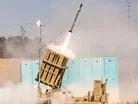
As tensions intensify between Iran and Israel, the nature of modern conflict is increasingly defined by the seamless integration of real-time data, positioning advanced telecommunications infrastructure as a cornerstone of defence.
Israel’s Iron Dome missile defence system is a prime illustration of this dependency, highlighting how its operations are intertwined with sophisticated telecommunications infrastructure.
This infrastructure facilitates rapid data transfer, precise coordination and swift decision-making capabilities, all essential for effectively countering modern threats.

Israel's technology rests on its capability to rapidly detect, assess and neutralise threats.
This is achieved through the smooth integration of radar systems, command centres and interceptor batteries, interconnected by secure, highly reliable telecom networks.
Without this robust communications architecture, the Iron Dome would be unable to coordinate responses proficiently, likely leading to delays that could result in more casualties and infrastructure damage.
The efficiency of the Iron Dome hinges on the robustness and reliability of its underlying technological framework.
The role of command, control and communication systems
At the core of the Iron Dome's architecture is a sophisticated command and control (C2) system designed to evaluate incoming threats and orchestrate appropriate responses.
These operations depend on resilient, low-latency telecommunications to link radar stations, decision-makers and interceptor sites.
The seamless operation of the C2 system highlights the critical significance of dependable telecommunications in contemporary missile defence strategies.
The role of cutting-edge telecommunications extends to missile interception, where accuracy is largely dependent on continuous connectivity. When a projectile is identified as a threat, the C2 centre sends launch commands to the related interceptor unit.
Following launch, Tamir missiles receive uninterrupted updates via encrypted telecom channels, dynamically adjusting to the incoming target’s trajectory.
These continuous guidance modifications require consistent, secure communication channels.
Any disruption in these channels can lead to interception failures, emphasising the critical need for reliable telecom connectivity in ensuring defence success.
The necessity shines a spotlight on the interconnection between dependable communication channels and profitable protective results.
Telecoms enables coordination in multi-threat environments
The Iron Dome is designed to manage several simultaneous attacks adeptly.
During periods of high-intensity, telecommunications infrastructure is used to ensure that interceptors are strategically positioned where they are most required.
Radar data is effectively distributed between batteries and lower-priority threats, such as rockets directed towards open spaces, are ignored to conserve assets.
The system’s capacity to make these complex, real-time decisions is predicated on networked data and fast, secure communications — vital fields for telecom operators and defence technology suppliers.
The Iron Dome capabilities demonstrate how telecommunications can improve missile defences, allowing advanced defence tactics.
Strategic and operational implications for telecom providers
It is important to recognise that telecommunications infrastructure is susceptible to damage in conflict scenarios.
Intentional attacks on fibre-optic cables, satellite links or cellular base stations can compromise the operational effectiveness of the system.
The Gaza conflict highlighted this reality, with more than 75% of the regions telecoms infrastructure suffering damage, severely impairing military and humanitarian activities.
Consequently, defence planning now focuses on telecom resilience as a key strategic necessity rather than merely a technical matter.
Considering telecom infrastructure vulnerabilities is critical to preserving defence skills in war areas.

From high-bandwidth capabilities to resilience against sabotage and cyberattacks, these facets highlight the degree of reliance placed on secure, high-performance networks.
Telecommunications are no longer just supportive elements of national security; they are basic.
Without high-performance networks, missile defence systems like the Iron Dome lose their reaction speed, precision and coordination, causing them to be ineffective against today’s complex threats.
The dependency emphasises the continuous development of telecommunications technology for maintaining effective defence systems.
Explore the latest edition of Technology Magazine and be part of the conversation at our global conference series, Tech & AI LIVE.
Discover all our upcoming events and secure your tickets today.
Technology Magazine is a BizClik brand