
What are the Top AI Announcements from Nvidia at Computex?
Nvidia continues to redefine its position within the AI industry.
Previously recognised primarily for its gaming graphics cards, Nvidia has shifted to become a dominant player in AI computing hardware.
The growth of Nvidia has paralleled the rapid expansion of AI technologies.
At this year's Computex technology conference in Taipei, the company unveiled a series of advancements that signify the future direction of AI.
This event, themed AI Next, saw Nvidia introduce groundbreaking innovations like NVLink Fusion.
This new development in AI infrastructure is pivotal for industries aiming to build semi-custom systems with multiple interconnected chips.
This initiative illustrates Nvidia's commitment to expanding its AI ecosystem through strategic partnerships, simultaneously addressing the escalating demand for specialised and efficient AI computing architectures needed to support large language models (LLMs) and Gen AI applications as they burgeon in scale and complexity.
Moreover, Nvidia is leading advancements in quantum computing by powering the world's largest quantum research supercomputer, ABCI-Q.
This supercomputer emerges as a dedicated platform for furthering quantum computing research.
This underscores Nvidia’s contribution to accelerating innovation within quantum technologies through its GPUs and CUDA-Q platform and forms a robust foundation for hybrid quantum-AI research initiatives.
How NVLink Fusion creates new AI infrastructure possibilities
NVLink Fusion represents a significant milestone for businesses seeking tailored AI solutions.
This new silicon technology facilitates the fusion of third-party accelerators and custom CPUs with Nvidia’s graphics processing units (GPUs), subsequently creating AI systems that are both flexible and powerful.
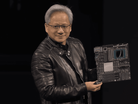
“A tectonic shift is underway: for the first time in decades, data centres must be fundamentally rearchitected – AI is being fused into every computing platform,” says Jensen Huang, Founder and CEO of Nvidia, during his keynote presentation.
The adoption of NVLink Fusion by various prominent firms, such as MediaTek, Marvell, Alchip Technologies and others, serves as a testament to its innovative capabilities.
Additionally, companies like Fujitsu and Qualcomm Technologies are leveraging this technology to integrate their custom CPUs in high-performance computing environments, thus addressing the mounting demand for bespoke AI solutions beyond Nvidia's standard offerings while remaining within its ecosystem.
GR00T-Dreams update: Humanoid robotics taking centre stage
Another highlight from Nvidia’s announcements includes Isaac GR00T N1.5, an updated foundation model for humanoid robots, along with GR00T-Dreams, a novel blueprint for generating synthetic motion data.
GR00T-Dreams leverages Cosmos Predict world foundation models to craft synthetic neural trajectories, enabling robots to learn new tasks with single image inputs.
This breakthrough accelerates the training of robots by producing large volumes of synthetic motion data, allowing machines to learn more effectively and efficiently.Developing highly skilled humanoid robots needs a huge amount of diverse data, which is costly to capture and process, as robots need to be tested in the physical world.
- Nvidia Cosmos Reason
- Cosmos Predict 2
- Nvidia Isaac GR00T-Mimic
- Open-Source Physical AI Dataset
- Nvidia Isaac Sim 5.0
- Nvidia saac Lab 2.2
According to Nvidia, the GR00T N1.5 model was developed in just 36 hours using GR00T-Dreams technology, compared to what would have required nearly three months of manual human data collection.
The updated model enhances robots’ ability to adapt to new environments and workspace configurations, significantly improving their success rates for common tasks like sorting and material handling.
“Physical AI and robotics will bring about the next industrial revolution,” Jensen says during his presentation.
“From AI brains for robots to simulated worlds to practice in or AI supercomputers for training foundation models, Nvidia provides building blocks for every stage of the robotics development journey.”
RTX Pro servers bolstering enterprise AI computing power
In addition, Nvidia debuted its RTX Pro Server, targeting enterprise AI applications with heightened performance improvements over previous models.
The RTX Pro 6000-powered servers, based on the Blackwell architecture, provide a 1.7-fold increase in performance over prior systems, catering to the needs of enterprise environments demanding high-performance AI solutions, including content creation, model training and inference applications.
A partnership with Foxconn
Jensen also announced a strategic collaboration with Foxconn to establish a massive AI supercomputer in Taiwan, powered by 10,000 Nvidia Blackwell GPUs.

This facility is poised to advance AI research and industry innovation throughout the region, reinforcing Nvidia’s infrastructural influence and commitment to the Taiwanese market.
“Nvidia sees itself as a pioneer of a new AI era and is using Computex as a stage to strategically position its narrative: as an innovator, but also as an infrastructural cornerstone for new digital value chains,” Jensen says.
Explore the latest edition of Technology Magazine and be part of the conversation at our global conference series, Tech & AI LIVE.
Discover all our upcoming events and secure your tickets today.
Technology Magazine is a BizClik brand
