Nvidia GTC: Behind the Next-Gen AI and Key Takeaways
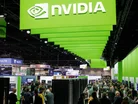
Nvidia Founder and CEO Jensen Huang presented at the company’s GTC Paris conference, delivering insights into how European nations are advancing AI infrastructure.
At this prominent technology event, Jensen highlighted strategic partnerships with governments and cloud providers across the continent.
His roadmap delineated steps for sustained investment and success in the realm of artificial intelligence.
Speaking at the Dôme de Paris, Jensen described Nvidia’s mission to bolster European AI development through sovereign computing models and industrial applications.
“We now have a new industry, an AI industry and it’s now part of the new infrastructure, called intelligence infrastructure, that will be used by every country, every society,” he emphasized.
GB200 systems enter full production
As the demand for Nvidia's inference services has soared dramatically from eight million to 800 million users over two years, the company has responded by announcing that its GB200 NVL72 platform, reputed as its most powerful AI system, has entered full production.
This platform integrates 72 processing units into a monolithic GPU, which Jensen describes as being crafted for tasks related to reasoning and planning.
“This machine was designed to be a thinking machine, a thinking machine, in the sense that it reasons, it plans, it spends a lot of time talking to itself,” he says.
Produced at a rate of 1,000 systems per week, Nvidia ’s manufacturing partners supply a range of systems, from compact DGX Spark to rack-mounted RTX PRO Servers to accommodate various deployment needs.
The company is collaborating with European partners to establish AI infrastructure services for third-party use and create AI factories for internal revenue purposes.
Nvidia launching industrial cloud in Germany
Nvidia has unveiled plans to construct what is being described as the world’s first industrial AI cloud in Germany.
This facility aims to assist European manufacturers in simulation, automation and optimisation through the use of Nvidia’s Omniverse platform, which creates digital twins of physical systems.
“We’re working on industrial AI with one company after another,” Jensen says, referring to collaborations across the continent using digital twin technology.
Additionally, Nvidia is enhancing its European technology centre network, incorporating new facilities in Finland, Germany, Spain, Italy and the UK to foster skills development and quantum computing research.
Quantum computing partnerships advance
Nvidia’s CUDA-Q platform, which fuses classical and quantum computing, is currently operational on Denmark’s Gefion supercomputer.
This platform is also available on Grace Blackwell systems, broadening the company's reach in hybrid quantum-AI research and error correction development.

Jensen announced partnerships with European supercomputing centres and quantum hardware manufacturers to advance hybrid quantum-AI research and quantum error correction development.
“Quantum computing is reaching an inflection point,” he says. “We are within reach of being able to apply quantum computing, quantum classical computing, in areas that can solve some interesting problems in the coming years.”
How Nemotron models target sovereign AI
Nvidia’s introduction of Nemotron aims to aid developers in crafting large language models tailored to local necessities.
These models will synchronise with Perplexity, a search engine leveraging reasoning abilities to facilitate multilingual AI deployment across Europe.
“You can now ask and get questions answered in the language, in the culture, in the sensibility of your country,” Jensen says.
Furthermore, Nvidia provided new agentic AI blueprints, which include safety frameworks for corporations and governments like the NeMo Agent toolkit and AI Blueprint for data flywheels — both designed to expedite the development of autonomous AI agents.
Nvidia is also collaborating with European governments, telecom firms and cloud providers to deploy its DGX Cloud Lepton platform across the region.
Lepton integrates with Hugging Face, a machine learning model platform, providing enhanced computing capacity.
“One model architecture, one deployment and you can run it anywhere,” Jensen says.
The future of automotive and robotics applications
The Nvidia DRIVE platform, which supports large-scale autonomous vehicle deployments, is now in production.
It serves as the core for developing intelligent transportation systems with its comprehensive software and hardware stack.
Demonstrating their robotics adeptness, Nvidia partnered with DeepMind, Google’s AI research unit, and Disney to develop Newton — a physics training engine for robotics applications.
“Soon, everything that moves will be robotic,” Jensen says, “and the car is the next one.”
Joining him on stage, Grek, a demonstration robot, showcased the blending of physical and digital AI systems.
Jensen concluded by discussing AI factories as the new wave of data centers focused on generating tokens — the fundamental units of AI model processing.
“These AI factories are going to generate tokens,” he concluded, “and these tokens are going to become your food, little Grek.”
Explore the latest edition of Technology Magazine and be part of the conversation at our global conference series, Tech & AI LIVE.
Discover all our upcoming events and secure your tickets today.
Technology Magazine is a BizClik brand