
Can Microsoft's Carbon Removals Help to Offset AI Emissions?
Microsoft, one of the world's largest corporate investors in carbon removal projects, has signed a fresh 12-year offtake agreement with Agoro Carbon for 2.6 million soil-based credits.
“Agoro Carbon’s approach to soil-based carbon removals reflects the kind of scientific rigor and long-term solution we look for in our carbon removal portfolio,” says Brian Marrs, Senior Director of Energy Markets at Microsoft.
“This agreement supports our broader sustainability goals at Microsoft, including support of scalable, agriculture-based climate solutions that deliver measurable impact over time.”
Down the years, sustainability agencies have played an important role in helping Microsoft build a world-leading portfolio of carbon credits.
"Microsoft is the biggest buyer of carbon removal credits but also puts in the most effort on quality," says Zara Ahmed, COO of Carbon Direct, a firm that works closely with Microsoft in this area.
"They hire us as their technical diligence partner for 3-4 month engagements with site visits and deep analysis to ensure projects will deliver climate impact.
"We should talk more about Microsoft's technical leadership, not just deal sizes.
"They're moving the market forward across nature-based and industrial carbon removal projects."
How carbon removals work
What exactly is a carbon credit? Well, one carbon credit represents the extraction of one metric tonne of CO₂ from the atmosphere.
These credits are different from traditional carbon offsets, though. Carbon credit schemes tend to focus on the physical removal and storage of carbon, rather than compensating for emissions by planting trees or creating renewable energy.
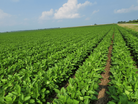
This new collaboration between Microsoft and Agoro Carbon is, in theory, very simple. Agoro removes carbon from the atmosphere by changing the way soil is used in farming.
Healthy, well-tended soil is a natural carbon sink, meaning that farmers can contribute to global sustainability if they work their land in certain ways.
Carbon removal credits don't come without challenges, though. Concerns include the accuracy of carbon calculations, potential double-counting, and questions about the permanence of soil-carbon storage. In response, leading tech companies like Microsoft require stringent monitoring and verification protocols to validate the integrity and impact of the credits they acquire.

Combining technology and agriculture
Agoro Carbon, initiated by Yara International, collaborates with US farmers to sequester carbon through technologically advanced, verified credits.
This organization employs the Verra’s VM0042 methodology, known for its rigid criteria, to ensure accurate measurements of soil carbon content. Agoro Carbon’s initiatives provide both agronomic and financial support, facilitating the implementation of innovative farming techniques that offer multiple advantages beyond carbon sequestration, such as improved crop yields and resilience.
Agoro Carbon commits to transparency and data integrity by utilizing advanced modelling and rigorous validation processes, ensuring the quality and sustainability of the credits.
“This agreement with Microsoft is the strongest endorsement of our quality-driven, farmer-focused approach to soil carbon sequestration,” says Elliot Formal, CEO of Agoro Carbon.
“We’re working with farmers and ranchers — offering hands-on support from our agronomists to ensure they achieve meaningful, long-term outcomes. From initial implementation to sustained success, we’re committed to helping producers build resilient operations for the future.”
Microsoft’s strategy
Microsoft has positioned itself as a leader in purchasing carbon removal credits, acquiring nearly 22 million tonnes last year.
Whilst the company has acknowledged its investments in AI have hampered its ambitions of becoming carbon negative by 2030, it shows no signs in slowing its commitment to proactive decarbonisation schemes such as these.
Microsoft's portfolio includes far more than soil-based removal techniques too, encompassing biochar, bioenergy, and far more besides.
"We are committing to purchasing carbon removal years into the future," says Brian.
