
Adobe Adds Models From OpenAI, Google to Firefly AI Platform
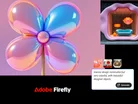
Adobe has unveiled a revamped Firefly application that consolidates image, video, audio and vector generation capabilities into a unified platform for enterprise content creation. The announcement, made at the MAX London creativity conference, positions Firefly as an end-to-end solution for organisations seeking to implement AI-assisted content workflows.
The platform now features Adobe’s in-house Firefly models alongside partner technologies from Google Cloud and OpenAI, with the company reporting that additional integrations from fal.ai, Ideogram, Luma, Pika and Runway are planned for release in the coming months.
“With Firefly, we set out to transform creators' experience by bringing image, video, audio and vector generation together in a one-stop-shop for AI-assisted creativity,” comments David Wadhwani, President of Digital Media at Adobe. “The new Firefly models and the integration of partner models give our users the ultimate choice as they bring their visions to life.”
Adobe Firefly Image Model 4 introduces enterprise-grade resolution capabilities
The updated platform includes several new model releases, including Firefly Image Model 4 and Firefly Image Model 4 Ultra. The base Image Model 4 generates outputs at 2K resolution, providing organisations with production-ready assets that can be cropped, recomposed or printed in larger formats without quality reduction.
For enterprise projects that require intricate detail, the Image Model 4 Ultra variant offers enhanced rendering capabilities for complex scenes with fine structures. Both models provide controls for structure, style, camera angles and zoom levels to maintain brand consistency across generated assets.

The Firefly Video Model has moved from beta to general availability, allowing organisations to generate 1080p video clips from text prompts or images. The model includes controls for camera settings and can be used to create atmospheric elements and motion design components.
Corporate clients currently using these technologies include dentsu, PepsiCo, Gatorade and Stagwell, which Adobe notes are deploying the video model for production content creation tasks.
Additionally, Adobe’s Vector Model powers the newly released Text-to-Vector capability, which enables designers to create editable vector artwork, logos, packaging designs, icons and patterns using natural language prompts.
Adobe Firefly Boards delivers collaborative AI-driven concept development environments
The platform introduces Firefly Boards, now in public beta, which provides teams with collaborative workspaces for moodboarding, storyboarding and concept exploration. Previously previewed under the name Project Concept, this feature allows creative teams to align on ideas before proceeding to production phases.
Kevin Weil, Chief Product Officer at OpenAI, comments: “We’re pleased to work with Adobe to bring OpenAI’s image generation capabilities to its creators. Now, even more people will be able to create consistent, context-aware images using the Adobe creative suite they already know and use, opening up more ways to share ideas visually.”
Content generated through the platform receives Content Credentials that identify whether assets were created using Adobe's models or partner technologies. Enterprise customers will have administrative options to control the availability of partner models within their organisation.
Adobe Firefly Services API framework extends production workflows for enterprise clients
Beyond the Firefly application itself, Adobe has expanded its Firefly Services API framework to integrate AI capabilities directly into content production workflows. These API-based services aim to automate repetitive tasks such as resizing assets for different marketing channels.
The company reports that organisations including Accenture, dentsu, Gatorade/PepsiCo and The Estée Lauder Companies have implemented Firefly Services to reduce campaign launch timelines and create audience-specific content variations.
New additions to the API framework include the Photoshop API (currently in beta), which facilitates programmatic image editing at scale, and Text-to-Video and Image-to-Video APIs for generating motion content. Adobe has announced that Text-to-Image API leveraging Firefly Image Model 4 and an Avatar API for instructional video content are forthcoming.
Adobe has focused on what it terms ‘commercially safe’ models, designed with consideration for creator rights and intellectual property concerns.
“Adobe’s view is that AI is a tool for, not a replacement of, human creativity. We believe that generative AI can be developed responsibly, starting with respect for creators’ rights,” the company stated in its announcement.
Firefly Image Model 4, Firefly Image Model 4 Ultra and the Firefly Video Model are available immediately through the web-based Firefly application, with mobile applications planned for future release. Firefly Boards remains in public beta within the Firefly app.
“We set out to transform creators’ experience by bringing image, video, audio and vector generation together in a one-stop-shop for AI-assisted creativity,” said David Wadhwani. “The new Firefly models and the integration of partner models give our users the ultimate choice as they bring their visions to life.”
Explore the latest edition of Technology Magazine and be part of the conversation at our global conference series, Tech & AI LIVE.
Discover all our upcoming events and secure your tickets today.
Technology Magazine is a BizClik brand