Amazon Enters Satellite Broadband Race With Kuiper Launch
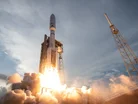
Amazon has commenced the full-scale deployment of its Project Kuiper satellite internet network, with United Launch Alliance (ULA) successfully launching 27 satellites into low Earth orbit on 28 April. The mission, designated KA-01 (Kuiper Atlas 1), marks Amazon’s substantive entry into the satellite broadband market currently dominated by SpaceX’s Starlink, which currently operates over 5,000 satellites.
The Atlas V rocket departed from Cape Canaveral Space Force Station in Florida, placing the satellites at an initial altitude of 280 miles (450 kilometres) above Earth. Amazon reports that its team has established contact with all 27 satellites, with initial deployment and activation sequences proceeding according to plan.
Andy Jassy, President and CEO at Amazon, confirmed the milestone on LinkedIn: “Important moment for Amazon Project Kuiper as we just confirmed our first 27 production satellites are operating as expected in low Earth orbit. While this is the first step in a much longer journey to launch the rest of our low Earth orbit constellation, it represents an incredible amount of invention and hard work.”
Project Kuiper enters competitive satellite internet market where Starlink leads deployment race
The KA-01 mission represents a substantial advancement from the company’s earlier prototype testing conducted in October 2023. The deployed satellites incorporate modifications to key components including phased array antennas, processors, solar arrays, propulsion systems and optical inter-satellite links.
While Amazon enters a field where SpaceX’s Starlink has established market position with thousands of satellites already in orbit, other competitors including OneWeb, Telesat’s Lightspeed and emerging Chinese constellations also seek market share in the Low Earth Orbit (LEO) satellite space. Amazon says Kuiper leverages the company’s existing AWS infrastructure and global logistics network, potentially offering integration advantages despite its later market arrival.
“We’ve designed some of the most advanced communications satellites ever built, and every launch is an opportunity to add more capacity and coverage to our network,” says Rajeev Badyal, Vice President of Project Kuiper. “We’ve done extensive testing on the ground to prepare for this first mission, but there are some things you can only learn in flight, and this is the first time we’ve flown our final satellite design and the first time we’ve deployed so many satellites at once.”

The satellites feature a dielectric mirror film that scatters reflected sunlight to reduce visibility to ground-based astronomers, addressing concerns about light pollution from satellite constellations. This coating is specific to the Kuiper satellites.
According to Amazon, the Kuiper payload established a record as the heaviest payload ever carried by ULA’s Atlas V rocket. To accommodate this mass, ULA utilised the rocket’s maximum-capacity configuration, incorporating five solid rocket boosters alongside the main booster.
Amazon secures launch capacity for Kuiper network through multi-provider strategy
This initial deployment forms part of a broader launch programme that will eventually place more than 3,200 satellites in low Earth orbit. Amazon has contracted for over 80 launches to deploy its constellation, with plans to begin customer service later this year.
- Amazon plans to deploy 3,200 satellites in low Earth orbit, competing with SpaceX's Starlink which currently operates over 5,000 satellites.
- The company has secured more than 80 launches across four providers: ULA, Arianespace, Blue Origin and SpaceX.
- Customer service is scheduled to begin later this year, with satellites operating at 392 miles altitude and orbiting Earth every 90 minutes.
The company has distributed its launch requirements across multiple providers. Working with ULA, the company has scheduled seven additional Atlas V launches and 38 launches on ULA's Vulcan Centaur rocket. Beyond this, Amazon has arranged more than 30 launches with Arianespace, Blue Origin, and SpaceX.
For the KA-01 mission, ULA managed the launch and deployment sequence from their Advanced Spaceflight Operations Centre at Cape Canaveral Space Force Station. Following satellite separation, Amazon's team assumed control from their mission operations centre in Redmond, Washington, which operates continuously.
Project Kuiper satellite activation procedures commence with orbital positioning manoeuvres
The post-deployment phase involves several automated processes. After separation from the launch vehicle, each satellite activates its onboard systems and utilises electric propulsion to gradually ascend to their assigned operational orbit of 392 miles (630 km).

When positioned, the satellites will travel at speeds exceeding 17,000 miles per hour (27,359 km per hour), completing an orbital circuit approximately every 90 minutes.
While the satellites establish their operational positions, Amazon’s technical teams are preparing for network connectivity testing. This process involves transmitting data from terrestrial internet infrastructure through ground stations to the orbital satellites, then down to customer terminal antennas, with the pathway functioning bidirectionally.
Amazon faces the challenge of accelerating its deployment schedule to compete with SpaceX, which routinely launches satellites. With the KA-01 mission now in progress, Amazon is preparing for its next deployment. The company reports it has begun shipping and processing satellites for the KA-02 mission, which will similarly utilise a ULA Atlas V rocket launched from Cape Canaveral Space Force Station.
“No matter how the mission unfolds, this is just the start of our journey, and we have all the pieces in place to learn and adapt as we prepare to launch again and again over the coming years,” says Rajeev.
Explore the latest edition of Technology Magazine and be part of the conversation at our global conference series, Tech & AI LIVE.
Discover all our upcoming events and secure your tickets today.
Technology Magazine is a BizClik brand