
Audi & Siemens Break Hardware Barrier in Factory Automation
For decades, factory floors have been tethered to physical automation controllers – metal boxes filled with circuit boards that must be individually programmed, maintained and replaced. This hardware dependency has become a bottleneck as manufacturers face pressure to reconfigure production lines rapidly and integrate AI into operations.
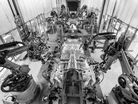
Audi has severed this connection entirely. The German carmaker is running its Neckarsulm assembly line using virtual controllers housed in data centres 10 kilometres away from the factory floor. When maintenance staff open control cabinets on the production line, they find empty spaces where programmable logic controllers (PLCs) once sat.
This deployment represents the first commercial implementation of fail-safe virtual PLCs in automotive manufacturing, marking a shift from hardware-dependent to software-based automation control. The approach enables centralised management of automation systems whilst providing the computational resources needed for advanced manufacturing applications including AI.
The technology addresses core IT challenges in manufacturing environments: system scalability, maintenance overhead and integration complexity. Virtual controllers operate as software applications on industrial edge computing infrastructure, providing equivalent functionality to physical systems whilst enabling capabilities that hardware-based approaches cannot support.
“A virtualised shop floor is a key enabler for a flexible production,” explains Gerd Walker, Audi Board Member for Production and Logistics. “Siemens’ software-defined automation portfolio empowers us to rapidly respond to market changes and optimise our manufacturing for more efficiency and flexibility.”
Siemens virtual controllers enable centralised automation management
The virtual controller deployment transforms system administration from distributed hardware management to centralised software operations. Traditional automation requires technicians to access individual controllers for programming changes, updates and troubleshooting. Virtual systems consolidate these functions through software interfaces that manage multiple controllers simultaneously.
Henning Löser, Head of Production Lab at Audi, highlights the key operational benefits: “If you want to change part of the libraries that, for example, send data out of all PLCs into some kind of data pool – because you figure out that if I collect this data centrally, I can do some kind of algorithm that helps me in my processes – all of a sudden we can deploy these libraries with a couple of mouse clicks over all the PLCs we have running.”
This approach addresses scalability constraints in traditional automation architectures. Manufacturing facilities typically contain hundreds of these individual controllers, each of which requires separate maintenance cycles and updates. Deploying virtual systems enables simultaneous deployment across multiple controllers, reducing administrative overhead and ensuring configuration consistency.
The speed advantages extend to system provisioning. Physical controller deployment requires procurement, installation and configuration processes that can extend over weeks, but virtual controllers can be provisioned through software interfaces within minutes.
“You give the team a call, they’ll ramp up a new PLC, and they’re quicker doing that than you are walking down to storage and getting a new PLC,” Henning describes.
Safety certification addresses production deployment barriers
In spite of these benefits, safety certification has historically represented one of the primary technical barriers to virtual controller adoption. Manufacturing automation controls machinery that poses worker risks, requiring fail-safe mechanisms that operate independently during system failures. Traditional approaches rely on dedicated safety hardware to ensure protection functions remain active.
Siemens has cleared this regulatory hurdle by achieving certification from TÜV, Germany’s technical inspection authority that sets stringent safety standards for industrial equipment across Europe. The certification process required proving virtual safety systems maintain operation during network disruptions, computing failures, and other failure scenarios. This technical validation removes regulatory barriers to virtual automation deployment in production environments.
Cultural adaptation accompanies technical implementation. Maintenance personnel traditionally verify safety systems through physical hardware inspection. Virtual systems require different verification approaches and confidence in remote diagnostics capabilities.
Henning addresses this transition: “If you are in maintenance and you can touch the PLC, you know it’s there and you know the safety will work because it has been wired up to that PLC. All of a sudden, you open up the cabinet and the PLC is missing. How do you know the safety is really working?”
Edge infrastructure supports advanced manufacturing applications
Virtual controller deployment requires industrial edge computing infrastructure capable of real-time control applications. Traditional automation systems operate with microsecond response requirements, demanding computing platforms that maintain performance under varying conditions.
Audi’s implementation operates on the company’s Edge Cloud 4 Production platform, providing computing resources and connectivity for virtual controller operation. This infrastructure supports multiple applications beyond basic automation control, including AI-driven quality inspection systems.
The convergence enables advanced manufacturing capabilities that traditional controllers cannot support. Audi implemented AI-powered weld spatter detection using Siemens Industrial AI Suite technology alongside virtual controllers. The system processes high-resolution images during car body assembly to identify quality issues requiring correction.
This integration demonstrates how virtual automation platforms enable applications that exceed traditional PLC processing capabilities. Hardware controllers lack computational resources for real-time AI algorithms, whilst virtual systems operating on edge infrastructure provide processing capacity for complex applications.
Cedrik Neike, CEO of Digital Industries and Member of the Managing Board of Siemens, positions the technology within digital transformation strategy: “Controllers are the ‘brains’ of machines and factories. Now we are virtualising these brains and bringing them to the cloud. This accelerates Audi’s digital transformation and increases agility, efficiency and safety in production.”
The deployment provides operational validation of virtual controller technology under production conditions. Audi plans expansion throughout the Neckarsulm facility during 2025, generating performance data that supports broader implementation decisions.
Henning concludes by emphasising the compute platform foundation: “We’ve got this compute layer that can scale and we can drive our classical mechanical parts out of this computer.”
To read the full article in the magazine, click HERE.