
Behind Nvidia's Global AI Strategy for Success
AI is the defining technological force of this decade, reshaping business models and accelerating digital transformation across industries.
At the centre of this revolution stands Nvidia, the computing technology firm that has transformed from a graphics card manufacturer into the infrastructure backbone of the global AI movement.
The race to develop and deploy AI capabilities has intensified, with governments and corporations worldwide investing billions to secure competitive advantages.
Market dynamics have shifted dramatically as AI integration becomes a necessity rather than a luxury for businesses – and Nvidia has positioned itself as the essential provider of the computational power required to train and run increasingly complex AI systems for many companies across the world.
To find out how Nvidia has maintained its top position in the AI market ahead of the Nvidia’s GPU Technology Conference (GTC) tomorrow, Technology Magazine highlights the company’s strategy so far and what it’s planning next.
Gen AI: Driving Nvidia's computing transformation
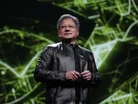
At CES 2025, Nvidia Chief Executive Officer Jensen Huang revealed the company's comprehensive vision for the future of AI, detailing how the firm plans to maintain its position at the forefront of the AI revolution while expanding its influence across global industries through new technology developments.
The presentation highlighted Nvidia’s multi-faceted approach to Gen AI, agentic systems and strategic partnerships intended to make advanced computing capabilities accessible to developers worldwide.
AI is fundamentally changing computing methods across industries – and Jensen emphasised during his 90-minute CES keynote that AI has evolved through distinct phases.
“It started with perception AI – understanding images, words and sounds.
“Then generative AI – creating text, images and sound,” he told an audience of over 6,000 in Las Vegas.
“Now, we're entering the era of physical AI, AI that can proceed, reason, plan and act.”
These systems can generate photorealistic images, complex 3D models and sophisticated written content, opening new possibilities for industries including gaming, entertainment and virtual reality.
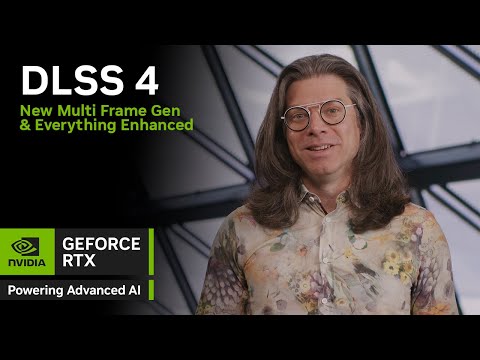
Now, Nvidia’s newest Deep Learning Super Sampling technology (DLSS 4) introduces Multi Frame Generation, which can boost performance by up to eight times.
The technology generates three additional frames for every calculated frame, significantly improving efficiency.
“As a result, we’re able to render at incredibly high performance, because AI does a lot less computation,” Jensen explained.
Nvidia Blackwell Architecture: Powering next-generation GeForce RTX 50 Series
For AI to reach its potential, effective scaling is essential – so Jensen discussed AI scaling laws which show that larger models and datasets produce improved outcomes.
Nvidia's Blackwell GPU architecture, named after mathematician and statistician David Blackwell, addresses the increasing demands of modern AI applications with improved performance per watt and per dollar.
Jensen unveiled the GeForce RTX 5090 GPU, built on this architecture, featuring 92 billion transistors and delivering 3,352 trillion AI operations per second (TOPS).
“Here it is – our brand-new GeForce RTX 50 series, Blackwell architecture,” he said, displaying the GPU to the audience.
"The GPU is just a beast."
- Project Digits
- GeForce RTX 50 Series GPUs
- DLSS 4
- Blackwell GPU Architecture
- Nvidia Cosmos
- AI Foundation Models for RTX PCs
Beyond gaming applications, the architecture's flexibility supports pre-training, post-training and test-time scaling, enabling applications from climate modelling to healthcare diagnostics.
Furthermore, industry sources indicate that Nvidia plans to extend its product line with a “Blackwell Ultra” series in the second half of 2025, which industry analysts expect to deliver significant performance improvements over current models.
Agentic AI and digital employees: The next phase of AI
AI is evolving beyond perception and generation capabilities into what has been termed ‘agentic AI’ – describing AI systems that can perceive, reason, plan and act autonomously.
“This is the next great leap, where AI agents evolve into digital employees capable of collaborating with humans,” he said.
Nvidia's NeMo framework, a toolkit for developing conversational AI applications, provides resources to train and manage AI agents.
The framework allows organisations to create digital assistants that can help researchers design new pharmaceuticals, automate logistics tasks or identify software vulnerabilities.
The company is likely to showcase additional advancements in agentic AI systems at GTC.
Nvidia’s Cosmos platform: Transforming robotics and autonomous vehicles
Understanding physical environments presents challenges for AI systems, but Nvidia’s newly announced Cosmos world foundation model platform addresses this by training on physics principles including motion, materials and real-world interactions.
“The ChatGPT moment for general robotics is just around the corner,” Jensen said during his CES keynote.
Cosmos integrates generative models, tokenizers and video processing pipelines to power physical AI systems.
The platform equips AI models with advanced simulation capabilities, enabling them to predict and evaluate multiple future scenarios to select optimal actions.
When combined with Nvidia Omniverse – a platform for creating virtual environments – Cosmos allows developers to simulate and train robots before physical deployment.
Several companies have already adopted the technology, including:
- Robotics firms 1X
- Agile Robots
- Figure AI
- Neura Robotics
- Uber
Nvidia has made Cosmos available on GitHub with an open licence.
In the autonomous vehicle sector, Cosmos helps create detailed driving scenarios that expand training datasets.
According to Jensen, this approach can scale “hundreds of drives into billions of effective miles,” providing the data volume necessary for safe autonomous driving development.
Project Digits and AI Blueprints: Demonstrating Nvidia’s commitment to AI accessibility
Making AI technology widely available represents a core component of Nvidia's strategy.
At CES 2025, Jensen also unveiled Project Digits, a compact AI supercomputer powered by the GB10 Grace-Blackwell superchip, set to launch in May.
“Every software engineer, every engineer, every creative artist – everybody who uses computers today as a tool – will need an AI supercomputer,” he said while revealing what he described as Nvidia’s smallest yet most powerful AI supercomputer.

The company has also introduced AI Blueprints for agentic AI, including tools for PDF-to-podcast conversion and video search and summarisation.
These blueprints integrate Nvidia AI Enterprise software with platforms like CrewAI, LangChain and LlamaIndex to help developers build custom agents for enterprise workflows.
By optimising these models for business applications, Nvidia enables organisations of all sizes to implement advanced AI tools.
Automotive and manufacturing sectors: AI applications and opportunities
In the automotive sector, Jensen announced the Nvidia DRIVE Hyperion autonomous vehicle platform built on the new Nvidia AGX Thor system-on-a-chip.
Automotive sector
The platform combines advanced processors, sensors and safety systems into a comprehensive suite.
“The autonomous vehicle revolution is here,” he said.
“Building autonomous vehicles, like all robots, requires three computers: Nvidia DGX to train AI models, Omniverse to test drive and generate synthetic data and DRIVE AGX, a supercomputer in the car.”
Meanwhile, Toyota will build its next-generation vehicles using Nvidia DRIVE AGX Orin running the safety-certified Nvidia DriveOS operating system.
Manufacturing sector
For manufacturing, Nvidia introduced the Isaac GR00T Blueprint for synthetic motion generation, designed to help developers generate large volumes of synthetic motion data for training humanoid robots through imitation learning.

The company’s Mega blueprint enables large-scale simulations of robot fleets for warehouse automation.
New Rubin Architecture: Set to debut at GTC 2025
Industry analysts expect Nvidia to reveal more sophisticated AI models and quantum computing initiatives during this event, which has become a central platform for the company's annual technology roadmap announcements.
Nvidia has reportedly begun providing select partners with information about its next-generation “Rubin” architecture, expected to be unveiled at GTC.
This future platform reportedly represents a significant advance in computing power, particularly for AI applications requiring complex reasoning capabilities.
“It's been an incredible year,” Jensen said as he concluded his CES keynote.
Explore the latest edition of Technology Magazine and be part of the conversation at our global conference series, Tech & AI LIVE.
Discover all our upcoming events and secure your tickets today.
Technology Magazine is a BizClik brand
