Dell & NVIDIA: Supercomputing Infrastructure for HPC and AI
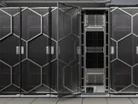
Dell has introduced the Dell PowerEdge XE8812 server, a new addition to the Dell AI Factory with NVIDIA.
The company says it is purpose-built for the world's most demanding high performance computing (HPC) and AI workloads, featuring NVIDIA Vera Rubin NVL4 architecture.
Delivering up to 144 GPUs per rack, Dell says the XE8812 delivers “a generational leap in compute”.
McKinsey says that amid the AI boom, compute power is emerging as one of this decade’s most critical resources.

The Dell PowerEdge XE8812 server
Dell says its new fanless, direct liquid cooled Dell PowerEdge XE8812 server is purpose-built for the world’s most sophisticated institutions running demanding HPC and AI workloads like molecular and multi-physics simulations.
Shifting from the NVIDIA GB200 NVL4 to NVIDIA Vera Rubin NVL4, the platform gains expanded host memory, extra cores (expanding from 144 to 176), more GPU memory and additional compute.
Arun Narayanan, Senior Vice President of Compute and Networking at Dell, says: "The institutions doing the world's most important research like decoding the human genome, modeling the energy systems of the future and building the sovereign AI infrastructure that nations depend on deserve infrastructure that matches the ambition of their work.
“The Dell PowerEdge XE8812 reflects Dell's commitment to pushing the boundaries of what's possible, giving these organisations the density, memory and open architecture they need to tackle workloads that once seemed impossible."
AI infrastructure growth
The scale and pace of AI and HPC workloads are outgrowing what incremental infrastructure upgrades can keep up with, while the global push for AI innovation is accelerating demand for high-performance infrastructure across data and compute.
According to Gartner, worldwide spending on AI is forecast to total US$2.52tn in 2026, a 44% increase year-over-year. AI infrastructure will also add US$401bn in spending in 2026, according to its statistics.
NVIDIA’s Vice President of Enterprise Platforms, Chris Marriot, says the two companies are raising the bar on infrastructure: "The convergence of AI and HPC is redefining what organisations should expect from their infrastructure.
“Dell and NVIDIA are raising that bar together, combining NVIDIA Vera Rubin NVL4 architecture and CUDA-X libraries with Dell's engineering and at-scale deployment expertise to provide the performance, efficiency and openness required for the world’s most demanding AI and scientific computing workloads."
The Dell AI Factory with NVIDIA
Dell’s new PowerEdge XE8812 server will be added to its AI Factory with NVIDIA. It is a portfolio of products, solutions and services tailored for AI workloads, which has over 5,000 customers globally.
In collaboration with NERSC, Dell and NVIDIA are building Doudna, the next flagship US Department of Energy supercomputer.
This system will be based on Dell PowerEdge XE8812 servers with NVIDIA Vera Rubin NVL4 and connected with NVIDIA Quantum-X800 InfiniBand networking, driving larger-scale HPC workloads, AI training and inference as well as data intensive workflows.
Dell says it will “accelerate breakthroughs from the molecular level” to astronomy, “reshaping science” and everyday life.
It also has customers such as AI company, InstaDeep, in France, the Wellcome Sanger Institute in the UK (which is using it to decode DNA) and Monash University in Australia.
Company portals


Executives
Arunkumar Narayanan
Senior Vice President Compute and Networking Product Management
Chris Marriott
VP/GM, Enterprise Platforms and Solutions