Why Nissan has Partnered With Nvidia-backed AI Startup Wayve
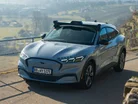
Wayve is no stranger reshaping the future of autonomous mobility.
The Nvidia-backed startup is a leading developer of embodied intelligence for autonomous vehicles and is working to change the face of the industry forever.
It has worked with tech industry giants like Microsoft to scale AI for autonomous vehicles and last year secured the largest investment in an AI company ever in Europe, totalling US$1.3bn.
About Wayve

Wayve develops AI-driven autonomous driving solutions with a distinct focus on partnering with original equipment manufacturers (OEMs) and fleet operators, rather than building or operating vehicles itself.
Unlike competitors that often lock into exclusive manufacturer partnerships, Wayve maintains flexibility by collaborating broadly across the automotive industry.
Central to its innovation is “embodied AI,” a system that trains self-driving vehicles to interpret environments dynamically through real-world interactions and human-like decision-making.
This approach leverages deep reinforcement learning to reduce reliance on pre-mapped routes, high-definition maps or complex sensor arrays, enabling adaptability in unpredictable driving scenarios.
“At Wayve, our vision is to develop autonomous technology that not only becomes a reality in millions of vehicles but also earns people’s trust by seamlessly integrating into their everyday lives to unlock extraordinary value,” Wayve Co-Founder and CEO Alex Kendall says.
Wayve x Nissan
Wayve has entered into a landmark partnership with Japanese automotive manufacturer Nissan, creating a further pivotal shift in how autonomous driving technology is developed and deployed.
Nissan will integrate Wayve’s self-learning AI software into its ProPILOT driver-assist system from 2027 in the hope of setting a new benchmark for collision avoidance and adaptability in advanced driver-assistance systems (ADAS).
This is Wayve’s first major commercial deal, with Nissan being the first automaker to leverage Wayve’s self-driving technology.
- Founded: 2017
- Co-Founder & CEO: Alex Kendall
- Employees: 254
- HQ: London, UK and San Francisco, USA
“Leveraging Nissan’s technology and Wayve’s AI, we are confident it will allow future Nissan vehicles to closely replicate the judgment and actions of a careful and competent human driver in complex driving scenarios,” Nissan’s Shiro Nagai says.
As well as being a deal of firsts, the collab emphasises the growing role of embodied AI in bridging the gap between human-like driving and full autonomy.
What sets Wayve apart?
So what makes Wayve different?

Wayve’s approach diverges from traditional autonomous systems that rely on lidar sensors, high-definition maps or rigid rules-based programming.
Instead, its aforementioned embodied AI foundation model learns from real-world driving data and simulations, enabling vehicles to generalise across unfamiliar scenarios much like humans do.
This is something Alex says allows the tech to understand intent, not just rules.
On top of this, its hardware-agnostic software integrates with existing sensors — like cameras, radar and optional lidar — making it easier for automakers like Nissan to adopt the technology without costly hardware redesigns.
This flexibility addresses a critical pain point for manufacturers, as modifying vehicle platforms typically requires four to six years of lead time.
“To change the hardware on a vehicle platform is anywhere from a four to six-year lead time and it's very expensive,” Kaity Fischer, Wayve's VP of Commercial and Operations says.
“We're able to work with OEMs and say, ‘Alright, what hardware do you have already submitted for your upcoming production models?’ and then we can work together on the level of autonomy that makes sense for their vehicle.”
Explore the latest edition of Technology Magazine and be part of the conversation at our global conference series, Tech & AI LIVE.
Discover all our upcoming events and secure your tickets today.
Technology Magazine is a BizClik brand