Nvidia Restarts AI Chip Sales to China Following Negotiation
The ongoing competition between the US and China has intensified within the tech sector in recent years, especially in the realm of AI chips, which are becoming increasingly central to technological advancement.
The initial trade tensions have now evolved into a complex landscape of export controls and strategic dealings.
This has prompted leading companies like Nvidia to adapt swiftly to maintain their positions atop the perch.
Earlier in 2025, the US imposed stricter measures on Nvidia's sales to China.
However, following interactions with US President Donald Trump and Chinese officials in Beijing, Nvidia is set to restart sales of its H20 AI chips in China.
US and China relations
Nvidia has been particularly impacted by the intricate export and licensing requirements.
With approximately 80% control over the global AI processor market, the company has seen potential revenues plunge due to American limitations on Chinese sales.
In response, Nvidia was forced to manufacture AI supercomputers on US soil and redesign its products for the Chinese market.
This led to developing less powerful versions of its processors, meeting US regulations while still appealing to Chinese clients.
US policies, especially those under the Trump administration, have been rigorous, with new rules in April halting sales of Nvidia’s H20 chip to China.
Despite these restrictions, Nvidia strives to portray itself as a vital partner to American interests, highlighting its dedication to domestic manufacturing and job creation.
The company's CEO has actively engaged with US political leaders, positioning Nvidia as crucial to the nation's AI leadership while seeking to maintain a foothold in China’s lucrative market.
This delicate balance remains challenging as both nations consider AI technology vital to national security infrastructure.
Concurrently, Chinese entities are stockpiling processors and investing in local alternatives.
US policymakers remain concerned that advanced semiconductors could bolster China’s military capabilities, particularly in surveillance and arms development.
Despite these dynamics, Nvidia plans to file applications with the US to resume its H20 chip sales, with hopes of securing the necessary permissions promptly.

Jensen Huang's diplomacy vindicated
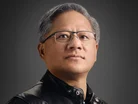
CEO Jensen Huang has been active in Washington, discussing with President Trump and policymakers Nvidia's commitment to supporting US AI initiatives, including job creation and domestic manufacturing.
Simultaneously, in Beijing, discussions with Chinese officials centreed around using AI positively.
Jensen emphasised the Chinese market's scale and innovativeness, stating: “The Chinese market is massive, dynamic and highly innovative and it’s also home to many AI researchers.
“Therefore, it is indeed crucial for American companies to establish roots in the Chinese market.”
Despite increased competition from Chinese companies like Huawei, Chinese firms still depend on Nvidia for its influential CUDA platform, enabling broad computation uses for graphics processors.
Inside Nvidia's strategy
Nvidia’s AI chips have been the focal point of US measures to prevent high-tech components from reaching China amid security worries. The company estimates these regulations could cut its revenue by US$15bn.
Faced with US restrictions, Nvidia crafted the H20 chip for the Chinese market.
However, the US ban in April necessitated writing off US$5.5bn in inventories.
Concerns over the H20 chip's potential military applications led to further US scrutiny. In response, Nvidia has criticised these stringent regulations.
It is indeed crucial for American companies to establish roots in the Chinese market
Navigating regulations
In light of these challenges, Nvidia has introduced a new model, targeted specifically at China, called the RTX Pro GPU.
The model is designed to adhere to US export controls and cater to sectors such as smart factories and logistics with digital twin AI applications.
The CEO announced during his bilateral visits that the RTX Pro GPU “is ideal for digital twin AI for smart factories and logistics,” aimed at meeting regulatory demands and broadening market access in China.
According to Reuters, Nvidia anticipates launching a new AI chip in China, following the RTX Pro 6000D model, aiming for a more affordable price point than the H20, with lesser specifications.

Navigating politics
Nvidia reported US$17bn in earnings from China in the fiscal year ending 26 January, representing 13% of its total sales.
It's understandable why Nvidia seeks to reintegrate China into its supply chain.
Nonetheless, Jensen’s presence is meticulously monitored by both nations, with US senators advising him against engaging with companies allied with military bodies.
Yet, as the CEO mentioned during his interactions, the world stands at a threshold wherein AI is as fundamental as utilities like water and energy.
He stresses Nvidia’s dedication to open-source AI research and foundation models, suggesting that “general-purpose, open-source research and foundation models are the backbone of AI innovation,” advocating for the US technology stack globally.