
How Nvidia Omniverse Will Drive AI Transformation for GM
The race to implement AI and automation across global industries has created a challenge: how to develop, test and deploy complex systems without the risk and expense of physical trial and error. Nvidia’s Omniverse platform aims to solve this problem, offering companies a way to create detailed virtual environments where AI systems can be trained before real-world deployment.
Described by Nvidia as a physical AI operating system, Omniverse enables the creation of digital twins that simulate real-world systems with high fidelity. For companies seeking to implement advanced automation, these virtual environments provide a testing ground where AI models can be developed and refined without the constraints of physical testing.
“Omniverse is an operating system that connects the world’s physical data to the realm of physical AI,” comments Rev Lebaredian, VP of Omniverse and Simulation Technology at Nvidia. “With Omniverse, global industrial software, data and professional services leaders are uniting industrial ecosystems and building new applications that will advance the next generation of AI for industries at unprecedented speed.”
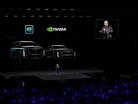
Today, companies like GM are leading the adoption of the technology to revolutionise operations and development processes. Announced at Nvidia GTC, GM recently expanded its collaboration with Nvidia to build custom AI systems using Nvidia accelerated compute platforms, including Omniverse with Nvidia Cosmos, to train AI models for operations and robotics.
“GM has enjoyed a longstanding partnership with Nvidia, leveraging its GPUs across our operations,” said Mary Barra, Chair and CEO of the automotive giant. “AI not only optimises manufacturing processes and accelerates virtual testing but also helps us build smarter vehicles while empowering our workforce to focus on craftsmanship.”
AI ecosystem expansion
Nvidia has continued to expand the Omniverse ecosystem, with recent announcements revealing partnerships with major technology and industrial firms. Companies including Accenture, Ansys, Cadence, Databricks, Dematic, Hexagon, Omron, SAP, Schneider Electric with ETAP and Siemens are now connecting Omniverse to leading software tools, extending the platform’s reach across industries.
This growth in partnerships reflects the versatility of the technology beyond automotive applications. The platform’s ability to create detailed simulations of physical environments has implications for AI development and automation in sectors ranging from logistics and warehousing to energy management and urban planning.
The expansion includes four new blueprints enabling robot-ready environments and large-scale synthetic data generation — capabilities that address critical challenges in AI development where access to diverse training data and realistic testing environments often limit implementation speed. The synthetic data generation capabilities allow companies to train AI models on simulated scenarios that would be impractical or impossible to create in the physical world.
Beyond GM, other major companies have begun integrating Omniverse into their operations. Foxconn, Hyundai Motor Group, KION Group, Mercedes-Benz, Pegatron and Schaeffler have joined GM in adapting the technology to specific AI and automation challenges.
For these organisations, the technology offers particular advantages in developing and testing autonomous systems. By creating virtual environments that accurately replicate real-world conditions, developers can train AI models more efficiently than would be possible using physical testing alone, significantly reducing the time and resources required to bring AI-driven solutions to market.
How digital twins redefine AI development
The concept of digital twins represents a fundamental shift in how organisations approach AI development and implementation. Traditional methods relied heavily on physical testing and iterative deployment, processes that consumed time and resources while limiting the scope of possible scenarios an AI system could encounter before deployment.
With Omniverse, companies can create virtual representations of entire operational environments, simulating everything from the movement of autonomous vehicles to the interaction between robots and humans. These simulations can be adjusted and refined rapidly, allowing engineers and AI specialists to explore multiple configurations and optimise for efficiency, safety and functionality.
For GM, this capability translates to more capable AI systems. By creating digital twins of physical environments, the automaker can simulate different scenarios — from normal operations to edge cases and potential disruptions — and develop AI models that respond appropriately across a wide range of conditions.
From AI training to deployment
The value of Omniverse extends beyond initial AI development. As organisations deploy AI systems based on insights gained through simulation, the digital twins can be updated to reflect the current state of physical systems, creating a continuous feedback loop that drives ongoing improvement of AI models.
This approach has proven particularly valuable for companies seeking to integrate intelligent automation into existing environments. By simulating the interaction between humans, robots and other systems, organisations can identify potential issues and develop solutions before implementing AI in the physical world.
The ability to train AI models for operations such as autonomous navigation, object recognition and decision-making in complex environments has significant implications for implementation speed and system safety. By optimising these systems virtually, companies can reduce the time required to bring new AI capabilities online while minimising risks associated with learning in physical environments.
AI development horizons
As adoption of Omniverse continues to grow, the platform is likely to evolve in response to the needs of AI developers and automators. The integration with other software tools, as demonstrated by Nvidia’s expanding partnerships, suggests a future in which digital twins become increasingly comprehensive, incorporating data from multiple sources to create more accurate and useful environments for AI training.
For companies like GM, this evolution presents opportunities to extend the use of digital twins beyond current applications. Future implementations may include end-to-end AI systems that manage supply chains, predict maintenance needs and enable product development, creating a more integrated approach to automation that spans entire operational lifecycles.
As organisations across sectors continue to implement AI and automation, platforms like Omniverse appear positioned to play an increasingly central role in how companies develop, deploy and manage intelligent systems. The adoption by industry leaders like GM signals a technological approach that may reshape how AI is developed across multiple sectors.
“The era of physical AI is here, and together with GM, we're transforming transportation, from vehicles to the factories where they’re made,” said Jensen Huang, Founder and CEO of Nvidia. “We are thrilled to partner with GM to build AI systems tailored to their vision, craft and know-how.”
To read the full article in the magazine, click HERE.
Explore the latest edition of Technology Magazine and be part of the conversation at our global conference series, Tech & AI LIVE.
Discover all our upcoming events and secure your tickets today.
Technology Magazine is a BizClik brand
