How Tetra Pak is Using AI & Robotics to Streamline Recycling
Just 9% of the world’s plastic waste ends up being recycled, according to the OECD.
The remainder accumulates in landfills or is burned in incinerators, which presents a huge obstacle for global sustainability.
Recycling is a particularly laborious process, which often requires workers to sort through waste by hand, separating materials into categories and removing unrecyclable items from production lines.
Statistics from Our World in Data show that packaging makes up around 40% of plastic waste globally.
Increasingly consumers and regulators alike are turning to consumer goods companies and packaging providers to reduce this environmental impact.
Tetra Pak — one of the world’s largest packaging companies — is making inroads on this front, using cutting edge technology to address the packaging problem.
The Swedish company has announced the successful installation of an AI-powered optical sorting technology at one of its UK materials recovery facilities, which could help to automate the processing phase of waste management.
For this initiative, Tetra Pak has enlisted the expertise of British start-up Recycleye, with its QuantiSort technology is now in action at the packaging giant’s recycling facility in Carlisle, UK.
“This announcement of another upgrade to a UK MRF demonstrates our commitment to improving the UK’s recycling infrastructure and transforming the UK's circular economy,” says Awantika Chadha, Sustainability Manager at Tetra Pak UK.
“We are particularly pleased to be helping to implement AI-powered optical sorter technology in the UK for the first time.”
How the technology works
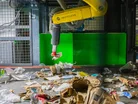
Recycleye’s system uses AI and a series of cameras to identify beverage cartons within mixed waste streams. Then, it uses pneumatic valves to separate them for recycling.
Right now, the system is achieving 98% purity in carton output, which hugely outperforms traditional sorting methods.
Unlike conventional sorting technologies, the AI system can be more easily trained to recognise different types of cartons and adapt to changing material streams.
“This project demonstrates the capability of AI to detect and recover items such as food and beverage cartons, offering MRFs a flexible technology to adapt to changing material streams,” says Victor Dewulf, Co-Founder and CEO of Recycleye.
The Carlisle facility processes materials from across North West England and parts of Scotland, serving Cumberland Council and Westmorland & Furness Council.
Part of wider UK investment programme
The Cumbria installation is the second of three planned upgrades under Tetra Pak’s 2025 UK investment programme, totalling US$1.7m.
In May, J&B Recycling in Hartlepool received funding for two new robotic sorting arms which were also produced by Recycleye.
A third facility upgrade is set to be confirmed later this year.
The investment forms part of Tetra Pak’s global commitment of more than US$41m annually to expand carton collection, sorting and recycling infrastructure worldwide.
Of this global budget, US$2.9m has been specifically allocated for UK sorting infrastructure.

Timing aligned with policy changes
The technology deployment comes ahead of the UK government’s Simpler Recycling policy, which comes into effect in March 2026.
The policy will require all English councils to collect cartons at kerbside, potentially creating substantial increases in carton waste volumes.
Businesses in England have faced similar requirements since March 2025, mandating separate recycling bins for specific materials.
“Even though our Council customers are not yet actively targeting Tetra Pak it is surprising how much we are already recovering with the system working seamlessly with the rest of our plant,” says Andy Chant, CEO of Cumbria Waste Group.
The Alliance for Beverage Cartons and the Environment (ACE UK) has supported the investment programme as UK councils begin to prepare for changes in regulation.
“As we move closer to the rollout of Simpler Recycling — which will require all councils in England to collect cartons at the kerbside — we’re proud to support another landmark investment in advanced sorting technology,” says Mandy Kelly, CEO of ACE UK.