How Meta’s Investing in the Longest Sea Cable in the World
Global internet infrastructure is evolving as technology firms take on a greater role in building the physical connections that power digital communication.
From traditional telco consortiums, now, technology giants are front-runners in laying down the foundations of digital communication networks.
As a result, submarine cables are becoming a key investment for technology companies seeking to control their digital supply chains and ensure capacity for data-intensive services – as these cables are ensuring sleek and efficient data transfer across continents.
Through expansion and new projects, technology firms are addressing increasing demands for bandwidth owing to the rise of video streaming, cloud computing and burgeoning AI technologies.
Now, Meta is investing in the world's longest underwater cable project.
How Project Waterworth is connecting the world
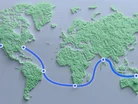
This cable is a 50,000-kilometre network that will connect five continents.
Dubbed Project Waterworth, the aim is to link varying regions including the US, India, South Africa and Brazil with what will be the longest undersea cable ever constructed.
"This project will enable greater economic co-operation, facilitate digital inclusion and open opportunities for technological development in these regions," Meta stated in a blog post announcing the venture.
Project Waterworth is part of Meta’s broader investments in expanding its technological footprint in AI and the infrastructure that supports it.
Meta's cable system’s use of high-capacity fibre tech
In the realm of global internet infrastructure, submarine cables are the unsung heroes. According to the industry insights from TeleGeography, these cables are crucial – carrying over 95% of the global internet traffic and presently, there are more than 600 known undersea cable systems facilitating international data exchange and communication.
Project Waterworth will feature a high-capacity system comprising 24 fibre pairs, significantly enhancing data capacity beyond older systems – which is essential for supporting data-intensive applications, ensuring faster and more reliable data transmission globally.
Previously, Meta has co-invested in the 45,000-km long 2Africa cable that connects continents and is one of the world's expansive submarine networks.
Its collaborations also extend to Orange, Vodafone and China Mobile.
Increased investment in global connectivity
Meta is not the only company in this expansive venture into connectivity infrastructure. Google, too, has disclosed plans, with a US$1bn investment for linking
Africa and Australia through an undersea cable – another dual cable setup is in the pipeline to enhance Japanese connectivity.
Experts from the industry and academia are acknowledging this shifting trend.
Professor Vili Lehdonvirta, from the Oxford Internet Institute, told the BBC: “Over the past decade there has been a shift in which these cables are increasingly laid by large technology companies.”
He also noted that the trend reflects the financial capabilities of major technology corporations to independently fund such infrastructure, a development that "may be significant to policy makers concerned with concentration in digital markets.”
Paolo Pescatore, Industry Analyst, also told the BBC: “Meta has shown a strong desire to own more of the connectivity slice.”
“This is a further demonstration as it seeks to leapfrog rivals in providing users with an unique experience by tightly integrating hardware, software, platform and its growing aspirations in connectivity.”
How Project Waterworth will avoid geopolitical hotspots
Heightened awareness of undersea cable vulnerability, underscored by recent disruptions, positions submarine communications infrastructure as a key geopolitical concern for businesses worldwide.
Taking action, NATO has increased Baltic Sea surveillance following cable damage last year, whilst a UK parliamentary committee is also gathering evidence on national resilience against potential interference – acknowledging the capabilities of Russia and China to jeopardise undersea infrastructure during heightened tensions.

In response to these concerns, Meta has announced that the Waterworth cable system will be installed at depths of up to 7,000 metres and "use enhanced burial techniques in high-risk fault areas, such as shallow waters near the coast, to avoid damage from ship anchors and other hazards.”
The cable’s route also strategically bypasses Europe and China, avoiding potential flashpoints such as the Suez Canal and South China Sea.
Vili suggests that the cable route appears to deviate from traditional paths by bypassing Europe and China while avoiding recognised geopolitical flashpoints such as the Suez Canal and South China Sea.
He added that establishing direct connections between the US and major emerging markets in the Southern hemisphere could be interpreted as “bolstering US economic and infrastructural power abroad.”
Explore the latest edition of Technology Magazine and be part of the conversation at our global conference series, Tech & AI LIVE.
Discover all our upcoming events and secure your tickets today.
Technology Magazine is a BizClik brand