Navigating Ethical AI: a Q&A with SAS's Data Ethics Leader
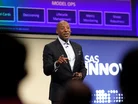
As AI continues its rapid integration into most sectors of society, organisations worldwide face the dual challenge of harnessing its potential while ensuring its ethical implementation to protect the people that use it.
This technological revolution brings unprecedented opportunities for innovation and efficiency, but also raises profound questions about responsibility, oversight and the future relationship between humans and intelligent systems.
In this Q&A, Reggie Townsend, Vice President of the Data Ethics Practice at SAS, offers insights into the complex intersection of AI advancement and ethical responsibility.
With AI systems increasingly making or influencing decisions that affect human lives – from healthcare diagnoses to financial approvals and government services – the need for thoughtful implementation is only becoming more critical.
Tell us about you and your role at SAS
On a basic level, my role is to elucidate AI so people can make smarter decisions about how they use it.
I lead the SAS Data Ethics Practice (DEP), which is tasked with ensuring our products, people and processes are always human-centred.
The DEP guides the company’s responsible innovation efforts by ensuring our principles of human-centricity, inclusivity, accountability, transparency, privacy and security and robustness are reflected in our products, people and processes globally.
My team and I work with and learn from customers, partners, academics, peers and policymakers to inform SAS practices and explore new ways to lift people up with data and AI.
Why is aligning AI progress with ethical responsibility critical across industries?
While ethical AI is important across industries, certain ones like healthcare, finance and government demand our utmost commitment because the decisions being made affect our livelihoods.
Technology has always been an enabler of our values, so we need to envision and imagine the AI-infused future we want to create.
Ethical alignment is important because it forces us to think about consequences – as there are risks with any major advances. Even basic agrarian tools can be used as weapons.
It’s up to us and our powerful imaginations to consider how much of our lives and work we want to offload to AI, or agentic AI and what that means for our quality of life.
Ethics suggest we reach social consensus around the anticipated future. To do that, we need more people engaged and literate in the conversation so we can imagine together.
What risks arise from deploying AI too quickly without robust safeguards?
We’ve been discussing AI risks for years now.
Risks to vulnerable populations; risks related to misinformation, scams, deepfakes; even more far-fetched doomsday risks.
- Promote AI literacy
- Implement human oversight
- Foster ethical decision-making
I feel like the risks are well documented. Now we need the courage to do something.
The new risk is not having the courage to do anything. AI is a mirror telling us who we are.
Let's not turn AI into the bogeyman but rather apply it in ways that benefit humans, particularly the most vulnerable.
How can organisations empower employees globally to shape AI’s ethical future, not just use it?
This comes down to AI literacy and not just in the context of one’s job.
We all need a basic grasp of AI, what it is and what it is not. We need to understand the realistic ways it can help us and the ways it could harm us.
Employees should always have at the front of their minds the question, “Just because we could do this, should we?”
That’s the first step in ethical decision making – and we need to realise that AI is not the answer for everything. Don’t make it a hammer in search of nails.
How will AI reshape roles and why is human oversight vital?
AI in its current form represents the next age of computing.
Look back at how computers changed our working lives, or how email changed things.
What does it mean to have AI at our fingertips and be able to get answers so quickly? It certainly increases productivity.
Human oversight of AI is vital to ensuring it’s doing what it’s meant to do and not creating unintended harm; the classic human-in-the-loop concept.
This is part of a strong AI governance strategy that supports ethical and responsible use of AI systems and mitigates risks like privacy, security, bias and model drift.
But when we talk about oversight in the context of reshaping work, we should consider how we use this newfound time.

Will the goal be to become optimal producers of work products, whatever form that takes? As humans, are we here so that we can produce for the economy, or are we trying to get our work done more efficiently so we can be more productive in our lives, holistically?
The answers to those questions will differ from organisation to organisation, and leader to leader.
What is the biggest challenge you face in your role?
My biggest challenge is a cultural one.
There is a tension between personal freedom and being a member of society. No one likes to be told “no” but AI’s risks demand that we establish guardrails.
Having productive conversations requires wading through that tension and embracing it.
But too often conversations today quickly become binary. We need to have a conversation about the tradeoffs of widespread AI use.
If we welcome the increased productivity, research and medical breakthroughs, new conveniences and other benefits, we also must reconcile the job displacements, energy consumption, nefarious uses and other risks.
Also, the societal and structural negatives of the past still linger in our data and systems.
As we rush towards a more automated society we risk embedding the problems of the past and present in the digital society of the future.
Getting people to ask “Who do we want to be?” is my greatest challenge.
Explore the latest edition of Technology Magazine and be part of the conversation at our global conference series, Tech & AI LIVE.
Discover all our upcoming events and secure your tickets today.
Technology Magazine is a BizClik brand