Nvidia & AWS’s AI Breakthroughs at Re:Invent 2024
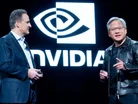
Expanding what developers and enterprises can do across the world to stay ahead in the AI market, the AWS re:Invent in Las Vegas has showcased new solutions across the global tech board.
This event has produced major announcements in the sector, from AWS launching its own AI family, Nova, to Nvidia and AWS converging to accelerate AI and robotics breakthroughs as well as simplify research in quantum computing development.
Nvidia has announced the launch of its Neural Interface Models (NIM) on AWS, marking a significant advancement in AI inference capabilities within cloud computing environments.
This strategic deployment arrives at a crucial moment in the AI industry's evolution, where the demand for efficient, scalable AI inference solutions has reached unprecedented levels amid the global surge in AI application development and deployment.
The integration of Nvidia NIM with AWS's extensive cloud infrastructure creates a powerful combination that promises to address one of the most pressing challenges in contemporary AI deployment: the ability to run complex AI models efficiently at scale without sacrificing performance or incurring prohibitive costs.
By bringing together Nvidia's expertise in AI accelerated computing with AWS's global cloud infrastructure, this initiative promises to reshape how businesses approach AI inference, potentially opening new possibilities for applications ranging from natural language processing to computer vision and beyond.
Nvidia DGX Cloud: democratising AI at scale
The introduction of Nvidia DGX Cloud on AWS Marketplace Private Offers is a fully managed platform that addresses the complex challenges of AI model training and customisation, offering a solution that combines high performance with ease of use.
- DGX Cloud provides direct access to Nvidia experts, enabling businesses to scale their AI capabilities quickly
- AWS has introduced liquid-cooled data centres
- Nvidia Isaac Sim allows developers to simulate and test AI-driven robots in virtual environments
- Nvidia BioNeMo NIM microservices accelerate drug discovery processes for biotech companies
- A-Alpha Bio achieved a 12-fold increase in inference speed using the BioNeMo framework on AWS
- Nvidia's latest AI Blueprints for video analysis and cybersecurity are available for instant deployment on AWS
- CUDA-Q allows developers to build hybrid quantum-classical applications using GPU-accelerated workflows
Furthermore, DGX Cloud's flexibility extends beyond mere computational power.
It provides businesses with direct access to Nvidia's AI experts, ensuring that companies can navigate the intricacies of AI implementation with professional guidance.
This level of support is particularly valuable for organisations that may lack in-house AI expertise but are eager to leverage AI technologies.
The platform's adoption by Leonardo.ai, a design tool company within the Canva ecosystem, illustrates its practical applications in creative industries.
Leonardo.ai's use of DGX Cloud for developing advanced design tools demonstrates how AI can enhance creative processes and potentially revolutionise the design industry.
Advancing physical AI: bridging virtual and real-world robotics
Nvidia's expansion of Isaac Sim to AWS represents a significant step forward in robotics development.
By leveraging high-performance Amazon EC2 G6e instances with Nvidia L40S GPUs, Isaac Sim provides a powerful environment for simulating and testing AI-driven robots.
The platform's synthetic data generation capabilities are particularly noteworthy.
This feature allows developers to create vast amounts of diverse, realistic data to train AI models, addressing one of the key challenges in robotics development – the need for extensive, varied training data.
The adoption of Isaac Sim by companies like Aescape, Cohesive Robotics and Swiss Mile for robot performance validation underscores its practical value.

By enabling thorough testing in virtual environments, Isaac Sim helps reduce the risks and costs associated with physical prototyping, potentially accelerating the development and deployment of robotic solutions across various industries.
Quantum computing and AI: accelerating drug discovery
The integration of Nvidia's BioNeMo AI Blueprints into AWS HealthOmics is an advancement in the application of AI to healthcare and pharmaceutical research.
This collaboration brings together Nvidia's expertise in AI with AWS's robust cloud infrastructure, creating a powerful platform for drug discovery.
The case of A-Alpha Bio's AlphaBind model exemplifies the potential of this integration.
The 12-fold increase in inference speed achieved using BioNeMo on AWS infrastructure demonstrates how these technologies can dramatically accelerate research processes in biotechnology.
SoftServe's launch of a Gen AI solution for drug discovery, built with Nvidia Blueprints and available on AWS Marketplace, further illustrates the growing ecosystem of AI-powered tools in this field.
Discussing Nvidia and AWS’s partnership last year, Nvidia’s CEO, Jensen Huang, noted: “Gen AI is transforming cloud workloads and putting accelerated computing at the foundation of diverse content generation.”
These developments have the potential to significantly reduce the time and cost associated with drug development, potentially leading to faster discoveries of new treatments and therapies.
Nvidia CUDA-Q on Amazon Braket: advancing quantum computing
Nvidia CUDA-Q is now integrated with Amazon Braket to streamline quantum computing development.
This integration allows CUDA-Q users to access Amazon Braket's quantum processors, while Braket users can leverage CUDA-Q's GPU-accelerated workflows for development and simulation.
The CUDA-Q platform enables developers to build hybrid quantum-classical applications and run them on various types of quantum processors, both simulated and physical.
Now preinstalled on Amazon Braket, CUDA-Q provides a seamless development platform for hybrid quantum-classical applications, unlocking new potential in quantum research.
At re:Invent, Head of Product, Amazon Braket at AWS, Stafan Natu, highlighted the key to progressing the data centre industry: “What we really need to advance this industry and move it forward is this ecosystem of AWS, hardware providers, software vendors and ultimately application builders who have potential applications that they want to explore and experiment with quantum computing.
“That’s what’s going to move the needle in the industry.”
He went on to say that the point he wanted everyone to take away from his talk was that: “All quantum computing is hybrid. We do not subscribe to this theory that quantum computing will displace classical computers, we don’t think that will happen.
"We think quantum computers are going to operate in tandem with classical computers.”
AWS liquid-cooled data centers with Nvidia Blackwell
AWS has additionally developed innovative cooling solutions for its data centers to support the next generation of AI computing.

The new cooling system seamlessly integrates air- and liquid-cooling capabilities, designed to handle the most powerful rack-scale AI supercomputing systems like Nvidia GB200 NVL72.
This flexible, multimodal cooling design provides maximum performance and efficiency for running AI models.
It will be used for the next-generation Nvidia Blackwell platform, which will form the foundation of Amazon EC2 P6 instances, DGX Cloud on AWS and Project Ceiba.
Real-time AI blueprints for video and cybersecurity
Nvidia has also made its latest AI Blueprints available for instant deployment on AWS.
These blueprints enable real-time applications such as vulnerability analysis for container security, and video search and summarisation agents.
Developers can easily integrate these blueprints into existing workflows to speed up deployments.
For instance, the Nvidia AI Blueprint for video search and summarisation allows developers to build visual AI agents that can analyze real-time or archived videos to answer user questions, generate summaries, and enable alerts for specific scenarios.
AWS has collaborated with Nvidia to provide a reference architecture applying the Nvidia AI Blueprint for vulnerability analysis.
This integration aims to augment early security patching in continuous integration pipelines on AWS cloud-native services.
Enterprise AI advancements with Nvidia on AWS
Leading software platforms and global system integrators are now leveraging Nvidia AI on AWS to drive innovation across industries:
Cloudera
Clouderais is using Nvidia AI on AWS to enhance its new AI inference solution, helping Mercy Corps improve the precision and effectiveness of its aid distribution technology.
Cohesity
Cohesity has integrated Nvidia NeMo Retriever microservices in its Gen AI-powered conversational search assistant, Cohesity Gaia, to improve the recall performance of retrieval-augmented generation.
DataStax
Meanwhile, DataStax announced that Wikimedia Deutschland is applying the DataStax AI Platform, built with Nvidia NeMo Retriever and NIM microservices, to make Wikidata available to developers as an embedded vectorized database.
Adding to last year's discussion on Nvidia and AWS’s partnership, Jensen summarises: “Driven by a common mission to deliver cost-effective state-of-the-art Gen AI to every customer, Nvidia and AWS are collaborating across the entire computing stack, spanning AI infrastructure, acceleration libraries, foundation models, to Gen AI services.”
Explore the latest edition of Technology Magazine and be part of the conversation at our global conference series, Tech & AI LIVE.
Discover all our upcoming events and secure your tickets today.
Technology Magazine is a BizClik brand