
Apple & Broadcom: US$30bn Deal for Billions of US Chips
iPhone manufacturer Apple has agreed to buy US$30bn worth of chips in a new agreement with Broadcom aimed at producing billions more chips in the US.
In a US Securities and Exchange Commission (SEC) filing, Broadcom says it has entered into new multi-year long-term agreements for developing and supplying a range of custom application-specific integrated circuit (ASIC) silicon products.
Apple says the agreement, which is expected to exceed US$30bn, will lead to the production of more than 15 billion chips.
In 2023, the companies entered a deal for Broadcom to develop and manufacture 5G radio frequency components including film bulk acoustic resonator (FBAR) filters.
Apple said these components were to be designed and built in "several key American manufacturing and technology hubs", including Fort Collins, Colorado.
The company designs its own application processors and has worked on bringing modems in-house, but it still relies on Broadcom for custom radio frequency chips that connect devices to cellular networks.
Broadcom's expanded role in Apple's ecosystem
The multiyear commitment covers the design and production of custom silicon components and wireless connectivity technologies.
Apple says it will enable Broadcom to expand and modernise its manufacturing facilities in Fort Collins, Colorado with a US$1.5bn investment.
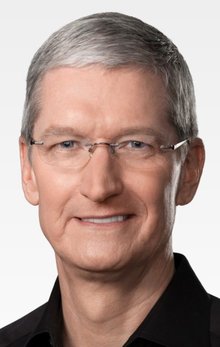
Tim Cook, Apple's CEO, said: "Apple and Broadcom have a long history together, and this new phase of our partnership further accelerates our commitment to American manufacturing and innovation.
"The cutting-edge components built in Fort Collins are essential to delivering the incredible performance and connectivity our customers expect, and we're proud to deepen our investments in US based suppliers that share our commitment to excellence and innovation. We're grateful to the president and his administration for supporting important projects like this one."
The partnership represents a significant expansion of Broadcom's role in Apple's supply chain.
Beyond the immediate production commitments, the deal strengthens Broadcom's position as a critical supplier of wireless connectivity components that are fundamental to Apple's product ecosystem.
This strategic relationship allows Apple to secure long-term access to specialised components while supporting Broadcom's capacity expansion in the US.
Political pressure on domestic production
In 2025, US President Donald Trump wrote in a post on Truth Social: "I have long ago informed Tim Cook of Apple that I expect their iPhone's that will be sold in the United States of America will be manufactured and built in the United States, not India, or anyplace else. If that is not the case, a Tariff of at least 25% must be paid by Apple to the US. Thank you for your attention to this matter!"
In 2025, Apple announced its American Manufacturing Program (AMP), an investment of US$600bn in US manufacturing.
As part of this, the company plans to hire 20,000 people in the US, with the majority focused on research and development (R&D), silicon engineering, software development, artificial intelligence (AI) and machine learning.
Silicon supply chain
In Apple's second quarter financial year (FY) 2026 earnings call, CEO Tim Cook discussed how the company is "advancing American supply chain innovation", including work on advancing an end-to-end silicon supply chain across the US. "At TSMC's Arizona facility, for example, Apple is on track to purchase well over 100 million advanced chips," he said.
In Peoria, Arizona, near the new TSMC plant, Apple is also investing in a new advanced chip packaging and testing facility run by Amkor. The AMP is supporting tool installations at Texas Instruments' facility in Lehi, Utah and a new facility in Sherman, Texas.
Apple has been facing supply issues for a number of its products, Cook said, including iPhones and Mac products like the Mac Studio and Mac mini. He attributed this to "higher than expected demand", in part due to customers recognising the potential of these devices for "AI and agentic tools".

Strategic capacity planning and risk mitigation
While Broadcom operates its own fabs for specialised technologies like radio frequency (RF) filters, the majority of its high-volume, digital and logic silicon is made by partners like TSMC and GlobalFoundries. By committing early and long-term, Apple is securing its supply of Broadcom components.
Broadcom wireless products were first used in the iPhone 3GS in 2009, with a chip that combined Wi-Fi and Bluetooth features into a single piece of silicon. Many of the components Apple has previously bought from the company are US-made, insulating them from geopolitical risks, tariffs and shipping bottlenecks.
Outside of Broadcom, most of Apple's in-house-designed silicon is made by TSMC. The volume of chips Apple purchases makes it a significant customer, likely giving it priority access to the company's advanced manufacturing.
According to PwC, global semiconductor chip demand will grow at a compound annual growth rate (CAGR) of 8.6% to 14.8% through 2030.
In March 2025, Taiwan's Economic Daily reported that TSMC is fully booked until 2028. While Apple already has a strong relationship with TSMC and has previously sourced more specific silicon from Broadcom, this new commitment could provide the opportunity for it to proxy-book further TSMC capacity and further insulate itself from industry-wide chip supply issues.
Company portals



Executives
Tim Cook
Executive Chairman