The Story Behind TMSC's Profit Uptick
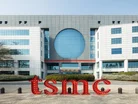
The Taiwan Semiconductor Manufacturing Company (TSMC), the world's largest contract chipmaker, is expected to report a staggering 58% increase in fourth-quarter profit for 2024 thanks to a boom in demand for AI applications.
Across 2024, TSMC earned around 2.9 trillion New Taiwan Dollars in profit, equivalent to approximately US$88bn. In short, this makes 2024 TSMC's most profitable year in its history.
Yet, despite posting these impressive numbers, TSMC may have some serious sustainability and geopolitical challenges to overcome in the not-so-distant future.

Record-breaking profits and the AI boom
TSMC is a key supplier to tech giants like Apple and Nvidia, supplying them companies with crucial components for their products.
As part of such a strong and wealthy supply chain in a sector with high demand, TSMC is reaping the rewards.
In the final quarter of 2024, the company's net profit came to US$11.41bn, up from US$7.21bn in the same period the previous year.
Analysts and experts attribute this stratospheric rise to the burgeoning of AI technologies, most of which require advanced chips like those which TSMC manufactures.
“2025 will be another year where TSMC's growth is largely driven by AI customers,” says Brett Simpson, Co-Founder of Arete Research.
From language models to autonomous vehicles, AI applications are fuelling demand for high-performance semiconductors, which places TSMC at the heart of this movement.
It's not all roses and pats on the back, though. Despite its record profits, the company is beginning to face a great deal of scrutiny over its environmental footprint.
Semiconductor manufacturing is energy intensive and, as the industry expands, its environmental impacts are becoming harder and harder to ignore.
Expanding overseas
To meet growing demand, TSMC is investing heavily in new production facilities, including a US$65bn cluster of factories in Arizona.
The Taiwanese company has positioned the project as a significant contribution to US manufacturing capacity, but questions about its sustainability linger.
Edward Chen, Chairman of Fubon Financial's Securities Investment Unit, highlighted the importance of operational efficiency at the Arizona facilities.
He believes that progress on the Arizona fab and its yield rates will be crucial for the company, alluding to the challenge of maintaining high output with minimal waste.
TSMC has acknowledged that the majority of its production will remain in Taiwan, a decision likely tied to cost efficiency and access to a skilled and specialised workforce.
However, the reliance on domestic operations raises concerns about resilience amid growing geopolitical tensions and Taiwan's vulnerability to climate change.
- A fab is a facility where semiconductor products are made. The term 'fab' is short for 'fabrication'.
- TSMC's fabrication facilities are called 'GIGAFAB' facilities.
Geopolitical risks and environmental accountability
The company's growth is also intertwined with its navigation of complex geopolitical currents.
The incoming administration of US President-elect Donald Trump has signalled a potential shift in trade policies, including the imposition of broad import tariffs.
Such measures could impact TSMC's operations and its global supply chain.
Brett expresses some cautious optimism, for TSMC's future relations with the US, though.
"TSMC can build a good relationship with the new administration particularly given its new fab cluster in Arizona is the biggest foreign direct investment project in the US at present," he explains.
However, Edward believes that "the impact of tariffs to be imposed by the incoming Trump administration on demand remains to be seen."
Then, there is the question of sustainability. As a business expands, they naturally become the subject of heightened scrutiny.
Semiconductor production is notoriously resource-intensive, consuming vast amounts of water and energy while generating significant waste.
The company has made efforts to improve its environmental impact, but it faces increasing pressure to align its practices with global sustainability goals.
Capital expenditure and future challenges
During its last earnings call, TSMC projected 2024 capital expenditure to exceed US$30bn, reflecting its aggressive push to expand production capacity.
It also hinted that 2025's spending would likely surpass even these figures, signalling the scale of its ambitions.
Yet, as the company allocates billions to fuel its expansion, investors and environmental advocates alike are watching closely for signs of accountability.
How TSMC balances its financial growth with its environmental obligations will serve as a bellwether for the broader semiconductor industry.
Amid these challenges, TSMC remains resolute in its vision and its team are confident in the company's ability to balance growth and sustainability.
"TSMC strives to integrate technology with sustainable development, joining hands with stakeholders to advance together towards prosperity and growth," says Lora Ho, TSMC's Senior Vice President and ESG Committee Chairperson.
Explore the latest edition of Technology Magazine and be part of the conversation at our global conference series, Tech & AI LIVE .
Discover all our upcoming events and secure your tickets today.
Technology Magazine is a BizClik brand