
Trump Scraps AI Risk Rules: What You Need to Know
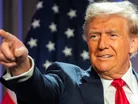
US President Donald Trump has revoked a 2023 executive order that mandated safety disclosures from AI companies to the federal government, marking a significant shift in the US government's approach to AI oversight.
This move comes on Trump's first full day in office following his inauguration on January 20, 2025, where he signed an executive order titled 'Initial Rescissions of Harmful Executive Orders and Actions.’
The executive order, signed by former President Joe Biden in 2023, represented the most comprehensive federal oversight of AI development in the US to date.
It required companies developing AI systems that could affect national security, the economy, public health or safety to submit safety testing data to federal authorities before public release.
These requirements, implemented under the Defense Production Act, marked a departure from the traditionally light-touch US approach to technology regulation.
The order also directed federal agencies to establish safety standards and address risks related to cybersecurity, chemical, biological, radiological and nuclear threats.
Now, President Trump's decision to rescind the order aligns with the 2024 Republican Party platform, which pledged to repeal it, arguing that it hindered AI innovation.
Impact on AI regulation and development
The revocation immediately halts the implementation of key safety and transparency requirements for AI developers.
It also casts uncertainty over the future of the US AI Safety Institute, which was established under the Commerce Department to create voluntary guidelines and best practices for AI technology use.
This policy shift is happening when Gen AI capabilities are rapidly advancing and the global race for AI supremacy is intensifying and the timing is particularly significant as other nations are working to establish their own regulations for this transformative technology.
Global context and contrasting approaches
The US move contrasts sharply with the EU's approach.
In 2024, the EU enacted the AI Act, arguably the most comprehensive framework for AI governance to date.
This legislation prohibits certain AI applications, such as facial recognition technology and imposes stringent oversight on 'high-risk' AI applications in critical sectors like healthcare and law enforcement.
Furthermore, while federal regulation is being rolled back, state-level AI regulations remain in effect.
California, home to numerous leading AI companies, has enacted laws on AI transparency and deepfakes.
Meanwhile, Colorado and Illinois have established protections against algorithmic discrimination in hiring.
Industry reaction and concerns
The tech industry's response to this regulatory shift has been mixed.
While some view it as removing barriers to innovation, others express concern about the potential risks of unregulated AI development.
Last week, the US Commerce Department imposed new restrictions on AI chip and technology exports, facing criticism from industry leaders, including Nvidia.
Ned Finkle, Vice President of government affairs at Nvidia said in a blogpost: “Built on American technology, the adoption of AI around the world fuels growth and opportunity for industries at home and abroad.
Speaking at the time, Ned said: “The Biden Administration now seeks to restrict access to mainstream computing applications with its unprecedented and misguided “AI Diffusion” rule, which threatens to derail innovation and economic growth worldwide.”
This move, coupled with the revocation of the AI safety order, highlights the complex balancing act between fostering innovation and ensuring responsible AI development.
Future of US AI policy
While Trump did not specify what would replace the rescinded order, it is anticipated that his administration will adopt a less interventionist policy.
“Built on American technology, the adoption of AI around the world fuels growth and opportunity for industries at home and abroad. That global progress is now in jeopardy.”
Trump has also appointed David Sacks, a venture capitalist and vocal opponent of tech regulation, as his point person for cryptocurrency and AI matters.
The Trump administration may retain certain aspects of Biden's approach, particularly efforts to enhance US competitiveness in AI against China.
Trump has now positioned the global competition for AI supremacy as a matter of national security and has pledged to increase domestic energy production to accommodate the demands of AI.
“Today, companies, startups and universities around the world are tapping mainstream AI to advance healthcare, agriculture, manufacturing, education and countless other fields, driving economic growth and unlocking the potential of nations.
“Built on American technology, the adoption of AI around the world fuels growth and opportunity for industries at home and abroad. That global progress is now in jeopardy”, Ned says.
Explore the latest edition of Technology Magazine and be part of the conversation at our global conference series, Tech & AI LIVE.
Discover all our upcoming events and secure your tickets today.
Technology Magazine is a BizClik brand
