
How Davos 2025 Tackles AI Revolution Amid Climate Concerns
The convergence of AI advancement and climate challenges has created unprecedented pressures on global businesses.
As companies navigate the transition to AI-driven operations, they face increasing demands to reduce environmental impact while maintaining competitiveness in an uncertain economic climate.
These tensions emerge as nations implement divergent approaches to AI regulation, with the EU's AI Act setting stringent controls while other regions pursue lighter oversight.
Meanwhile, corporate investment in AI infrastructure has driven a surge in energy consumption from data centres, highlighting the complex relationship between technological progress and environmental goals.
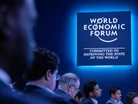
The intersection of these challenges brings added significance to the WEF's 2025 Annual Meeting in Davos, structured around the theme "Collaboration for the Intelligent Age."
The gathering arrives as businesses seek frameworks to balance innovation with sustainability and as developing economies work to avoid exclusion from technological advancement.
Microsoft and Google executives lead AI discussions
The conference includes more than 30 sessions focused on AI and industrial transformation, with Brad Smith, Vice Chair and President at Microsoft Corporation, the enterprise software company and Ruth Porat, President and Chief Investment Officer at Alphabet and Google, the technology conglomerate, among key speakers.
Katie McGinty, Vice President and Chief Sustainability and External Relations Officer at Johnson Controls, the building efficiency company, says: "Addressing energy demands resulting from the AI revolution and exponential growth in data centres will also be key.
"Through innovative cooling technologies, we can cut energy use by nearly 80% and zero out on-site water consumption for keeping chips cool in data centres."
Additionally, technology sector leaders Marc Benioff, CEO at Salesforce, the cloud computing provider and Dara Khosrowshahi, CEO at Uber, the mobility technology company, will participate in discussions on industrial transformation.
Climate action shapes corporate strategy discussions
The programme features 26 sessions on environmental protection, with speakers including Ursula von der Leyen, President of the European Commission and Al Gore, Former US Vice President.
Ngozi Okonjo-Iweala, US Special Presidential Envoy for Climate and Damilola Ogunbiyi, CEO of Sustainable Energy for All, will address carbon pricing and nature markets.
Ester Baiget, President and CEO at Novonesis and Co-Chair of the WEF Alliance of CEO Climate Leaders, says: "Climate transformation isn't about avoiding risks. It's about building resilience and unlocking growth. It's about turning challenges into competitive advantages and innovation opportunities."
Economic resilience takes centre stage
The forum dedicates 47 sessions to economic growth and resilience, with speakers including Christina Lagarde, President of the European Central Bank, and Dani Rodrik, Harvard Professor of Economics.
The programme examines sources of economic growth, from major cultural events to financial market stability.

Patrice Louvet, CEO at Ralph Lauren, the luxury fashion company, joins Brian Moynihan, CEO at Bank of America, the financial services corporation, to discuss economic transformation.
Global leaders address technology access
The conference emphasises the need to ensure technological advances benefit developing economies.
Alvaro Lario, President of the UN's International Fund for Agricultural Development, says: "We must harness the intelligent age to ensure emergent technologies are accessible to all, especially the world's poorest.
"Letting them fall even further behind risks global development and increases the risk of hunger and conflict everywhere."
Trust building initiatives emerge
The forum includes 25 sessions on rebuilding trust, featuring Tony Blair, Former UK Prime Minister and Rafael Mariano Grossi, Director General of the International Atomic Energy Agency. Discussions will cover AI governance and global conflicts.
Barbara Frei, Executive Vice President and CEO for Industrial Automation at Schneider Electric, the energy management company, joins 180 speakers addressing workforce development alongside World Health Organisation Director General Tedros Adhanom Ghebreyesus.
The programme includes sessions on industrial decarbonisation strategies and electric vehicle supply chains.
Katie says: "The challenge - and opportunity - will be to highlight the essential connection of climate action to progress against the array of top-of-mind concerns.
“For CEOs worried about business growth, we can show that leaning into decarbonisation offers a competitive edge, as seen in Johnson Controls' own success in reducing both carbon and operating costs."
Explore the latest edition of Technology Magazine and be part of the conversation at our global conference series, Tech & AI LIVE.
Discover all our upcoming events and secure your tickets today.
Technology Magazine is a BizClik brand