
What Trump 2.0 Means for the US Technology Industry So Far
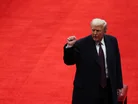
Donald Trump’s return to the White House in 2025 has already set the stage for a seismic shift in the US technology landscape. Within the first month of his second term, Trump has aggressively dismantled Biden-era tech policies and introduced sweeping executive orders that are reshaping AI governance, digital regulation and energy policy.
His presidency is also being marked by an unexpected alignment with Big Tech, with major firms like Apple, OpenAI, Meta, SoftBank and Amazon actively supporting his administration. With billions of dollars now pouring into AI infrastructure, data centres and cloud computing, the US is doubling down on domestic technological dominance.
AI regulation: Deregulation over risk management
One of Trump's most immediate and controversial moves was revoking Biden's 2023 executive order on AI risk. Biden's order required developers of high-risk AI systems (such as powerful language models and autonomous decision-making tools) to share their safety test results with the federal government before public release.
Trump's decision to eliminate this rule signals a pro-business, deregulated approach to AI development. Without federal oversight, AI firms – including OpenAI, Google Cloud and Microsoft – are free to release models without disclosing potential risks, which could accelerate innovation but also increase concerns about misinformation, bias and safety vulnerabilities.
“The United States has long been at the forefront of AI innovation, driven by the strength of our free markets, world-class research institutions and entrepreneurial spirit,” Trump says in the executive order. “To maintain this leadership, we must develop AI systems that are free from ideological bias or engineered social agendas. With the right Government policies, we can solidify our position as the global leader in AI and secure a brighter future for all Americans.”
The move has, however, sparked criticism from AI ethicists, who warn that without safeguards, AI tools could be deployed without adequate testing for societal impact. However, it has also been welcomed by venture capitalists and Silicon Valley executives, who argue that regulation stifles innovation and that the free market should decide AI's trajectory.
The social media war: Censorship ban and fact-checking rollback
Trump has long accused Big Tech of suppressing conservative voices, and his January 2025 executive order to “immediately stop all government censorship” of social media is his boldest step yet in deregulating online platforms.
The executive order prevents government officials from pressuring tech companies to moderate content, even regarding election security, public health crises or national disasters. It creates legal uncertainty around government agencies’ ability to communicate with platforms about disinformation threats and strengthens Trump’s stance against Section 230 reforms, ensuring platforms retain their legal immunity for user-generated content.
Meta, under Mark Zuckerberg, has already moved to eliminate third-party fact-checkers from Facebook and Instagram, leaving content moderation largely to Community Notes, a user-driven system similar to X’s (formerly Twitter) approach.
Vaidotas Šedys, Chief Risk Officer at Oxylabs, warns that this shift could turn Facebook, Instagram and Threads into “disinformation battlegrounds”, particularly as AI-generated fake news and deepfakes proliferate.
Meanwhile, X owner Elon Musk, a close ally of Trump, has been appointed co-leader of the Department of Government Efficiency (DOGE) advisory board, which is tasked with reducing regulations and promoting free speech online.
TikTok ban: A temporary reprieve
One of the biggest uncertainties in tech policy has been the fate of TikTok in the US. The Biden administration had passed legislation requiring its divestiture or ban, set to take effect in early 2025.
However, Trump signed an executive order to pause the enforcement of the TikTok ban for more than two months, instructing the Attorney General not to act on the law while his administration evaluates “the appropriate course.”
While an executive order cannot override an act of Congress, Trump’s move signals a potential negotiation between TikTok's Chinese parent company, ByteDance, and US officials. Some analysts speculate that Trump might push for an American-led buyout of TikTok, similar to his previous attempt in 2020.
AI data centres and the energy emergency
The AI boom requires enormous computational power, and with that comes skyrocketing electricity demand. Trump’s executive order declaring a “national energy emergency” could pave the way for the expansion of power infrastructure, particularly to support AI data centres and cloud computing hubs.
“In an effort to harm the American people, hostile state and non-state foreign actors have targeted our domestic energy infrastructure,” the order reads, “weaponised our reliance on foreign energy, and abused their ability to cause dramatic swings within international commodity markets. An affordable and reliable domestic supply of energy is a fundamental requirement for the national and economic security of any nation.”
The executive order opens the door for accelerated approvals of new power plants, particularly fossil fuel and nuclear facilities. It could prevent the closure of older power stations, ensuring AI infrastructure has uninterrupted access to power, and aligns with Trump's broader pro-fossil fuel agenda, in contrast to Biden’s clean energy initiatives.
This move is expected to benefit AI and cloud companies like Google, Amazon Web Services (AWS) and Microsoft Azure, which are investing billions into expanding domestic data centres.
“The policies of the previous administration have driven our Nation into a national emergency, where a precariously inadequate and intermittent energy supply, and an increasingly unreliable grid, require swift and decisive action,” the order adds. “Without immediate remedy, this situation will dramatically deteriorate in the near future due to a high demand for energy and natural resources to power the next generation of technology.”
However, environmental groups have criticised the decision, arguing that it prioritises fossil fuels over sustainable energy solutions. Some fear that weakening environmental regulations could accelerate climate risks while prioritising corporate profits over long-term sustainability.
The US-China tech war: Trade restrictions continue
Despite the temporary pause on the TikTok ban, Trump's administration is maintaining a hardline stance on China, particularly in semiconductors, AI and telecoms.
The administration continues to enforce export controls on advanced AI chips, limiting China's access to cutting-edge semiconductor technology. US firms reliant on Chinese manufacturing may need to further diversify their supply chains, increasing production costs. Additionally, tensions over Taiwan and its semiconductor industry, particularly TSMC, remain central to US-China relations.
The ongoing US-China technology war will continue to shape global IT supply chains, particularly in semiconductors, AI and 5G infrastructure.
A high-stakes, high-rewards era for tech
Trump’s second presidency has already reshaped the technology industry in just a few weeks. His aggressive deregulation agenda, combined with closer ties to Big Tech, has resulted in AI innovation accelerating due to deregulated risk oversight, social media companies gaining greater freedom while raising misinformation concerns, AI data centre expansion accelerating under the national energy emergency order, EV production slowing as focus shifts back to fossil fuels, and ongoing US-China tech conflicts affecting supply chains.
In any case, industry leaders will be watching closely to see how these policies unfold – and how they will shape the future of AI, cybersecurity and digital governance under Trump 2.0.
To read the full article in the magazine, click HERE.
Explore the latest edition of Technology Magazine and be part of the conversation at our global conference series, Tech & AI LIVE.
Discover all our upcoming events and secure your tickets today.
Technology Magazine is a BizClik brand