Arizona State University’s Sustainable City Solutions
Despite their individuality and uniqueness, cities also naturally share challenges and aspirations. Urban areas, while often not developed with sustainability in mind, present ample opportunities for sustainable development and innovation.
Smart and sustainable urban development is at the heart of Arizona State University’s (ASU) Zimin Institute for Smart and Sustainable Cities.
Zimin Institute’s sustainability leadership
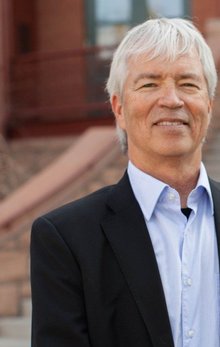
Gregory Raupp, Foundation Professor and Director of the Zimin Institute, has an academic and leadership journey at ASU that spans over four decades, during which time he has witnessed and contributed to transformational changes across technology and urban development disciplines.
He originally trained in classical chemical engineering and entered ASU focusing on synthetic fuels in the 1980s – an era when this was a hot topic globally.
However, ASU's location in Phoenix, a region lacking traditional chemical industries but rich in high-tech and defense sectors, shifted his focus to microelectronics and emerging materials.
This path led Gregory to conceive and establish the Flexible Display Center (FDC) at ASU, a US$100m industry-academia-government collaboration supported by the Army Research Labs. While flexible displays were the FDC’s flagship technology, Gregory was particularly intrigued by the potential of flexible sensor arrays for applications in wearable health and human performance technologies and for ubiquitous sensors embedded throughout urban environments.
The traditional concept of smart cities envisioned urban areas as “self-aware” systems monitored by centralised technologies making intelligent decisions. “The original thinking was a city that had everything sensed and some central intelligence making decisions and taking actions to make it a better place to live,” Gregory says.
However, the Zimin Institute's approach evolved towards being more citizen-centric, focusing on the lived experience of residents where technology enhances daily life without being intrusive. “We want to create solutions that are seamless, where the inhabitants don’t really know the technology is there – it just makes life safer, healthier and more sustainable,” Gregory explains.
“We want to get lab technologies out into the real world, making cities better places to live and work.”
Zimin Institute’s origin and vision
The founding of the Zimin Institute at ASU was funded by the philanthropic Zimin Foundation, established by the late Dr. Dmitry Borisovich Zimin, a radio scientist, entrepreneur and telecom businessman, and his son Boris Zimin. With the aim of advancing science and education for the benefit of humanity, the foundation’s flagship initiative includes several institutes worldwide, with ASU hosting the first and only US-based institute.
“They were looking to support scientific solutions with real-life impact,” Gregory says. “Science is the foundation, but impact comes from innovating those ideas out into the real world.”
ASU was chosen for its philosophical alignment with these goals, its status as the most innovative university in the US for 11 years running and its comprehensive engineering programmes embedded in a dynamic community. Metro Phoenix’s rapid urban growth and commitment to smart and sustainable city initiatives make it an ideal ‘living lab’ or ‘testbed’ for the institute’s projects.
The Phoenix metropolitan area comprises more than 20 cities and towns, including major cities like Phoenix, Mesa, Tempe, Scottsdale, Gilbert and Chandler. With a vision to build the nation’s most connected, collaborative and innovative smart region, the municipalities have formed “The Connective”: an alliance committed to sharing resources and best practices for sustainable urban development. “Instead of having dozens of different unconnected initiatives, it becomes a coordinated, powerful effort,” Gregory says. This community collaboration enables the Zimin Institute to run effective field tests and pilot projects in a given partner city while facilitating sharing and a broader impact.
Citizen-centric smart city projects
Engaging citizens is central to the institute's work. Projects seek resident input early and throughout development to shape technology that meets real needs. One standout citizen-centric example is the Bicycle Oasis project in partnership with Culdesac Tempe – the first vehicle-free neighbourhood of its kind designed to embrace a culture of community belonging, transportation freedom and thriving embedded small businesses.
Phoenix’s sprawling metro area depends heavily on cars, however, the vehicle-free Culdesac mixed-use development has residents relying mainly on biking and light rail transit. “Project Director ASU Associate Professor Deborah Salon and her team interviewed bicyclists, recorded their experiences and created interactive and immersive presentations to show what life was really like for them,” Gregory says.
In the culmination of the project, Dr. Salon hosted Bicycling in Tempe, AZ – An interactive & Multimedia Experience at the Walton Center for Planetary Health. To extend the project’s impact and reach, the interactive stations and information presented to the live participants have been memorialised in a website.
button: https://sites.google.com/asu.edu/bicyclingintempe/home
This engagement revealed how many cyclists remain unseen in city planning decisions. City officials were surprised by both the volume of bike traffic and the nuanced feedback, leading to new initiatives to improve infrastructure and safety. The project also spawned a startup, Street Counts, which uses AI and inexpensive camera technology to count cyclists – a tool the founders hope will be adopted by other bicycle-friendly cities.
How Homer Farms is solving urban food waste with circular innovation
One of the Zimin Institute’s flagship startup collaborations is with Homer Farms, which focuses on indoor vertical farming and circular economy principles. The Institute’s partnership with Homer Farms began with a challenge familiar to many cities – the overwhelming amount of food waste generated by urban populations.
“A lot of our waste here, and a lot of almost any city’s waste, is actually food,” Gregory explains. “So they said ‘let's take food waste, convert it to fertilizer and put it back into the system’.”
A Zimin Institute project was built around converting post-consumer food waste into a viable, cost-effective liquid fertilizer – a task complicated by food waste’s typically low nitrogen content. The project was led by ASU Assistant Professor Yujin Park and conducted at her Indoor Farming Lab at ASU’s Polytechnic campus. “Most food waste isn’t by itself a viable fertilizer, so her project focused on a novel processing method to inexpensively convert the food waste into a usable liquid fertilizer that would be viable and effective,” Gregory says.
The result was a breakthrough – Yujin and her team successfully developed and demonstrated this technology in her lab and then transitioned it to Homer Farms, who has since brought the product to market. In recognition of her work, Yujin was awarded the prestigious New Innovator Award from the Foundation for Food and Agriculture Research in 2024.
The impact didn’t stop at technology. The Zimin Institute’s initial support was catalytic, positioning Homer Farms secure major funding from the City of Phoenix to create a 10,000 square-foot demonstration and pilot production site. “I don’t want the Zimin Institute to take credit for the Phoenix funding, but there’s no doubt that our success with our project helped them demonstrate that they’re technically capable of doing great things,” Gregory says. “That’s what we always want to see. We want to help them demonstrate that they can do what they say they can do with our seed funding, and then find other people’s funding to take them to those next steps”.
Now, in a new project with the City of Phoenix, regional power provider Salt River Project and ASU, Homer Farms is developing modular containerised farming solutions that blend circular economy, renewable energy and proximity to consumers. “Their new modularised concept is going to be self-powered with solar and batteries and, by their calculations, it’s actually going to generate excess electricity back on the grid,” says Gregory. These new modules directly address “food deserts” by providing ultra-local, fresh produce while using only a fraction of the water and eliminating the need for chemical fertilizers and pesticides, offering city dwellers more sustainable and nutritious choices.
Apollo Insights’ data-driven workforce transformation
Apollo Insights is another emblem of the Zimin Institute’s power to take a great idea and nurture it to startup creation and incubation. This new startup aims to tackle a pressing issue for fast-evolving urban regions – transforming the local workforce in response to broader economic shifts imposed by external forces such as natural disasters or pandemics or by internal intentional policy shifts, including particularly those driven by energy transition.
“The focus is to define the best pathways to transform the workforce for a region where the economy is transforming,” Gregory says. “For example, imagine a high fidelity, robust decision tool that could guide policymakers in Germany as their Energiewende initiative bids farewell to nuclear energy, expands renewables, and seeks to build a climate-neutral economy”.
He adds: “with the Phoenix metro area’s unprecedented renaissance in high tech manufacturing along with an explosion in energy-hungry data centre development, the tool would be incredibly valuable to policymakers and planners here and now.”
In the context of the rapidly evolving global and local landscapes, the Zimin Institute funded a project led by ASU Sustainability Scientist Dr. Shade Shutters, to develop and validate just such a tool. Using advanced complexity science and a robust adaptive framework linked to vast datasets – spanning technologies, labour market dynamics and geopolitical factors – Shade’s tool provides cities and regions with status snapshots that identify strengths, gaps and routes for socio-economic evolution and progress.
“The key is the fusion of cutting-edge science with the data structure, combined with comprehensive real-time, real-life data that’s relevant for his projects,” Gregory explains. With Zimin Institute support, Shade has matured his solution from a research-grade tool to a robust, accessible platform that can drive real-world decision-making for government and industry actors.
The initial rollout of his tool incorporated in a pilot demonstration for the island of Hawaii, where there is a push for energy and food independence and resilience, was very well received. With this success and enthusiastic feedback from potential clients in the Phoenix metro area, the surrounding southwest US and as far away as Germany, the Zimin Institute encouraged Shade to spin out a new startup company Apollo Insights. “I was excited about the opportunity because I could see that it’s not just about transforming the workforce, it’s about transforming a city or whole region, and the way it is conceptualised, architected and designed,” Gregory says.
The Institute’s active support enabled Apollo Insights to quickly launch and successfully engage clients. The startup now consults on complex systems modelling, helping regions design strategies for sustainability and resilience by integrating economic, technological, social and environmental factors into policymaking.
Apollo Insights’ first contract work is focused on Northern Arizona, where the transition away from coal-fired electric power – previously a regional economic cornerstone – has become a case study in workforce and economic transformation. The platform provides actionable insights for impacted stakeholders to navigate this disruptive change. Its second contract is focused on decarbonisation in the US southwest through the installation of a network of new carbon capture facilities.
Similarly, other startups benefit from the institute’s hands-on support in working with municipal partners and securing additional funding to accelerate deployments. “We try to get projects out to the field faster than they could get there otherwise, providing entrepreneurial assistance beyond just funding,” Gregory says.
Accelerating Sensagrates’ commercial translation
Sensagrate is an Arizona startup that has developed a computer vision AI platform that helps improve traffic optimisation and roadway safety, aiming to save lives on roads. It represents what may be the best example of the power of the Zimin Institute in bringing field test projects to fruition and all that is made possible by that.
Sensagrate’s integrated technology was a promising albeit untried system solution when the Zimin Institute funded a citizen-centric pedestrian safety field test to be conducted in partnership with the City of Scottsdale. The successful completion of that high visibility study led to a similar follow-on field test with the City of Tucson, and more notably a large project with UCLA, where it is helping prepare their campus for the 2028 Olympic Games as the host of the Olympic Village, and recently, the State of Virginia Department of Transportation, where they are assessing “pedestrian-vehicle near-misses” across the state.
With all this new-found success, CEO Darryl Keaton was chosen for a Google for Startups Black Founders Fund Award in 2024, an initiative that provides non-dilutive cash and hands-on support to startups using AI to drive responsible change. With this support Sensagrate is now implementing its first GenAI solution, creating automated and proactive safety reports to help municipal departments of transportation understand safety issues and risks, and provide countermeasures to prevent collisions.
“It is great to see the tremendous success Sensagrate has achieved since our original field test project”, Gregory notes. “I always believed in the technology and especially in Darryl, and thought if he was just given a chance to show his stuff he would hit it out of the park.”
A collaborative ecosystem of innovation
The Zimin Institute’s innovation model is holistic. It funds and partners across every stage of the value chain – from early research to product development, commercialisation and scaling. This integrated approach contrasts with typical funding agencies that restrict support to narrow stages.
The Institute leverages a culture of innovation and risk taking embedded in the Phoenix metro area. Municipalities play critical roles, granting permission, technical support and physical spaces to trial technologies. ASU faculty, research staff and students bring foundational fundamental expertise, ideas and problem-solving capability. Existing startups bring nascent technology solutions to the table, while new ASU spinouts move solutions from the lab to practical realisation. These startups drive the field tests pilot deployments enabled by the cities, while successful field tests open the door to new opportunities and commercialisation.
“We don’t just fund and walk away,” Gregory says. “We work interactively with our project directors, help them overcome obstacles and navigate speedbumps, and connect them with partners.” This collaborative ecosystem is the foundation for the institute’s success in turning scientific ideas into impactful urban solutions.
Company portals

Executives
Gregory Raupp
Director Partnerships & Innovation