How Collaboration Drove Graceland’s Oracle Cloud Migration
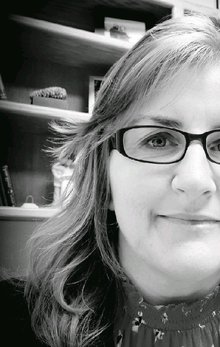
When Talia Brown became Chief Information and Data Officer at Graceland University in early 2020, she expected to manage what she describes as “people, projects and pennies” because IT departments in higher education are chronically underfunded. Within weeks, the pandemic hit. Twenty years at Graceland gave her the institutional knowledge to navigate the crisis, but the abrupt shift for every employee to remote work exposed additional digital transformation needs.
“I came into the role just before the pandemic, so I got my feet wet, and a pandemic hit, and everything kind of went awry,” Talia says. There was no time for conventional onboarding: the world changed too fast. Students began expecting answers at two o’clock in the morning with the same urgency as two o’clock in the afternoon. Systems and operational processes that had served the university for more than two decades could not keep pace.
Despite its abrupt nature, the pandemic accelerated trends that were already reshaping higher education, with remote learning becoming mandatory overnight and support services requiring round-the-clock availability.
Once the pandemic response settled, Graceland returned to focusing on Digital Transformation and invested substantial resources to implementing Oracle Cloud as its enterprise resource planning system, partnering with Drivestream as part of its membership of the HESS Collective, a consortium of small private institutions across the United States taking the same path.
“I can’t really say ‘pennies’ anymore, because what our institution has done is a significant investment into our future, into a new ERP system with Oracle Cloud,” Talia says.
Graceland University joins HESS Collective for Oracle Cloud deployment
The HESS Collective – Higher Education Systems and Solutions – does something unusual in technology. Competitors talk openly about processes, share solutions and collaborate in ways that would be unthinkable in most industries. Each member institution implements the same Oracle Cloud system, which means a report Talia creates in her instance can be shared directly with another university in Iowa or across the country.
“We’re able to collaborate and engage with each other in ways that you typically don't see in other industries, where you’re talking to your competitors about how they do things,” Talia says.
The model works because small private institutions face similar challenges. They serve comparable student populations, operate with similar resource constraints and need systems that can handle both traditional campus students and growing online programmes. The back-end technology does not differentiate one institution from another in ways that matter to prospective students. Universities compete on mission, culture and academic programmes – not on whether their financial aid system uses a different database structure.
The collective extends to implementation. All HESS members work with Drivestream, which focuses on Oracle deployments. When one institution hits a problem, the others learn from it. Collaborative meetings bring together HESS members and Drivestream consultants to discuss challenges that affect multiple institutions simultaneously. If a university in the Midwest encounters an integration issue with employment records, a school on the East Coast can avoid the same problem before it starts implementation of that module.
Talia receives more from these meetings than she contributes, by her own assessment. “I’ve said many times the HESS Collective has provided me more insight than I’ve provided them,” she says. “I go to meetings and share information and content, but I’ve received twice as much as I'm ever able to give.”
The selection process took months, with the ERP assessment analysing vendors and narrowing options to three finalists. Graceland brought each to campus for reviews that pulled in people from across the institution – not just IT staff, but faculty, administrators and student services personnel who would live with the decision daily. The university needed a platform that could handle traditional campus students, online learners and adult continuing education programs through a single cloud-native system. Oracle Cloud won.
Graceland implements multiple Oracle Cloud pillars in first year
Small private institutions lack the internal resources to execute transitions of this scale alone. Graceland turned to Drivestream for expertise, committing to a long-term partnership that goes beyond transactional support. Weekly check-ins track project progress and application management service tickets and Talia meets regularly with the Drivestream team to work through overall project health.
Data migration from systems more than 25 years old involves decades of records, reconciling inconsistencies and mapping old structures to new ones. Business processes that evolved organically need to be formalised and sometimes redesigned entirely.
“We’ve committed to a long-term partnership with Drivestream, and they've been very collaborative,” Talia says. “We connect at conference sessions, and I meet with them on a regular basis.”
Graceland deployed multiple pillars of the Oracle platform within the first year. The pace runs counter to expectations about higher education, where decision-making tends to crawl. Talia attributes the speed to institutional willingness to take risks. The institution moved quickly on a project that others might stretch across several years. The project gained a lot of attention. Oracle’s Excellence Award for CIO of the Year was awarded to Talia Brown in 2025. (Infrastructure Awards Past Winners | Customer Awards | Oracle )
Oracle Student Management represents the next major phase, with planning already underway. The platform has numerous AI agents already built in. Applications span expense reports, payroll queries and administrative tasks that currently require human intervention.
“There are already AI agents in the system, so we can configure those, test those out and turn them on whenever we’re ready,” Talia says.
The transformation reaches beyond Oracle. Graceland implemented new platforms for Advancement and Enrollment, migrated to a cloud phone system, and launched Pathify as the new student portal with mobile capabilities. None of these projects were required by the ERP transition, but Talia pushed them through anyway.
“I know sometimes I’m pushing the institution too hard on how many projects we’re going to have in play at one time,” Talia says. “We have a good time in our department, and the Teams chat blows up with emojis once in a while when I'm pushing a little too hard.”
At a small institution, the CIO role collapses the hierarchy. Talia handles strategic planning, budgeting and vendor management, but she also answers Tier 1 support tickets alongside her team.
Graceland University transitions learning management system during Oracle deployment
The learning management system is next. The campus community has been asking Talia about it, prompting her to evaluate every contract the institution holds. She asks whether current products still make sense or whether Graceland should move to something else.
Graceland’s mission revolves around three concepts: learning, wholeness and community. Talia sees technology as a direct extension of that mission. The university has reinvented itself before and brand pillars frame these transformations: create a safe space for self-discovery, offer skills for the 21st century, and help students make connections that last a lifetime to name a few.
“We want to be a safe space for self-discovery. We want to ensure that we’re offering our students skills for the 21st century. We want to help students make connections that last them a lifetime,” Talia says.
AI has driven the most substantial shift Talia has witnessed across higher education. The pandemic changed what students expect from institutions, and AI makes always-on service possible.
“Certainly across the industry, AI has been the biggest movement,” Talia says. “We saw a huge shift with the pandemic in terms of expectations of our students, and I think AI plays a role in that, in that everybody wants answers right now, regardless of when ‘right now’ is.”
Oracle’s integrated AI capabilities position Graceland to meet those expectations once the foundational systems stabilise and staff develop expertise with the platform.
Talia has advice for other CIOs in higher education preparing for similar transitions. ERP implementations are not IT projects, though many organisations treat transformations as something the technology department owns and executes. Success requires buy-in from trustees, executive leadership, and faculty.
“I think one of the key components is making sure that everybody acknowledges this is an institution-wide effort,” Talia says. “Many people make the mistake of thinking that an ERP transition is an IT project and IT owns it and runs it, and I think it’s important for the entire institution to acknowledge the change.”
Graceland spent time educating stakeholders about what was coming. A new integrated system means trade-offs. Not every component will satisfy every department perfectly. The institution decides what serves students best and works with the rest.
The difference between corporate and education technology work comes down to what happens at commencement. Talia gets to watch as students transform from entering freshmen to seniors walking across the stage ready to take on the world.
“It is certainly the students,” Talia says. “It’s so different from a corporate position where you’re monitoring bottom line and stock prices, where in education, you really get to see, year after year, students walk across the stage witnessing their personal growth.”
The work continues. Oracle Student Management implementation has begun. The learning management system conversion is in process and AI agents wait in the wings, ready to activate when the time is right.
“Being able to see that transformation happen on our campus is huge, and I’m lucky I get to work with a lot of great people both on our campus and as part of the HESS Collective.” Talia says.
Company portals
Executives
Talia Brown
Chief Information Officer