
Vietnam’s hospitality sector faces a pivotal moment in its development. The country’s tourism industry has rebounded from pandemic-era restrictions, with international arrivals increasing as new flight routes continue to open. This growth has sparked investment in hospitality infrastructure, particularly in the growing luxury segment.
The intersection of hospitality and technology presents specific challenges in the Vietnamese market. Properties must address cybersecurity concerns, navigate strict gaming regulations and manage operations with a workforce transitioning to digital systems. These demands require careful technology implementation strategies, particularly for resorts serving international guests.
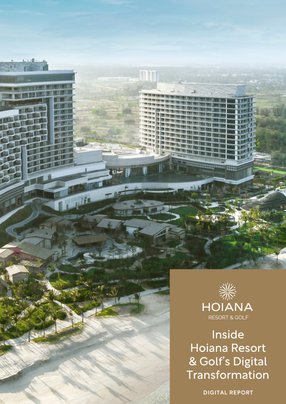
Located near UNESCO World Heritage sites, Hoiana Resort & Golf comprises four hotel towers with more than 1,200 rooms, a casino certified under Vietnamese law and an 18-hole golf course capable of hosting world-class tournaments. The property includes multiple high-end restaurants from overseas and partners with Rosewood Hotels Group, a luxury hospitality brand known for its premium properties in Hong Kong.
Ching Yip, Vice President and Head of IT at Hoiana Resort & Golf, oversees the resort’s technology infrastructure, security, applications and service delivery operations. His experience includes managing technology implementations at casino resorts across Macau, the Philippines and South Korea, including two major casino openings on Jeju Island recently.
“When I joined Hoiana, we faced challenges from rapid business expansion and unplanned technology deployment during COVID-19,” he says. “This created an opportunity to implement cost savings and system consolidation initiatives.”
The resort’s emergence from the pandemic period has positioned it well to showcase its offerings to a broader market. Current efforts focus on establishing direct flight connections between China and Vietnam to increase visitor access, while simultaneously developing technology infrastructure to support growing operations.
Strategic technology consolidation & cost optimisation
The resort’s technology strategy centres on vendor contract optimisation and system integration, reflecting the specific challenges of operating a foreign-only casino in Vietnam’s emerging market. Ching’s team conducted a comprehensive review of existing technology partnerships and service agreements, identifying billing discrepancies and opportunities for cost reduction.
“After joining Hoiana, we reviewed all partner and vendor contracts to identify unknown charges and overcharges from previous agreements,” Ching explains. “By revising these contracts, we reduced our total spending substantially.”
The consolidation strategy extended beyond contract management to system integration. By reducing system divisions across the property, the resort decreased integration charges and annual maintenance costs. “When we have too many divisions across the property, the system integration charges increase,” says Ching. “After consolidation, we achieved significant reductions in yearly maintenance costs.”
This systematic approach to cost management generated a great number of savings: a significant achievement in the context of post-pandemic recovery. The savings enabled investment in new technology tools focused on operational efficiency and workflow optimisation.
The resort's position as a foreign-only casino necessitated a different approach to technology deployment compared to larger gaming markets. “Our volume is different from Macau or Las Vegas, so we need to manage resources strategically,” emphasises Ching. “Working with limited budgets means focusing on tools that optimise workflows and reduce staffing requirements.”
This focus on efficiency extends to the deployment of digital transformation tools. The challenge is what you can deliver for the company with limited resources,” Ching notes. “We focused on consolidation to create room in the budget for tools that optimise and simplify company workflows.”
The consolidation initiative reflects a broader strategy of resource optimisation. Rather than implementing multiple specialised systems, the resort focuses on integrated solutions that can serve multiple departments. This approach reduces both immediate costs and long-term maintenance requirements while creating operational efficiencies through standardised processes.
“The consolidation approach for combining teams means we can eliminate unnecessary integration points,” Ching shares. “This allows us to reduce resource requirements while making the company operate more efficiently.”
Digital transformation initiatives
Hoiana’s digital transformation programme focuses on workflow automation and system integration. The resort implemented ManageEngine SDP – a service desk management platform from Zoho Corporation – to reduce paper-based processes. This system enables mobile approvals and streamlines administrative tasks across departments, providing audit trails for all IT changes.
"The ManageEngine SDP system tracks all tickets and changes in our IT systems,” Ching mentions. “We maintain an audit trail and approval matrix to ensure all system changes receive proper authorisation before implementation.”
The integration strategy connects four core systems: Opera for hospitality management, the F&B point-of-sale system, the gaming system and the golf operations platform. “We aim to combine all guest activities into a single directory,” Ching notes. “Whether guests are staying in our hotels, dining, playing golf or visiting the casino, we can understand their complete experience.”
The resort's digitisation extends to workforce management. “For an organisation of our size, with more than 2,400 employees, automated systems are essential,” Ching recommends. “Tasks like performance assessments and workflow approvals need systematic automation to be manageable.”
From Ching’s experience during the Jeju Dream Tower project in Korea. One of these gaming technology companies has extensive solutions in resort business. “Their specialised development teams understand the unique requirements of integrated resort operations.”
Security and data protection
Recent cybersecurity incidents have highlighted the importance of robust security measures in the hospitality industry. A major company recently incurred a substantial expense to resolve a ransomware attack, underscoring the financial risks of security breaches. In response to these threats, Hoiana implements a multi-layered security approach combining traditional safeguards with modern protection measures.
The resort’s cybersecurity includes data loss prevention, USB controls, and data encryption protocols. “IT security requires heightened attention in Vietnam due to increased risk factors,” Ching explains. The resort conducts annual penetration testing to identify potential vulnerabilities in their systems, ensuring no unauthorised access points exist.
Backup strategies combine traditional and modern approaches. “Traditional tape backup remains essential to our security strategy,” Ching notes. “While cloud storage offers advantages, ransomware can encrypt cloud-based backups. With offsite tape backup, we can guarantee system recovery within a short period if needed.”
The resort's security strategy includes cyber insurance coverage to protect against potential data breaches and ransomware attacks. This approach combines preventive measures with risk transfer mechanisms to safeguard guest information and operational continuity, particularly crucial for a 24-hour gaming operation handling significant financial transactions.
Hoiana is evaluating a Managed Detection and Response Services Solution, a security system that uses AI for 24-hour system monitoring. “Standard security monitoring requires extensive staffing,” mentions Ching. “AI-powered systems can identify and block suspicious activities automatically, from unauthorised data transfers to potential hacking attempts. This technology provides faster response times than traditional monitoring methods.”
The emphasis on security reflects the particular requirements of casino operations. “Our security needs exceed typical banking requirements because we process transactions continuously throughout the week,” Ching explains.
Guest experience enhancement through technology
Hoiana’s technology strategy includes a centralised membership concept that integrates guest data across all resort facilities. This system connects information from hotel stays, dining experiences, gaming activities, and golf course usage to create unified guest profiles, enabling personalised service delivery across the property.
“The centralised membership concept is important for our resort,” Ching explains. “We want to engage all the databases into a directory integrated with our core systems. Wherever guests engage in activities, whether in the buildings, playing golf, or dining, we understand their preferences. This allows us to target specific regions or groups of customers more effectively.”
The resort plans to further by using AI systems for guest engagement, building on successful deployments in other Asian markets. “When guests reach certain thresholds on slot machines, the AI system will automatically send promotions or hotel vouchers to their mobile devices,” says Ching. “The AI already knows these are potential guests, so they can quickly accept offers and check in.”
The technology team is also evaluating tabletop ordering platforms, following successful implementations in Korean properties. This solution addresses specific operational challenges in international hospitality. “Previously, we thought five-star hotels should have staff providing real-time service,” Ching explains. “However, with guests from multiple countries, training staff in multiple languages simultaneously is challenging. When we launched tabletop ordering tools, guests could view menu items in multiple languages and order directly through our POS system. This reduced miscommunication and wrong orders significantly.”
Future plans include implementing face recognition technology to replace physical membership cards, particularly in the casino operation. “Each membership card costs a certain amount”, Ching notes. “When people visit our casino once and don’t return, that card becomes a waste. By implementing face recognition with mobile registration, similar to applying for an e-visa where you scan your passport with your face, we can create a certified profile on your mobile device. This enables all transactions to be cashless or without physical cards.”
The resort’s approach to guest experience technology focuses on practical solutions that address specific operational challenges while enhancing service delivery. “For the future, we definitely need to be more creative,” says Ching. “We cannot rely solely on traditional methods. For the new generation of guests, we need to keep studying what works best while maintaining our service standards.”
Building local IT excellence
The resort’s technology team consists primarily of local Vietnamese professionals, reflecting a strategic decision to develop domestic talent rather than rely on international recruitment. This approach differs from common practice in the Asian hospitality sector, where properties often recruit expatriate technology specialists for senior roles.
“After joining Hoiana, I prioritised hiring local talent over bringing in expatriates from overseas,” Ching explains. “We kept the original teams because they demonstrate strong loyalty to IT. The resort business requires specialised knowledge, so I share my experience with the teams to provide direction on how they can help the company.”
This strategy highlights the value of fostering a local workforce while appreciating the unique dynamics of Vietnam’s hospitality sector. “Vietnamese talent brings an inherent understanding of the culture and community,” recommends Ching. “By prioritising local hiring, we create a team that is not only highly skilled but also aligned with our shared vision, enabling a flexible and seamless process to achieve our goals.”
With this in mind, the resort emphasises career development in its IT team management, creating clear progression paths for technical staff. “We don’t want people working just because it’s a job,” Ching emphasises. “We focus on their career development and help them understand their potential path over the next five years. This helps motivate employees and accelerates their progress.”
The approach has yielded positive results in team innovation and problem-solving. “The team here demonstrates strong capabilities,” says Ching. “They are honest and hardworking, but most importantly, they are creative. Creativity is key to our success in Vietnam. I prefer to give the teams more opportunities to think, rather than simply following established paths.”
Future technology roadmap
Looking forward, Hoiana’s roadmap extends beyond current digital transformation initiatives to explore advanced automation and advanced AI applications.
“We are studying three key areas for future development,” Ching explains. “AI security monitoring tools, engagement platforms that optimise all resource procedures for our staff, and new digital platforms for guest interaction.”
The strategy also includes plans for enhanced data analytics capabilities. “We are currently implementing data analysis consolidation,” says Ching. “This will enable real-time analysis of guest activities and automated response systems.”
The resort's approach to future technology reflects broader industry trends toward system consolidation. “I read about Ford's CEO discussing the challenges of building electric vehicles with applications from 150 different countries in hundreds of languages,” Ching observes. “We face comparable complexity in the resort business. Each vendor brings specific solutions, but combining them effectively remains our primary challenge.”
Explore the latest edition of Technology Magazine and be part of the conversation at our global conference series, Tech & AI LIVE.
Discover all our upcoming events and secure your tickets today.
Technology Magazine is a BizClik brand