In the global telecommunications industry, infrastructure is undergoing a major transformation. It is no longer enough for operators to deliver basic connectivity. Instead, they are expected to provide a seamless combination of high-speed networks, sovereign data storage and vast computational capacity.
The convergence is visible in Finland, where Telia has established Helsinki as a strategic digital hub for the Nordic region. By uniting an immense, carrier-neutral data centre with advanced 5G deployments, the company is enabling an ecosystem that supports hyperscale AI, critical governmental operations and the increasingly data-driven ambitions of modern businesses.
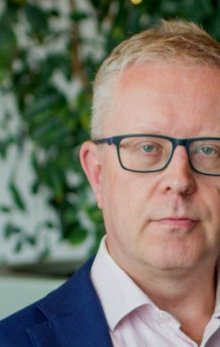
Guiding this transformation is Kari Maikkola, Head of Data Centre Solutions at Telia. His career spans the evolution of the ICT sector itself, from the early experimental years of new media to the industrial-scale demands of contemporary data centre engineering. Kari oversees Telia’s data centre business for enterprise and public-sector customers, a responsibility that blends commercial leadership with a commitment to national resilience.
Elaborating on his role, he says: “I am responsible for Telia’s data centre operations for business customers and public-sector organisations.”
He describes his background as long and varied, noting: “I have worked for many years across different roles, moving into the ICT field in the early 2000s.” His career in ICT began in Finland’s new-media scene at Satama Interactive. Since 2013, he has worked directly in the data centre sector, following years in university education and software companies.
A foundation of national infrastructure
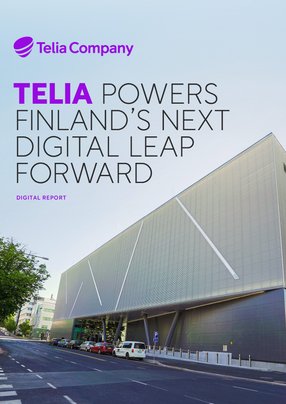
Telia’s flagship facility, the Telia Helsinki Data Centre in Pitäjänmäki, is widely regarded as the largest open data centre in the Nordic countries. Since opening in 2018, it has become a cornerstone of Finland’s digital infrastructure, with an investment of around €150 million (US$176m) creating more than 30,000 square metres of technical space capable of accommodating close to 200,000 servers.
Its importance extends far beyond scale. In today’s digital economy, data centres fulfil the role traditionally held by utilities such as electricity or water, supporting banking, logistics, healthcare, communications and public administration.
Kari speaks candidly about the responsibility. “We have discussed within our organisation, including at the highest levels, that we keep society running,” he says. He contrasts this with more conventional businesses, noting, “It is a different task to produce connectivity that must operate continuously, every day, without interruption.”
Responsibility shapes every aspect of the facility’s design, security and operations. Keeping critical data within Finland’s borders provides reassurance to customers facing complex regulatory requirements. Meanwhile, the centre’s ultra-reliable architecture positions it as a trusted site for both domestic workloads and international hyperscale deployments seeking resilience, stability and sustainable energy.
Where 5G meets compute
One of Telia’s most significant competitive advantages is the combination of advanced network infrastructure with high-density compute. Unlike traditional colocation providers, Telia can leverage its extensive mobile and fibre networks directly alongside its data centre estate. Helsinki has become a real-world testing environment for integrated digital services, including early 5G rollouts in the city centre.
Telia has developed notable showcases such as 5G-enabled services at the Mall of Tripla, billed as the first shopping centre in Europe with live 5G and innovative deployments at Helsinki Airport featuring robots and high-resolution surveillance. The tightly integrated ecosystem reduces complexity for clients, who no longer need to coordinate with multiple suppliers for connectivity, cloud and security.
Companies increasingly seek end-to-end simplicity, a point Kari reinforces. “Companies want ease in their daily operations,” he says. While colocation buyers may operate independently within large organisations, Telia’s wide portfolio allows it to cross-link services. “We try to understand where it makes sense to bundle products. For smaller companies, it is often easier to obtain several services from the same provider,” he notes.
Sustainability as a strategic imperative
In the Nordic market, sustainable operations are a baseline expectation rather than a differentiator. Telia’s facility is powered by renewable energy sources including hydro, wind and solar. However, its most innovative environmental feature is its integration with Helsinki’s district heating system. The facility captures waste heat from servers and distributes it into the city’s heating network, providing warmth to thousands of apartments.
Kari highlights the importance of the capability. “Green energy and sustainability are essential in the current market,” he states. “In the past, customers might have had long lists of requirements, but today, if you are not green, you are not even considered.” The decision to build within the city rather than in a remote location was intentional, he explains. Waste heat cannot be transported over long distances, so proximity to the heating network is crucial.
He acknowledges that urban real estate is more expensive but stresses that the long-term sustainability gains outweigh the costs. “Our location in the middle of the city allows us to feed heat into the district heating network. The combination improves our energy efficiency throughout the year,” he says. Even in summer, households require heated water, ensuring continuous demand for the recovered heat.
Engineering for the AI era
While sustainability forms the foundation, the explosive rise of AI currently drives change within the data centre industry. AI workloads place extraordinary pressure on facilities due to their need for high-density racks and GPUs. Air-cooling alone cannot manage these loads, prompting a shift towards liquid-cooling technologies.
Telia is expanding its capacity by megawatts dedicated to meeting AI demand. Helsinki facility now hosts liquid-cooled clusters for e.g. neocloud companies. Kari describes the pace of change: “The recent boom in AI has significantly changed the business for everyone working in this area,” he says. “The shift towards high-density workloads has happened very quickly and has required substantial changes to our design.”
Deploying liquid cooling at a megawatt scale introduces engineering challenges that did not exist a decade ago. Kari is open about the learning curve. “We now have liquid-cooled AI loads in production, including some of the latest generation Nvidia chips, among the first in Europe,” he says. “But making liquid cooling possible at this scale has not been easy. We have learned many lessons. The new technologies always bring surprises, and the final solution must meet customer requirements that are not always precise.”
He adds that significant customisation is often required because many vendors and customers lack deep experience with such specialised systems. As a result, stakeholders must work together to solve emerging issues through a collaborative process.
Security, sovereignty and stability
In an era of geopolitical uncertainty, the physical location of data has become a strategic concern. Finland is seen as a stable and trustworthy jurisdiction and Telia’s ownership of the underlying fibre and transport infrastructure strengthens its value proposition. Kari describes security as a core asset.
“Security of data and connectivity are real strengths for us,” he says. “We have high-security premises for the most critical workloads and our network includes multiple layers of protection.”
He acknowledges that global tensions have heightened risk awareness among clients. “The current geopolitical situation concerns us, as it concerns many people around the world, but we are prepared,” he notes. The facility has maintained 100% availability since opening, supported by redundant systems, robust security measures and a defence-in-depth approach designed to counter both accidental and intentional disruptions.
Beyond the horizon
Looking ahead, Telia expects demand for data centre services to grow rapidly. The digitalisation of industries continues at pace and AI workloads are increasing in intensity and complexity. Telia has adopted rapid provisioning and flexible consumption-based pricing to meet customer expectations. Kari notes that some AI customers have been brought online within a month.
He believes that the world is still at the earliest stage of the AI revolution. “Data continues to grow at an exponential rate, and I think we have only seen the beginning of AI’s impact,” he says. Predicting the future is difficult, but he remains certain that society will become increasingly digital in the decade ahead.
As Helsinki strengthens its role as a Nordic digital hub, Telia’s investments symbolise the region’s readiness. By balancing the demands of AI with sustainability, security and operational resilience, it is building the infrastructure for the next phase of digital society.
For Kari, the industry's fast-paced nature remains its greatest appeal. “This is a very international business, and I appreciate the pace of technological change,” he says. “The days are never the same and there is always something new happening.”
Company portals

Executives
Kari Maikkola
Head of Data Center Solutions