
Attracting Customers’ Immersive Experience With VR
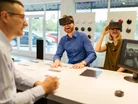
VR is revolutionising how customers interact with products or services — but which type of business needs it the most?
According to the report by Grand View Research, the global immersive VR market size is expected to hit US$435.36bn by 2030, at a CAGR of 27.5%. Game and entertainment companies may be the early adopters of the emerging technology. The business world is gradually catching up and strategically positioned to harness the technology's immersive experiences. Every entrepreneur knows that customer interaction dictates the direction of a business.
When it comes to creating a connection between the customer and the product or its value, the immersive engagement of VR is a game changer. With it, companies are drawing in potential customers and retaining existing ones in ways not seen before with traditional communication and marketing channels. Thanks to its massive advancement, integrating technology into businesses is becoming increasingly seamless.
How Virtual Reality (VR) Works
Before diving into how businesses integrate VR into their customer acquisitions, it is important to understand the basics of the technology. Virtual reality digitises a user’s physical presence using computer-generated imagery and audio cues. Its three major components are hardware, software, and content.
Users wear a VR headset and get transported into a simulated reality, often a blend of 3D modelling, animation and audio stimuli. Another key hardware is the tracking and input system, such as a controller and gloves, for interacting with the virtual world and manipulating objects. Specialised software enables developers to create virtual environments and handle user interactions and feedback.
Besides the visual content, key elements like spatial audio and eye and head tracking add immersiveness and interactiveness to the content. Now, let us explore how new-generation businesses implement VR to attract customers’ attention.
Try-Before-Buying Concept
There has been a continuous spike in the popularity of online shopping in recent years. Despite its convenience and other benefits, online shopping is without challenges, including product returns. Even with the ease of connecting with these digital landscapes, many customers stuck to in-person shopping to avoid these challenges. Businesses that integrate virtual reality bridge the gap between brick-and-mortar operations and online stores.

Virtual reality "try-before-you-buy" stores offer an immersive way for customers to test products before committing to a purchase. This trend has now started to spread to many areas of gaming. You can even try to play for free in an online casino. For example site Slotozilla allows casino players to try out different slots for free in the best online casinos, giving users the opportunity to explore and enjoy games without any financial commitment. Just as VR enables shoppers to make more confident buying decisions, Slotozilla provides a risk-free experience for those wanting to test online casino games before wagering real money.
The concept lowers the uncertainty many consumers feel during purchases. That, in turn, aids in decision-making while mitigating the high return rate common in online shopping.
- Reduced return rate
- Cost-effective operation
- Improved customer satisfaction
- Boost in sales and conversions
- Boosted brand awareness
Enhanced Customer Support
Customer service is key to converting inquirers or potential customers into paying ones. AI-powered chatbots and virtual assistants have become commonplace. With Virtual Reality integrated into customer service, agents can provide a simulated yet immersive product demonstration.
With the help of a customer agent, the technology enables potential customers to tour products or interact with the features like they already own them. Agents watch and listen to the customers' concerns as they go around vivid 3D graphics or animation.
Furthermore, VR changes the shape of real-time assistance. Agents can deliver step-by-step troubleshooting processes and product setups to customers in the comfort of their rooms. These reduce the need for phone support and on-site visits, which most customers find inconvenient. This level of effective customer service with VR boosts the likelihood of a business getting new purchases and keeping existing customers.
Virtual Rooms And Tours
A key application of VR in attracting customers is letting them explore shops, spaces and locations without being physically present. Businesses in different industries can tailor the innovation to their needs. Utilising virtual reality to create an engaging and interactive tour has the potential to boost customer acquisitions in a wide variety of industries. From online stores, hospitality, and travel to real estate - the possibilities are endless.
One industry that benefits massively from this is real estate. A potential buyer can virtually tour properties from any part of the world. A real estate company may even further exploit VR's immersiveness and provide the potential buyer with customization options. The immersive virtual tour gives the buyer a comprehensive and realistic sense of the best colour combinations, furniture placements, etc.
Industries That Use Virtual Tours
Not long ago, only real estate listings came to mind whenever virtual tours were mentioned. In today's competitive business world, companies always look for innovative ways to attract customers and promote products.
Little wonder other industries are catching up on the potential of virtual tours. More and more businesses now incorporate virtual tours into their marketing strategies for a competitive edge.
- Real estate: To showcase homes and properties in an elegant way
- Automotive retailer: Customers can see their ideal cars
- Hotels and hospitality: People looking to book can get vivid details of the table settings, decor possibilities, and even meals
- Tourism: Travellers are more likely to book if they get an interactive and engaging guide tour
- Education: Schools can give potential students a campus store from anywhere in the world
Product Demonstration With Virtual Reality
There will be little to no attracting customers without a good product demonstration. Customers respond better if they can see the benefits and features of a product in full detail. Product demonstration with virtual reality stands head above traditional methods in this regard.
There is a limit to how traditional product demonstrations can showcase a product and evoke emotions. VR takes the game beyond showing a static image or videos to an immersive demonstration where the customer uses the product in active but simulated scenarios.
With immersive experience in VR enhancing product understanding, potential customers get an interactive and hands-on encounter with the product remotely. Such remote demonstration completely removes the geographical limitation of any business. It saves both parties time and resources. But most importantly, attract customers, engage them and boost their acquisition.
Personalised Experience and Ads With VR
Many businesses now understand the effectiveness of customer-centric marketing messages. Tailoring ads to each customer's preferences leaves a lasting impression on them. The technology is proving to be revolutionary in personalization.
The immersiveness of VR can take personalised marketing to an unimaginable height, especially when combined with data from artificial intelligence. It invokes and enhances the customer's emotional connection with the product.
Leveraging data collected based on customer interactions and preferences, businesses are creating a memorable experience with VR. A travel agent, for instance, can give a potential client a virtual tour of the city they love to visit, immersing them in the culture, cuisine and adventures awaiting them. Such marketing messages delivered with an immersiveness of VR not only attract customers but leave lasting impressions on them.
Takeaways
The integration of virtual reality, especially into business operations, is still in its infancy. While some challenges still exist, the future of VR as a business tool is definitely promising. As the technology continues to evolve and prices of VR gadgets drop, innovative companies of different sizes are already tapping into its vast potential.
In addition to the benefits of being early adopters and leaders in innovation, such companies are reported to enjoy a competitive advantage. From retail to hospitality, the immersive capabilities provide an ocean of possibilities for daring companies. Soon, any company ignoring the immersiveness of VR will be missing out on a tonne of customer acquisition.
Explore the latest edition of Technology Magazine and be part of the conversation at our global conference series, Tech & AI LIVE.
Discover all our upcoming events and secure your tickets today.
Technology Magazine is a BizClik brand