Q&A: BT's Head of Circularity & Net Zero on Tech Recycling
BT Group is one of the most influential players in the UK telco arena, employing more than 90,000 people worldwide.
In 2024, the company consumed 0.8% of the UK’s total electricity, used to power its extensive network and operations.
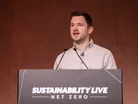
Matt Manning, BT Group’s Head of Circularity & Net Zero, plays a pivotal role in driving the company’s efforts toward decarbonisation and waste reduction.
Following his compelling presentation at Sustainability LIVE: Net Zero last month, hosted by sister title Sustainability Magazine, Matt discussed BT Group’s initiatives and the broader sustainability landscape within the technology and telco spheres.

Could you start off by introducing yourself, talking a little bit about what you do at BT Group and also how you got into sustainability in the first place?
At BT Group I lead on circularity and net zero, working across our business of over 90,000 employees, supporting both on our net zero ambitions and our efforts to build towards a circular tech ecosystem.
I work across all those impact areas, such as our consumer part of the business, EE, our B2B side, our network operations and the fleet, to help them understand where those levers need to be pulled, where those opportunities are and where the risks are.
In terms of my background, I’ve been in sustainability for about 12 years, but I didn’t take the traditional route.
I studied law at university, but realised then that I didn't want to be a lawyer. I started working for a small consultancy firm in Bristol, supporting businesses on legislation around packaging and e-waste and batteries.
From there, I moved into the retail sector to work for a leading electrical retailer, supporting them on issues like climate, e-waste, recycling and waste management.
That led me to BT, and I’ve been working here for almost three years.
How do you see the relationship between circularity and net zero?
The links between circularity and net zero are vital. Often they get dealt with as separate pillars, but fundamentally the two are linked.
About 70% of global emissions are linked to our use and handling of materials. And then more scarily, 90% of biodiversity law and water stress is linked to the extraction of raw material.
So, it is really important to see circularity and net zero as overlapping.
Within BT and the rest of the electronics market, a lot of raw materials go into products.
It's really key to consider how we can reduce that impact by reusing more equipment, getting it back and refurbing it.
We’re working with suppliers to see if they could start supplementing virgin materials with reused materials, avoiding some of that extraction process.
It’s far less energy intensive to use recycled material than digging up stuff from the ground, refining it and passing it through lots of different hands.
We’re also looking at the lifecycle of products, particularly smartphones and tablets, which can often have a second life.
We’re thinking about how we can encourage our customers to hand back old devices when they’re upgrading, and we’re working with partners to refurb them and put them back on the market.
People are coming around to the idea that old technology doesn't mean less durable or less reliable. It would be great to know if you've started exploring that with other companies and how you’re establishing that chain.
I've always thought we never have a problem buying a second-hand home or second-hand cars. Increasingly we’re seeing the growth within the secondary market for clothing too.
I think there's lots of new players coming up around the tech space now as well.
Five or ten years ago, when people were talking about refurbed tech, they often thought the products would be scratched and knackered.
But actually, if you've ever seen a lot of the refurb stuff now, it'd be hard to distinguish it between something old and something new.
So, to support that growing demand, we need to get the used products back.
One of the big challenges is for data-bearing stuff like phones and laptops, because sometimes people can be a bit concerned about what happens to their data, so they'll just leave it in that drawer of doom and it just lies there for years.
Then by the time they do clear it out, unfortunately then that generation of device is almost so old there isn't really that opportunity to resell.
It's really key that when people are replacing or upgrading tech, that they get that phone back in through a trading-in service that we offer.
Then, that phone has the highest chance possible to be refurbed. Not only do they get some money back, that phone then can obviously go onto then have a second use.
It's a win-win-win as far as I see it, because BT is getting something out of that process, the customers getting something – whether that be the money that they get from trading things in or a newer, perhaps cheaper phone – and it's also a win for the environment as well.
Just to build on that, I think as with some technologies, the jump isn't as big as probably when devices came out.
So actually, if you're able to offer a refurb solution, a two-year-old phone which has been fully refurbed might completely tick the box for some people.
It’s about supporting those people that just want a newer phone, but not necessarily a brand new model. We really see that opportunity there.
What are the telco sector’s main challenges when it comes to sustainability?
Firstly, Scope 3, which makes up more than 70% of our emissions.
We're fortunate within the telco sector that it's quite collaborative. We work with a lot of global working groups.
By having that kind of single point of contact within those associations, we're able to really streamline the kind of questions that we're asking the suppliers so they're not getting 20, 30, 40 requests for fundamentally the same information.
It also means that, as an industry, we can know the biggest opportunities to explore, where those hotspots are within the electronics that we buy.
In a lot of cases it is the manufacturing process, so it’s important for us to understand what influence that we can have on that as well.
Then there’s also the energy needed to run our networks. Last year, BT used 0.8% of UK electricity – for a single company that's quite big.
It is our second biggest cost, alongside just rolling out infrastructure in the UK. So, we’re considering how we can become more energy efficient.
There's lots of different things to explore as a telco, both in your own operation, but also those suppliers that we're working with as well.
Finally, what would be your one piece of sustainability advice, if you had to give one?
Don't wait for perfection. Often, if you're making a business case for something, it’s rare that everything will add up at the same time.
If there's that opportunity that might move the dial a little bit, or might help convince a certain part of the business to do something, do it.
Explore the latest edition of Technology Magazine and be part of the conversation at our global conference series, Tech & AI LIVE.
Discover all our upcoming events and secure your tickets today.
Technology Magazine is a BizClik brand