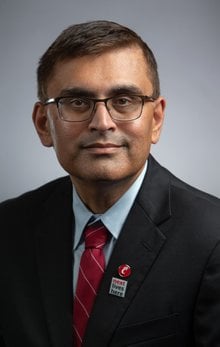
Bharath Prabhakaran
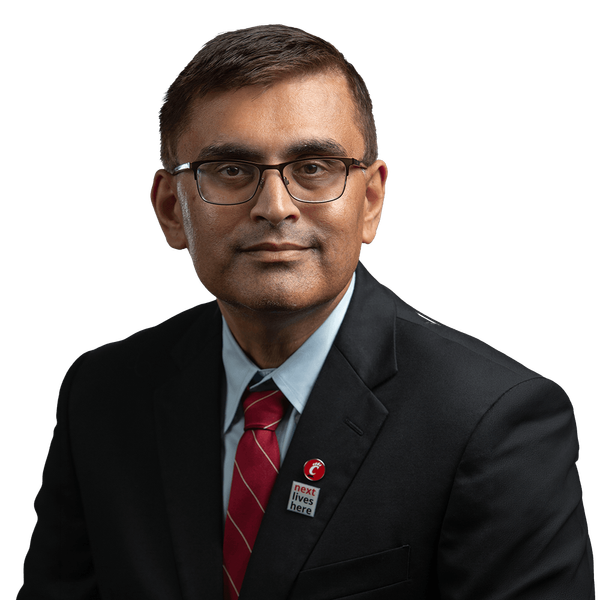
Bharath Prabhakaran
Early years
Bharath’s professional trajectory is rooted in a robust technical education.
Having earned a Bachelor’s degree in Computer Science and Engineering from the Birla Institute of Technology and Science in India, he relocated to the US in 1995 to pursue a Master’s degree in Computer Science at the University of Maryland – an opportunity made possible through a graduate scholarship.
Upon completing his graduate studies, Bharath entered the private sector during the dot-com expansion of the late 1990s. He joined Razorfish, a prominent startup of the era, initially serving as a software engineer. However, he quickly transitioned into project management, identifying a greater professional aptitude for client interaction and the translation of business requirements into technical solutions.
Following the market downturn in the early 2000s, he sought stability within the established enterprise software sector, securing a position at Oracle.
Corporate leadership and enterprise transformation
Bharath’s tenure at Oracle spanned the best part of two decades, during which time he held leadership roles across various divisions, including cloud services, database management and middleware.
His most significant contributions occurred during a period of aggressive corporate acquisition, where Oracle integrated companies such as Sun Microsystems, PeopleSoft and Siebel.
He played a pivotal role in the development of Oracle’s Fusion product suite, an ERP platform built from the ground up.
Bharath was responsible for driving the creation of this platform and overseeing its transition into a SaaS offering, now recognised as Fusion Cloud. His experience in managing large-scale digital transformations and moving complex legacy systems to the cloud established him as an expert in enterprise-level IT strategy.
Transition to higher education
Despite a successful corporate career, Bharath sought a professional shift toward mission-driven work.
Motivated by the transformative impact education had on his own life, he targeted the higher education sector for his next leadership phase.
“My friends joke that I was having a midlife crisis,” Bharath says with a laugh. “Some people go buy a red Ferrari; I decided to take my talents and move them to education.”
He initially faced the industry’s common barrier of requiring prior academic experience; however, he broke into the field at the University of North Texas (UNT).
At UNT, he served as Deputy Chief Information Officer for three years. In this capacity, he led the university’s enterprise application strategy and spearheaded broader digital transformation efforts.
His success in bridging the gap between corporate efficiency and academic needs positioned him as a prime candidate for executive leadership at a larger research institution.
Executive leadership at the University of Cincinnati
Four years ago, Bharath was appointed Vice President and Chief Digital Officer (CDO) at the University of Cincinnati (UC). His role was designed to support the university’s Next Lives Here strategic vision, which emphasises innovation, urban impact and academic excellence.
Bharath currently manages a dual-pillar portfolio that encompasses traditional IT operations and a comprehensive digital transformation mandate. His responsibilities include:
- Operations: Oversight of infrastructure, cybersecurity, telecom, academic, administrative and classroom technology.
- Transformation: Driving cutting-edge initiatives in data analytics, AI and virtual/augmented reality.
He leads a combined workforce of approximately 500 individuals, consisting of 350 professional staff and up to 150 students.
“The president views digital transformation as foundational to our strategic direction,” Bharath explains.
Under his leadership, the IT organisation supports a population of 54,000 students and 15,000 faculty and staff across three campuses.
By integrating corporate-level agility with a deep commitment to the university’s public mission, Bharath has become a central figure in ensuring UC remains a leader in the digital-first academic landscape.