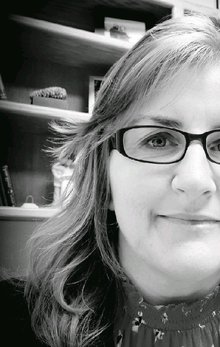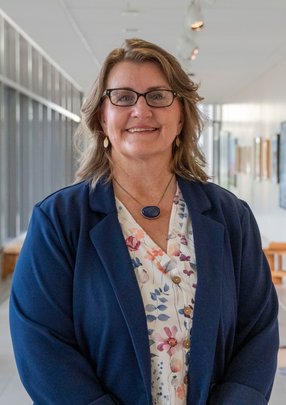
Talia Brown
Chief Information & Data Officer
Talia Brown’s journey to becoming Chief Information and Data Officer at Graceland University was anything but conventional. When she assumed the role in early 2020, she brought something most CIOs lack: 20 years of institutional experience across nearly every corner of the organisation. That deep knowledge would prove essential when the pandemic hit just weeks into her new position.
“I came into the role just before the pandemic, so I got my feet wet, and a pandemic hit, and everything kind of went awry,” Talia says. There was no traditional onboarding period, no gradual ramp-up to full responsibility. The world changed too quickly for that.
“Having 20 years at the institution prior to that really gave me a good perspective of our culture and our systems and our people, and that allowed me to already have relationships with people and really move into the role pretty quickly,” Talia says.
Those two decades at Graceland meant she already understood the culture, the systems and the people. When the pandemic forced the university to pivot to all remote operations overnight, those relationships became her greatest asset. The crisis further confirmed something else: Graceland’s technology systems needed updates. Systems 25 years old could not meet the demands of students who expected answers at two o’clock in the morning with the same urgency as two o'clock in the afternoon.
Talia jokes now about coming into the CIO role expecting to manage “people, projects and pennies” because IT departments in higher education are chronically underfunded. That changed when Graceland’s Administration and Board of Trustees committed substantial resources to implementing Oracle Cloud as the university’s enterprise resource planning system.
“I can’t really say I manage pennies anymore, because what our institution has done is a significant investment into our future, into a new ERP system with Oracle Cloud,” Talia says.
Her leadership style reflects her years in the trenches. At a small institution, the CIO role collapses traditional hierarchies. Talia handles strategic planning, budgeting, and vendor management, but she also answers Tier 1 support tickets alongside her team. She pushes hard on timelines and project scope, but she is in it with them.
“I know sometimes I’m pushing them too hard on how many projects we're going to have in play at one time,” Talia says. “We have a good time in our department, and the Teams chat blows up with emojis once in a while when I'm pushing a little too hard.”
The HESS Collective partnership highlights Talia’s collaborative approach. As part of this consortium of small private institutions implementing Oracle Cloud, she participates in regular meetings where competitors share solutions openly.
“I’ve said many times the HESS Collective has provided me more insight than I’ve provided them,” Talia says. “I go to meetings and share information and content, but I’ve received twice as much as I’m ever able to give.”
Talia deployed multiple pillars of the Oracle platform within the first year, a pace that runs counter to expectations about higher education decision-making. She attributes the speed to institutional willingness to take risks and her team’s ability to execute quickly despite limited resources. Beyond Oracle, Talia pushed through upgrades to campus printers, migration to a cloud phone system, and launch of Pathify, a new student portal with mobile capabilities. The learning management transition is also underway.
What keeps Talia passionate after 25 years at Graceland comes down to one thing: watching students cross the stage at commencement different from when they arrived.
“It is certainly the students,” Talia says. “It’s so different from a corporate position where changes are in, say, stock prices, where in education, you really get to see, year after year, students walk across the stage different than when they arrived.”
Company portals
Executives
Talia Brown
Chief Information Officer