Inside Mars’ Commitment to Reshaping Food and Packaging R&D

There is nothing quite like the sharp tang and satisfying crunch of a salt and vinegar Pringle (my personal favourite, the tangier the better). While the immediate sensation is all about flavour, the real story behind that perfect bite is one of incredible technology and science. This applies not just to the taste itself, but also to the packaging it comes in, where innovation is constantly striving for solutions that are recyclable, compostable or reusable.
Zooming out from a single crisp reveals the monumental operation of Mars, the global manufacturer of snacks, petcare products and food cupboard brands like Ben’s Original, Dolmio and Tasty Bite.
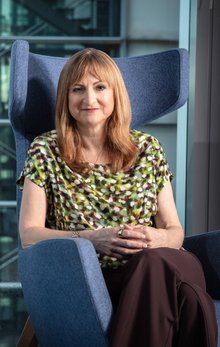
Overseeing the research, development and technical strategy behind every one of Mars’ best-loved brands – from M&M’s and Snickers to Pedigree, Whiskas and Royal Canin – is Nici Bush, the Chief Innovation, Science and Technology Officer.
Nici has worked her way up over 30 years, having served across all Mars business segments, multiple functions, regions and countries.
Her vision is critical as Mars continues to invest heavily in its future.
“In the last five years alone we have committed over US$6bn in our US manufacturing operations and €1.5bn (US$1.8bn) in EU manufacturing, which has enabled us to accelerate efforts to decarbonise our value chain and support consumer-driven innovation, such as new packaging technologies,” she says.
But what are these technologies, and how are they helping across R&D?
“Our packaging experts use Ansys’ advanced simulation technology to design packaging solutions that are recyclable, compostable or reusable,” Nici explains. “This has reduced packaging development time by 40% and eliminated more than 240 tonnes of plastic.”
Substantial progress in this area includes Snickers, Milky Way and Mars bars in Australia now using recyclable paper flow wrap. Plus, redesigned packaging for the firm’s pet nutrition brands in Europe has saved more than 480 tonnes of plastic annually.
“Another area where technology is driving innovation is in the development of new ingredients that meet the evolving needs of our consumers. In partnership with PIPA, we have created an AI-powered research assistant that leverages both generative and agentic AI,” Nici says.
PIPA’s platform, LEAP, analyses more than 33million scientific publications and 100 knowledge bases to identify new bioactive plant compounds that can improve nutrition in food and pet care products. The multi-year partnership began in 2022 and will also help Mars across operations in food safety, and pet health and diagnostics.
Creating new products
Consumers, including furry-legged friends, are at the centre of everything Mars does.
“We’re relentless in not only listening to what our consumers say, but also understanding what they do, embedding consumer insights throughout our R&D processes to solve real consumer pain points,” Nici explains. “A great example is our new snacking brand for gamers, Respawn by Razer.”
Razer, the gaming PC vendor, has developed an array of mints and chewing gum tailored to gamers’ needs, including packaging that keeps them in the game rather than fumbling around to open a wrapper and losing concentration.
“Razer has a deep understanding of gamer needs and behaviours, developed through access to esport teams, millions of interactions on its digital platforms and its own research team,” Nici adds.
“We also created Gamer Labs, dedicated spaces where we can interact with gamers to understand their behaviours. Through this, we are testing prototypes, claims and campaigns and gaining valuable insights into the pain points and potential wins we can create for gamers in a real-life setting.”
Balancing nutrition, taste and accessibility
Nutritional science plays a fundamental part in Mars product development too.
“The breakthroughs emerging in biology and nutrition, combined with advances in computing power and our ability to read DNA, are opening up new opportunities,” Nici says.
“These technologies enable us to identify novel ingredients, optimise formulations and design products that meet evolving health needs. Whether it’s for pets or people, the challenge is always balancing the triangle of nutrition, taste and accessibility.”
In the past year, Mars’ Food & Nutrition segment has delivered 3.5 billion healthy meals, including 309 million servings of fibre and 372 million servings of vegetables, while reducing sodium by 5% compared to a 2019 baseline.
Nici highlights: “These results reflect our commitment to making food tasty, accessible and healthy. We’ve expanded our ready meals portfolio with launches like Ben’s Original Street Food in the US, Canada and UK – a bold, flavourful range, packed with fibre and protein for busy lifestyles.
“In pet food, where pets rely on a complete meal for balanced nutrition, nutritional science is critical. For over 60 years, scientists at our Waltham Petcare Science Institute have advanced understanding pet health and nutrition, finding the optimal balance of nutrients so cats and dogs can thrive throughout their lives. This science helps in the development of all Mars Petcare’s products and services.
“Nutrition science also fuels our Kind snacking products. Kind’s nutrition principles are built on using nutrients‑dense foods like nuts and whole grains as the first ingredient. Nuts in particular, are central to Kind’s recipes, providing a delicious and convenient way to get nutrition from recommended foods into everyday diets.”
Tech-enabled sustainability in agriculture
Mars and its partners are also using technology to improve operations beyond its business by helping farmers to reduce emissions and supporting regenerative agriculture.
“Last year alone, we supported over 60 climate-smart agriculture projects across 13 crops in 29 countries,” Nici points out. “These initiatives helped remove over 41,000 tonnes of CO₂ from the atmosphere.
“We’re also working with partners like ADM, Cargill and Riceland Foods to scale regenerative practices in wheat, corn and rice farming. One example is our recent partnership with PepsiCo and ADM to advance regenerative agriculture in Poland, aiming to transform farming practices across 5,454 hectares and support 24 farmers in adopting climate-smart techniques.
“This partnership sees us and PepsiCo working with some of the same farmers to implement rotational agriculture, a method that alternates crops like cereals, legumes and cover crops to improve soil health, break pest cycles and reduce emissions.”

Nici also explained that, more broadly, Mars is supporting low-emission farming with digital tools and data as part of its multi-billion dollar Sustainable in a Generation plan. This support includes technology that helps farmers improve resource management and boost crop yields, as well as the use of satellite data and remote sensing technology to monitor land use changes and deforestation.
“We’re also using technology to reduce dairy emissions, working with our dairy supplier DMK on three net zero pilot farms in Germany, implementing proven and new technologies to create a pathway to net zero,” she adds.
This willingness to test and implement new and proven technologies is rooted in a culture that has always prioritised innovation and experimentation.
“Trying new things has been part of our culture since our founders started the company more than 110 years ago – it enables us to innovate, remain relevant and grow,” Nici says.
“Learning from experience and sharing those learnings is key to scaling solutions. One example is our Mars Make The Difference global recognition and innovation programme, which celebrates pioneers, trailblazers and innovators with the aim of scaling and replicating extraordinary innovations.”
- Mars has more than 170,000 associates working on products across its brands and services
The Mars Make The Difference 2025 cycle saw 14,000 nominations, which advanced to local and regional semi-finals, and itsGlobal Final where 150 associates, representing 80 extraordinary projects, gathered in Washington, D.C. in November 2025, with members of the Mars Family and Mars senior leaders to celebrate and unveil the top 10 global Make the Difference winners.
“To encourage experimentation, people need to feel safe trying ideas that may fail,” Nici concludes. “Innovation requires personal risk, and personal risk is only possible when psychological safety is present. You need to fall in love the problem, rather than the solution, because solutions will inevitably evolve.
“By focusing on curiosity, openness and the right enabling technologies, we create a culture where learning and experimentation thrive. This mindset has led to real breakthroughs, from trialling and developing Skittles compostable packaging to Greenies Canine Dental Check, the first AI-powered tool that helps pet parents monitor their dog’s dental health with just a smartphone photo.”