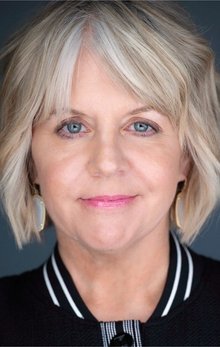
Quest Software: Sue Laine, Bharath Vasudevan and Mike Laudon
Global Field CTO, Vice President of Product, Data Division and Chief Product and Technology Officer

Quest Software’s push into AI-powered data management features three executives who bring distinct perspectives to the company’s mission.
From data expertise to product strategy and technology leadership, Sue Laine, Bharath Vasudevan and Mike Laudon are shaping how enterprises build trusted data foundations for AI success.
Sue Laine
Sue Laine, Global Field Chief Technology Officer at Quest, didn’t set out for a career in technology. She fell into it “many years ago” during a three-year ERP system migration project. After representing one area of the business and helping re-engineer processes, she was hired as a business analyst.
“I was pretty good at being able to transfer the technical information to the business information and it's kind of been my forte with metadata all along,” Sue explains.
That translation skill has been an enabler in her career.
She works regularly with Chief Data Officers across organisations, helping them extract value from Quest’s product line. At Quest Software, her passion lies in demonstrating impact.
“My favourite part of my work is when I can show how good, solid data management can turn a company around – how it can impact people and help them understand and get value out of data – that’s what I live for.”
Her biggest challenge? Keeping pace with AI’s rapid evolution while prioritising what will deliver the most return for clients from a data readiness perspective.
Bharath Vasudevan
Bharath Vasudevan, Vice President of Product for Quest's data division, has spent more than 25 years in technology. His journey began in pure engineering – namely circuit board design – and every step since has brought him closer to customers.
From motherboards to server storage and networking subsystems, from partner management to product management and marketing, Bharath’s roles have increasingly focused on understanding customer needs.
He spends considerable time with Quest’s sales teams, helping them tell the company’s story effectively to senior decision-makers in customer organisations.
“It’s all about bringing out what our customers need, or what they’re asking for, and separating them from the noise,” Bharath says of his work.
“When you are able to resonate with customers, that’s really the win for us.”
His current challenge reflects broader industry tensions.
He acknowledges that AI helps solve practitioner problems, but is constantly evolving – something that’s hard to keep up with.
With terms like agentic AI not existing 18 months ago, he works to find adopters willing to take advantage of new capabilities – something that requires careful discovery to separate “the pretenders from the contenders”.
Michael Laudon
Michael Laudon joined Quest as Chief Product and Technology Officer at the end of 2025, bringing decades of experience from semiconductor design through to cybersecurity.
He has a master's degree in electrical engineering and has navigated multiple technology shifts – all the way from the dot-com era through virtualisation to today’s AI transformation. He joined Quest after being attracted to its positioning.
“What really excites me is working alongside a great team in the very interesting space we’re in,” Michael says. “If you look at where the industry’s going, the continuum has always been that data has been important. There’s always been a change in what the lead technologies are, but there’s always a need for data. So with Quest in that space and being the market leader in providing data products is really exciting.”
His challenge now lies in driving adoption. Quest has embedded AI across its products, making them more effective and easier to use. Now the work is “really educating the world on what we’re doing and where we're going with our vision.”
For Michael, seeing the technology Quest builds being used at customer sites drives both excitement and fulfilment – a results-oriented approach that aligns with Quest’s focus on measurable business impact.
Company portals
Executives
Bharath Vasudevan
VP of Product and GTM

Michael Laudon
Chief Product and Technology Officer
Susan Laine
Chief Technologist