What the Latest Trump Tariffs Mean for the Tech Industry
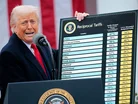
US President Donald Trump has unveiled extensive new tariffs on imports to the US, branded by the White House as ‘Liberation Day’ measures.
The policy imposes baseline 10% duties on all imports, with targeted nations facing rates as high as 50%.

The administration’s reciprocal framework applies higher rates to countries based on their existing trade barriers with the US.
Analysts predict retaliatory measures from affected nations, compounding stress on a world economy still recovering from post-pandemic inflation.
The tariffs threaten to disrupt supply chains for multinational corporations, particularly in automotive and technology sectors.
Trump’s address
Making his speech from the White House’s Rose Garden, Trump said 2 April 2025 is “one of the most important days in American history”.
“For decades, our country has been looted, pillaged, raped and plundered by nations near and far, both friend and foe alike,” he said. “Our country and its taxpayers have been ripped off for more than 50 years, but it is not going to happen any more.
“It’s our declaration of economic independence. For years, hard-working American citizens were forced to sit on the sidelines as other nations got rich and powerful, much of it at our expense, but now it’s our turn to prosper.
“This will be, indeed, the golden age of America. It’s coming back and we’re going to come back very strongly.”
Trump’s new tariffs
Holding a chart detailing the new trade regime, President Trump announced customised tariffs for approximately 60 countries he branded the “worst offenders” in global trade.
The rates reflect what he called a “discounted” approach to reciprocity, applying roughly half the perceived trade barriers imposed on US goods.
Asian economies face steepest levies.
Key Asian trading partners received the highest rates under the framework:
- China: 54%
- Cambodia: 49%
- Vietnam: 46%
- Thailand: 36%
- Taiwan: 32%
- Japan: 24%
The European Union (EU) will be impacted by a 20% levy on exports to the US, with European Commission President Ursula von der Leyen condemning Trump’s measures as a “major blow to the world economy.”
“Uncertainty will spiral and trigger the rise of further protectionism,” she added. “The consequences will be dire for millions of people around the globe.”
While the UK faces the baseline 10% rate alongside Singapore, Brazil and Australia, smaller economies confront higher rates.
Existing tariffs set stage for ‘Liberation Day’ escalation
Heading into the 2 April announcements, the US maintained a 25% global tariff on steel and aluminum imports alongside a new 25% duty on all foreign automobiles — including sedans, SUVs and key components like engines and transmissions — effective immediately.
Focusing on specific countries, the US’ North American neighbours face sustained pressure, with Canada and Mexico retaining their 25% metals tariffs, compounded by a 10% levy on Canadian energy exports imposed in early March.
Amid a mounting regional trade war, Canada responded by imposing a 25% charge of its own on US steel and aluminium.
While a 20% baseline tariff on Chinese goods preceded the announcement, Liberation Day compounded this with additive reciprocal rates — pushing effective duties beyond 50%.
A separate 25% tariff now targets any nation purchasing Venezuelan oil or gas while maintaining US commercial ties, creating secondary pressure points beyond the main reciprocal framework.
The updated Liberation Day tariffs layer new reciprocal rates on top of existing sector-specific duties, preserving the 25% metals and auto tariffs while introducing country-specific surcharges.
The tech impact, explained
Trump’s tariffs have put a strain on tech firms, leaving them in limbo thanks to the latest announcement.
This is because, unsurprisingly, China accounts for a significant portion of global tech manufacturing — with estimates suggesting it produces around 30% to 35% of the world's total manufacturing output.
According to data published by the United Nations Statistics Division, China accounted for 31% of global manufacturing output in 2022.
Neighbouring Taiwan has also been impacted by Trump’s tariffs.
The country says the US tariffs imposed on it, 32%, are unreasonable.
As a global leader in chip manufacturing and producing a significant portion of the world's most advanced semiconductors — including those used in AI and quantum computing — this could have a significant impact on the likes of Nvidia, AMD and Qualcomm, all customers of Taiwan Semiconductor Manufacturing Company (TSMC).
The White House however has published a fact sheet following Trump’s announcement that outlines that semiconductors will be exempt from the reciprocal tariff.
That being said, the tariffs making manufacturing generally in places like China less attractive, meaning the disruption caused by sweeping tariffs could create opportunity for other countries.
With India’s 26% tariff lower than its Asian peers, technology companies could turn to the country to meet demand.
On top of general tariff implications, the technology sector is impacted when it comes to the semiconductor market.
Shortly after Trump’s tariff speech, Nvidia and TSMC saw chip stocks fall.
Nvidia stock dropped 4.7%, while AMD fell to a similar level at 4.5%.
Broadcom dipped even further at 5.2% and Micron further still at 6.4%.
Trump said: “To any company that objects to our common sense, reciprocal tariffs… My answer is very simple.
“If they complain, if you want your tariff rate to be zero, then you build your product right here in America.”
Analysts have outlined the detrimental impact that will be felt, with Wedbush analyst Daniel Ives saying the tariffs imposed are “worse than the worst case scenario” for tech investors.
Apple, whose stocks have slipped more than 6%, and Amazon are among a group of US companies that rely heavily on manufacturing in China and will feel the impact of Trump’s additional levies.
Daniel added that the technology industry “will clearly be under major pressure on this announcement [over] worries about demand destruction, supply chains and especially the China and Taiwan piece of the tariffs.”
In anticipation of tariffs disrupting operations and potentially pricing goods out of the market, many chip manufacturers are moving their manufacturing sites out of China in favour of the US.
Even chip giant TSMC — a brand with Taiwan core to its identity — plans to invest an additional US$100bn in the US, expanding its chip manufacturing footprint to bolster domestic production and reduce reliance on foreign supply chains. Its CEO C.C. Wei announced this move in March at the White House.
“We must be able to build the chips and semiconductors that we need right here,” Trump said in March. “It's a matter of national security for us.”
TSMC says it looks "forward to discussing our shared vision for innovation and growth in the semiconductor industry, as well as exploring ways to bolster the technology sector along with our customers”.
Explore the latest edition of Technology Magazine and be part of the conversation at our global conference series, Tech & AI LIVE.
Discover all our upcoming events and secure your tickets today.
Technology Magazine is a BizClik brand