ABB and NVIDIA: Physical AI Shapes Intelligent Automation
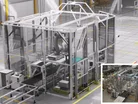
ABB and NVIDIA are pushing the boundaries of industrial AI as ABB Robotics announces the integration of NVIDIA Omniverse libraries into RobotStudio – its software suite for programming, design and simulation in industrial automation.
The collaboration enables manufacturers to apply physical AI in robotics through high-fidelity digital simulations and synthetic data generation.
By combining NVIDIA’s accelerated computing and real-time simulation technologies with ABB’s robotics software ecosystem, the two companies aim to close the gap between virtual training and full-scale deployment on the factory floor.
Marc Segura, President of ABB Robotics, says: "Using NVIDIA accelerated computing and simulation technologies, we have removed the last barriers to making industrial and physical AI a reality at a global scale by closing the sim-to-real gap.
"For more than 50 years, ABB Robotics has led the evolution of intelligent industrial automation, from pioneering the first generation of fully-electric industrial robots to advancing digital twin simulation through RobotStudio and shaping a new area of autonomous and versatile mobile robots. Today’s announcement with NVIDIA brings physical AI to industry at scale."
Combining RobotStudio with Omniverse simulation
The partnership centres on connecting RobotStudio with the simulation capabilities of NVIDIA Omniverse libraries, creating a unified platform for physically accurate simulation.
Developers can use these virtual environments to build digital twins – virtual replicas of real-world systems – enabling engineers to test and optimise processes, automation workflows and robotics behaviour before deployment on the production floor.
By combining RobotStudio with Omniverse, developers can generate synthetic data – computer-created datasets used to train AI models when real-world data is scarce or costly to capture.
In robotics, this synthetic data allows machines to rehearse complex tasks across countless simulated scenarios.
The integrated platform also introduces RobotStudio HyperReality, which merges simulation with live operational feedback to refine foundation models.
These models train ABB robots globally, continuously improving through real-world data loops that ensure simulations remain both precise and adaptive.
Deepu Talla, VP of Robotics and Edge AI at NVIDIA, says: "The industrial sector needs physically-accurate simulation to bridge the gap between virtual training and the real-world deployment of AI-driven robotics at scale.
"Integrating NVIDIA Omniverse libraries into RobotStudio brings advanced simulation and accelerated computing to ABB Robotics’ unique virtual controller technology, accelerating how manufacturers of all sizes bring complex products to market."

The ‘sim-to-real’ gap
The sim-to-real gap refers to the difference between results achieved in simulation and actual performance in the physical world.
In robotics development, virtual tests often struggle to account for variables such as lighting changes, material responses and environmental complexity.
This gap limits manufacturers’ ability to design and validate advanced processes entirely in digital environments, often forcing engineers to rely on repeated physical testing.
ABB Robotics is tackling this challenge by embedding NVIDIA Omniverse libraries into RobotStudio, delivering robotics simulation and synthetic data generation that achieve up to 99% accuracy between virtual models and real-world operations.
A key advantage comes from ABB’s virtual controller, which runs the same firmware as its physical counterpart.
This one-to-one firmware alignment ensures that behaviour in simulation closely replicates performance in real robots.
Combined with ABB Robotics’ Absolute Accuracy technology – which reduces positioning errors from 8–15mm to around 0.5mm – this precision enables high-performance motion control for industrial applications across both digital and physical environments.
Manufacturers can now design, test and optimise production lines virtually, cutting setup and commissioning time by up to 80% and reducing costs by as much as 40% by avoiding physical prototypes.
According to ABB Robotics, this approach accelerates time-to-production for complex products such as consumer electronics by 50%.
Looking ahead, ABB Robotics is also exploring integration of the NVIDIA Jetson edge computing platform into its Omnicore controller to enable real-time AI inference at the network edge.
Industrial testing and early deployments
RobotStudio HyperReality is poised to support industrial clients across a range of sectors, with select customers already piloting the technology ahead of a wider rollout to ABB Robotics’ 60,000 RobotStudio users in the second half of 2026.
Foxconn, the world’s largest electronics contract manufacturer, is leading the first joint use case in consumer electronics assembly – an environment that demands exceptional precision in pick-and-place and assembly control.
Through RobotStudio HyperReality, Foxconn trains its assembly robots in a virtual environment powered by synthetic data.
These robots can rehearse diverse manufacturing scenarios in simulation with accuracy levels reaching 99%, significantly reducing setup time, cost and the need for physical training on production lines.
Dr Zhe Shi, Chief Digital Officer of Foxconn, explains: "Precision is everything in consumer electronics manufacturing and, until now, this level of accuracy and fidelity just wasn’t possible in simulation and digital twins.
"We’re incredibly excited by the potential of ABB Robotics and NVIDIA’s collaboration, which enables parallel engineering for better designs, faster production ramp-up and greater product evolution through advanced AI inference and understanding."
Elsewhere, California-based robotic workforce company WORKR is expanding the reach of this technology to small and medium-sized manufacturers across the United States.
At the upcoming NVIDIA GTC 2026 in San Jose, WORKR will showcase AI-driven robotic systems built on ABB technology and trained using synthetic data generated through NVIDIA Omniverse libraries.
Ken Macken, CEO and Founder of WORKR, adds: "This collaboration is about making industrial AI deployable today. Together with ABB and NVIDIA, we're proving that advanced automation can work for manufacturers of any size."