AMD and HPE Power DOE’s $1bn AI Supercomputer Push

The US Department of Energy is moving to further solidify American leadership in science and technology with a US$1bn investment in two new AI supercomputers: described as the next evolution in leadership-class AI systems.
A second-generation exascale supercomputer named Discovery, and a new AI-focused cluster called Lux, will both be built at the DOE’s Oak Ridge National Laboratory (ORNL).
Both systems will be powered by AMD technologies and constructed in partnership with HPE.
The Lux system, led by AMD and leveraging Oracle Cloud Infrastructure (OCI), is planned for deployment in early 2026, while the HPE-led Discovery system is expected to arrive in 2028.
This new portfolio is purpose-built for the AI era and forms part of the DOE’s mission to advance American leadership in AI and supercomputing across science, energy, and national security.
The systems also support the US AI Action Plan’s push for secure and sovereign national AI infrastructure.
“When we built Frontier for Oak Ridge National Laboratory and ushered in exascale, we achieved the pinnacle in supercomputing history and a triumph for the US,” said Antonio Neri, President and CEO at HPE.
“We are proud to build on that leadership innovation and strong public-private partnership with the U.S. Department of Energy, ORNL and AMD, to build Discovery and Lux, accelerating the next era of scientific discovery and AI innovation.”
Inside the exascale Discovery
Discovery succeeds ORNL’s Frontier — the HPE-built machine that became the world’s first exascale supercomputer, capable of two quintillion calculations per second.
It will use the new HPE Cray Supercomputing GX5000 platform, which features a unified AI and High Performance Computing(HPC) architecture.
Discovery will also feature HPE Cray Supercomputing Storage Systems K3000 and be powered by next-generation AMD EPYC CPUs (“Venice”) and AMD Instinct™ MI430X GPUs.
Discovery is expected to increase research productivity tenfold, enabling breakthroughs in precision medicine, cancer research, nuclear energy and aerospace.
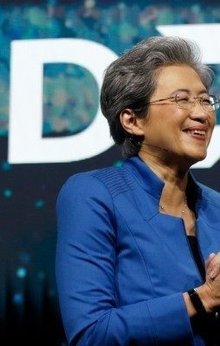
“We are proud and honored to partner with the Department of Energy and Oak Ridge National Laboratory to accelerate America’s foundation for science and innovation,” said Dr. Lisa Su, chair and CEO, AMD.
“Discovery and Lux will leverage AMD’s high-performance and AI computing technologies to advance the most critical U.S. research priorities in science, energy, and medicine – demonstrating the power of public-private partnership at their best.”
Lux: An AI factory for science and national security
Lux will be the first of its kind, dedicated AI factory for science, energy and national security, purpose-built to train and deploy advanced AI models that boost engineering innovation.
It is expected to accelerate breakthroughs in critical problems such as: fusion and fission energy, new materials, quantum research and advanced manufacturing, by enabling researchers to combine data and models across DOE domains.
The Lux system, which will support large-scale AI training, will use AMD Instinct™ MI355X GPUs, AMD EPYC™ CPUs, AMD Pensando™ networking, and HPE ProLiant Compute XD685 systems.
Mahesh Thiagarajan, executive vice president at Oracle Cloud Infrastructure said they were honoured to partner with the DOE to help drive breakthroughs in science, energy, and national security.
“Oracle will deliver sovereign, high-performance AI infrastructure that will support the co-development of the Lux AI cluster.”

Together, Discovery and Lux signal not just another supercomputing upgrade, but a strategic shift in how the U.S. intends to conduct scientific research — combining exascale computing and frontier-scale AI under one national framework.
As Bronson Messer, Director of Science for the Oak Ridge Leadership Computing Facility, noted: "We expect both systems will contribute to a paradigm shift in our productivity, reaching unparalleled gains in various, critical areas of scientific research and leadership."
Company portals



Executives
Antonio Neri
President & CEO
Lisa Su
Chair & CEO
Mahesh Thiagarajan
Executive Vice President, Oracle Cloud Infrastructure