Has Tesla's Tech Diversification Ended its EV Domination?
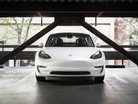
In Q2 of 2025, Tesla reported a notable decline in its quarterly vehicle deliveries, setting a new record in this direction.
The company, a leader in EV technology, delivered 384,112 units, which fell just short of anticipated figures by almost 3,000 vehicles.
Despite this, Tesla's stock value exhibited resilience, buoyed in part by its aspirations beyond traditional EVs.
The automaker is actively pursuing several advanced technologies, such as robotaxi systems, AI-driven humanoid robots, photovoltaic solar solutions and energy storage advancements.
Disruption in EV market share
Tesla commanded a substantial 75% share of the US EV market in early 2022.
However, by the first quarter of 2025, this dominance had decreased significantly to 43.5%.
A number of competitors are narrowing the gap, with General Motors leading the charge through its Chevrolet, Cadillac, GMC Hummer and Buick brands.
Cassandra Garber, GM’s Chief Sustainability Officer, said: “We’re now the #2 EV company in the US, thanks to the dozen EV models we offer across the Chevrolet, Cadillac, GMC Hummer and Buick brands. I love our vehicles! You need to experience GM’s incredible advancements in design and technology.”
Globally, Tesla faces intense competition from the likes of Chinese powerhouse BYD, which captured a 22.2% market share in 2024.

Investment in solar and energy storage
Since its acquisition of SolarCity in 2016, Tesla has been pioneering the solar energy sector with its futuristic vision of sustainability.
The aim was to build a vertically integrated company capable of supporting global renewable energy demands.
In a landmark development, Intersect Power confirmed a robust 15.3GWh storage partnership with Tesla in 2024.
Mike Snyder, VP of Energy and Charging at Tesla, commented on the collaboration, noting that: “Intersect continues to be an exceptional partner and their development expertise combined with the plug-and-play nature of Tesla’s vertically integrated technology enables the speed and scale needed to enhance grid resilience and support greater renewables integration.”
Advancements in autonomous vehicle technology
For its robotaxi fleet, Tesla places trust in vehicular camera technology over radar and LiDAR systems, predominantly used by competitors like Waymo and Zoox.
This decision offers potential cost benefits, though it has drawn some regulatory scrutiny and consumer attention.
The US National Highway Traffic Safety Administration (NHTSA) clarified that it 'does not pre-approve new technologies or vehicle systems', but expects compliance with safety regulations.
In June 2025, Tesla’s autonomous vehicles faced criticism following the release of social media videos allegedly showing traffic violations, prompting NHTSA's intervention.
Envisioning the future with humanoid robots
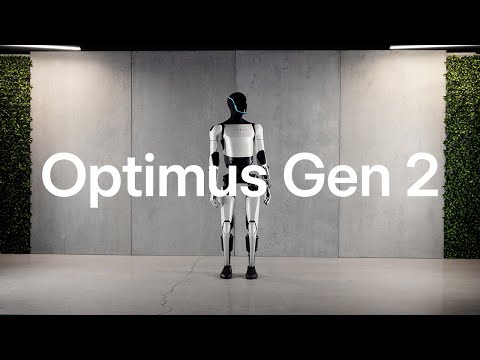
Among Tesla’s ambitious projects is the development of Optimus, a humanoid robot designed to leverage the advanced AI systems initially created for Tesla vehicles.
Tesla’s CEO, Elon Musk, has articulated his belief in the potential for Optimus to eclipse the automotive sector in importance.
Tesla’s vision for Optimus includes executing hazardous, monotonous tasks, guided by state-of-the-art AI technology.