How AWS is Powering Cargill's Shipping Data Transformation
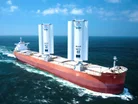
Cargill Ocean Transportation has developed a custom cloud solution with AWS to streamline its vast shipping operations and meet increasingly complex regulatory requirements across its fleet of 650 chartered vessels.
The company's fleet conducts more than 4,500 voyages annually, visiting more than 700 ports while transporting more than 100 types of dry bulk cargo including iron ore, coal, grain, fertiliser and sugar.
With a commitment to achieve net zero emissions by 2050, following its 2018 global CO₂ Challenge initiative, Cargill found its manual data processes were inadequate.
Neither existing SaaS solutions nor ERP systems could effectively handle the company's data complexity or adapt quickly enough to evolving compliance standards.

Having previous experience with AWS on large-scale projects, Cargill chose to develop a bespoke cloud platform.
René Greiner, Senior Director of Data, AI & Digital at Cargill Ocean Transportation and Thomas Burns, Principal Sustainability Strategist and Principal Solutions Architect at AWS, detailed the collaboration in a recent AWS blog post.
Cloud architecture for maritime compliance
The project began with a Data-Driven Everything (D2E) workshop to assess business requirements and data streams. While seven emissions use cases were considered, Cargill focused on two key metrics: the Carbon Intensity Indicator (CII) and Energy Efficiency Operating Indicator (EEOI).
This led to the creation of OT DataCloud, built on AWS services including Amazon S3 for storage, AWS Glue for ETL processes and AWS Lambda for application execution. The platform serves as a central hub for integrating and governing data across operations.
The CII application, completed in four months, helps classify ships by efficiency ratings from A to E, supporting both compliance and customer decision-making. Additional decision support tools running on Snowflake hosted by AWS enable route planning based on emissions and cost comparisons.
AI and automation capabilities
Following initial success, Cargill expanded the platform's capabilities by incorporating machine learning and customer access features. The company implemented Amazon Textract to automate document processing tasks, while leveraging Amazon SageMaker, Simple Queue Service and Simple Notification Service to introduce new data sources and AI models.
The enhanced platform now provides analytics services for studying carbon trends, benchmarking performance and comparing shipping options. This enables traders and operators to analyse cost and carbon trajectories for improved planning.

Intelligent port management
Cargill further extended the platform's functionality with a Laytime application that optimises vessel port times. Using AI and machine learning, the system automates data extraction and analysis from documents like Statements of Facts and contracts.
This automation helps clients manage vessel turnaround times and avoid unnecessary port charges while reducing potential environmental impact. When ships fall behind schedule, they often increase speed to compensate, resulting in higher fuel consumption and emissions.
The centralised data system continues to evolve, enabling Cargill to enhance operational control, improve customer service and make more informed environmental decisions through cloud technology and automation.