Cloud, Chips and Cargo: How US-Iran Conflict Hits Tech Flows
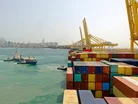
The deepening military standoff between the United States, Israel and Iran has unleashed fresh turmoil across the global technology and logistics ecosystem, with the effective closure of the Strait of Hormuz sending shockwaves through data infrastructure, semiconductor transport and energy supply chains worldwide.
The Islamic Revolutionary Guard Corps has reportedly issued electronic and radio directives restricting vessel passage through the strait, leaving close to 170 container ships stranded and stalling the movement of nearly 20% of the world’s seaborne energy exports – a disruption with direct implications for hyperscale data centres, cloud providers and global manufacturing networks.
"The speed and scope of escalation in the Middle East will have taken many businesses by surprise and has highlighted just how unstable the region can become in as little as 48 hours," says Simon Geale, EVP at Proxima.
"What will concern companies is that we may just be at the start of a prolonged conflict and there may be much more to come in terms of the impact on global supply chains."
Maritime traffic paralysis
Data intelligence from Pole Star Global tracking 3,878 vessel zone events across the Persian Gulf in the week surrounding the February 28 military strikes highlights a dramatic real-time shift in maritime network behaviour.
Maritime traffic spiked 162% on the day of operations, peaking at 05:00 UTC when 138 vessel zone events were detected – a seven-fold surge above baseline hourly averages.
Iranian-flagged vessels exhibited a steep decline in digital visibility, dropping from 940 pre-strike events to just 41 in the six hours following the attacks, representing a 95.6% reduction in reported activity.
The International Maritime Organization's Secretary-General, Arsenio Dominguez, issued a statement: "No attack on innocent seafarers or civilian shipping is ever justified. These crews are simply doing their jobs and must be protected from the effects of wider geopolitical tensions."
The IMO is calling on shipping companies to exercise maximum caution and, where feasible, to avoid transiting the affected corridor until security conditions stabilise, warning of mounting risks to vessels, crews and the wider logistics technology stack.
Major shipping lines are already responding at pace to the unfolding disruption.
Maersk has suspended all vessel crossings through the Strait of Hormuz and warned that services calling ports in the Arabian Gulf will face delays, rerouting or schedule changes, while confirming that its ME11 and MECL services are being redirected around the Cape of Good Hope to safeguard crews, cargo and critical digital supply chain operations.
Hapag-Lloyd cited the official closure of the Strait by relevant authorities in suspending all transits, noting: "This measure is therefore not discretionary but a necessary response to the current conditions and regulatory restrictions."
MSC has ordered all vessels currently operating in the Gulf region to proceed to designated safe shelter areas, reiterating that the safety of its crews remains its highest operational priority.
Diversions around the Cape of Good Hope add approximately 3,500 nautical miles and around US$1m in additional fuel costs per voyage, with these increased expenses expected to flow through to end consumers.
Operations at Jebel Ali Port, the Middle East’s largest container hub, were temporarily suspended after debris from an aerial interception ignited a fire within the port precinct, with port operator DP World stressing that the shutdown was a precautionary measure to protect assets and infrastructure.
Although Dubai Civil Defence quickly contained the blaze and cargo handling resumed following safety checks, the incident underlines how rapidly regional conflict risk is spilling over into critical commercial and logistics infrastructure, including ports, terminals and associated digital systems.
Analysts at Linerlytica estimate that roughly 450,000 TEU of containers remain stranded inside the Gulf, amplifying congestion risks, schedule volatility and downstream disruption for global shippers and supply chain technology platforms.

The impacts on air cargo
The conflict has sharply reduced global air freight capacity, with Netherlands-based consultancy Rotate reporting an 18% week-on-week drop in available cargo space.
Emirates SkyCargo – the fourth-largest cargo airline by traffic – suspended flights until 15:00 UAE time on 2 March and temporarily restricted booking and acceptance of new shipments for 24 hours, impacting flows of high-value and time-sensitive tech cargo.
FedEx has suspended flights to and from Bahrain, Iran, Iraq, Israel, Jordan, Kuwait, Lebanon, Oman, Qatar, United Arab Emirates and Saudi Arabia, also halting pickup and delivery in several of these markets and stressing that “the safety and well-being of our team members is our highest priority.”
Qatar Airways, which operates 29 Boeing 777 freighters providing more than 3,000 tonnes of capacity per day, has temporarily stopped flights following Qatar’s airspace closure, removing a key artery for electronics and e-commerce shipments.
Cathay Group has suspended all Middle East operations, including passenger services to Dubai and Riyadh and freight services to Al Maktoum International Airport.
Etihad Airlines, operating five Boeing 777 freighters, had halted all flights through Abu Dhabi, while Oman Air has imposed temporary restrictions on perishable cargo, further constraining specialised supply chains.
Energy sector under attack
Saudi Aramco shut its Ras Tanura refinery following Iranian drone attacks on 2 March, marking a clear escalation on the third day of strikes.
The state oil giant halted operations at the Gulf coast facility, one of the Middle East’s largest refineries with a 550,000-barrels-per-day capacity and a critical export terminal for Saudi crude that underpins global energy and industrial supply chains.
Sam Coyne, CEO Europe at Currenxie, comments: “Rising oil prices might grab the headlines but escalation across the Middle East will result in price hikes across all industry supply chains. The crippling of key trade routes will prolong uncertainty and continue to drive up supply costs, squeezing merchant margins ever further and ultimately leading to a spike in the cost of consumer goods and surging inflation.
“Recent research from the Chartered Institute of Procurement and Supply (CIPS) recently warned that due to rising costs of transport, energy and raw materials, consumer goods prices could soar during 2026. The events over the weekend are likely to make such forecasts inevitable and global businesses and consumers will rightly be hugely concerned of the longer-term impact on supply chain costs and the price of products on the shelves."
Rafael Grossi, Director General of the IAEA, cautioned at the opening of the agency’s quarterly board meeting that cities across the Middle East could ultimately face large-scale evacuations if civilian nuclear power facilities were to come under attack.
"We cannot rule out a possible radiological release with serious consequences, including the necessity to evacuate areas as large or larger than major cities," he said. "We therefore urge utmost restraint in all military operations."
Other industries brace for fall-out
Healthcare: The sector is facing a critical supply cliff for generics and Active Pharmaceutical Ingredients sourced from India, with resilience gaps exposed across global pharma logistics.
Air freight costs have surged 400% in 48 hours, hitting the vast majority of Indian pharma exports that normally transit through affected corridors, while major manufacturers warn of looming inventory shortages as emergency air reroutes run into severe capacity constraints.
Technology: Just-in-time delivery of microchips and consumer tech hardware is under intense strain.
EV batteries and semiconductors earmarked for 2026 production runs are stranded in the Gulf, and regional data infrastructure is coming under pressure, with Microsoft Azure and AWS “investigating” reported latency spikes at Middle Eastern nodes following missile strikes on Dubai and Doha hubs.
Agriculture: The effective blockage of the Strait of Hormuz is threatening nitrogen fertiliser exports ahead of Northern Hemisphere spring planting.
Extended disruption risks creating shortages in South Asia and Latin America, setting the stage for reduced crop yields in late 2026 and renewed upward pressure on global food prices.
Energy: Qatar’s halted LNG and food tanker departures are emerging as a critical chokepoint, with internal storage projected to hit maximum capacity within weeks, forcing upstream production curtailments.
With the Middle East importing around 85% of its food, security concerns are intensifying as scarce air-bridge capacity is increasingly prioritised for military and medical shipments over perishable cargo.
Construction: The Jebel Ali Port fire has disrupted the world’s largest man-made harbour, delaying deliveries of Chinese structural steel destined for NEOM’s The Line and flagship Riyadh skyscraper projects.
Specialised materials such as heat-reflective glass cannot simply be airlifted, freezing key construction phases and prompting multiple firms to invoke force majeure clauses, with the potential for multi-month stop-work orders.
Recent briefings delivered by DP World COO Tiemen Meester have emphasised: "The Middle East is a vital trade route... our focus is on providing superior infrastructure and security to ensure the global supply chain can thrive even in a volatile environment."
The road ahead
Maritime authorities have issued critical new guidance, with the US Maritime Administration advising commercial vessels to keep at least a 30‑nautical‑mile distance from US naval assets in the region amid ongoing operations and the risk of retaliatory strikes.
UK Maritime Trade Operations has likewise urged heightened vigilance, calling for reinforced bridge watch protocols and enhanced monitoring from all ships transiting the area..
Simon emphasised the uncertainty ahead: "Just what does happen next now depends on the intentions and actions of several actors and the composition of the next Iranian regime. But for businesses, there is a need to enact contingency plans immediately and begin working through the implications of this conflict lasting weeks or months, rather than days."
As companies globally evaluate the impact of a prolonged crisis, the immediate focus is on executing those contingency measures and bracing for sustained disruption to key trade corridors that function as critical arteries of the international economy.




Executives
Arsenio Dominguez
Secretary General

Rafael Grossi
Director General
Simon Geale
Tiemen Meester
Group COO Ports & Terminals