Davos: Tesla's Musk Lays Out the Future of Self-Driving Cars
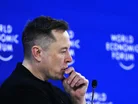
The world’s richest man, Elon Musk, made an unexpected, headline-grabbing appearance at the World Economic Forum (WEF) in Davos.
It marks a notable reversal for the billionaire, who in past years dismissed the gathering as “elitist” and “unelected”.
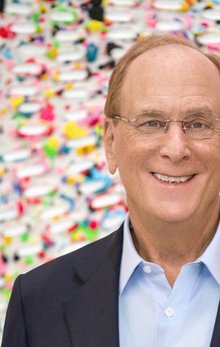
In conversation with BlackRock CEO Larry Fink, Musk addressed an audience of global decision-makers, sharing his vision for an era of unprecedented technological acceleration.
He seized the moment to announce ambitious goals across his companies – from Tesla to SpaceX – reaffirming that his ultimate mission is to "maximise the probability that civilisation has a great future".
Self-driving cars and robotaxi expansion
The business leader is forecasting major advances in autonomous transport, despite early setbacks in the US surrounding Tesla’s Cybercab.
The vehicle became the focus of a federal investigation after footage captured it violating traffic laws during public trials in Austin, Texas.
Speaking in Davos, Elon Musk asserted that "self-driving cars is essentially a solved problem at this point”.
He revealed that Tesla has already launched its robotaxi service in several US cities and expects "very widespread" adoption across the country by year-end.
Turning to international expansion, Musk said Tesla is seeking regulatory clearance for "supervised full self-driving" in Europe, saying, "we hope to get... approval in Europe, hopefully next month".
He added that a similar timeline is in motion for China, as the company accelerates its global rollout of autonomous vehicle technology.
Solar energy and tariff barriers
Elon highlighted the potential for solar energy to meet the United States’ power needs, while warning that progress is being constrained by trade tariffs.
He argued that the country has sufficient natural resources to become entirely self-sufficient through solar power.
"You could take a small corner of Utah, Nevada or New Mexico... to generate all of the electricity that the US uses," he said.
"Unfortunately, the tariff barriers for solar are extremely high and that makes the economics of deploying solar artificially high."
He argued that these barriers are slowing the rapid rollout of clean energy needed to support the vast, power-intensive data centres now being developed for AI.

Policy differences with Donald Trump
The interview underscored a growing rift between Elon Musk and his former close ally, US President Donald Trump, on renewable energy policy.
While Musk continues to champion solar power, Trump has been openly dismissive of clean energy and has pushed for increased oil and gas development.
Musk’s comments place him at odds with the President, particularly over the current freeze on solar project approvals.
Elon emphasised that securing enough power is "critical" as the US rushes to meet the soaring requirements driven by the AI revolution.
Rapid growth of artificial intelligence
Elon set out a timeline for the evolution of AI, forecasting that AI will soon exceed human capabilities.
"I think we might have AI that is smarter than any human by the end of this year," he said, adding that it would likely happen "no later than next year”.
Projecting further ahead, he predicted that by “2030 or 2031, call it five years from now, AI will be smarter than all of humanity collectively”.
He characterised this trajectory as a fundamental turning point, arguing that the speed of AI advancement will eventually “saturate human needs” and unleash an unprecedented wave of global economic growth.
Future of robots outnumbering humans
Musk placed a bold forecast at the centre of his remarks, predicting that “there will be more robots than people” in the future.
He argued that the fusion of robotics and AI represents “the path to abundance for all,” positioning it as a viable route out of global poverty.
Elon told Larry: "The only way to do this is AI and robotics."
He outlined a future in which robots become “ubiquitous,” driving “an explosion in the global economy” that surpasses today’s industrial output.
According to Musk, this shift will redefine the very nature of work, as “everyone on Earth” ultimately seeks robotic assistance for both domestic and industrial tasks.
Optimus humanoids launching next year
Tesla’s humanoid robot, Optimus, is poised to transition rapidly from factory prototype to consumer product.
Elon revealed that Optimus is already handling “simple tasks in the factory,” with more advanced capabilities expected imminently.
"By the end of this year, I think they will be doing more complex tasks, and probably by the end of next year, I think we'd be selling humanoid robots to the public," he said.
He voiced strong confidence that by late 2026, the robots will achieve “very high reliability” and handle virtually any task a human owner might request.

Robots assisting in daily life
Elon highlighted the potential for humanoid robots to tackle social challenges, such as elder care in ageing populations.
He suggested that robots could deliver vital support in societies where young people are too few to care for older citizens.
"Who wouldn't want a robot to, assuming it's very safe, watch over your kids, take care of your pets?" he asked the audience.
He positioned the technology as an everyday essential, predicting that demand for robots to look after “older parents or children” will make them a household mainstay worldwide, dramatically easing the load of manual labour.
Avoiding a Terminator-style future
Despite his optimism, Elon issued a stark warning about the safety risks of advanced robotics.
He said: "We need to be very careful with robotics. We don't want to find ourselves in a James Cameron movie.
“Love his movies, but we don't want to be in Terminator, obviously."
He stressed that safety is a non-negotiable condition for the widespread adoption of humanoid robots.
This note of caution arrives as his AI venture, xAI, faces international regulatory pressure over “sexually explicit content” produced by its Grok chatbot, prompting calls for stricter safeguards.
Solving the problem of ageing
In his closing remarks, the business leader turned to human biology, describing ageing as “a very solvable problem.”
He predicted that once the biological root of ageing is pinpointed, the solution will seem “incredibly obvious” to scientists.
When questioned about his personal ambitions – including his famed goal of colonising Mars – Musk quipped about his mortality on the Red Planet.
"People ask me ‘do I want to die on Mars? and I'm like: 'yes, but not on impact'."



Executives
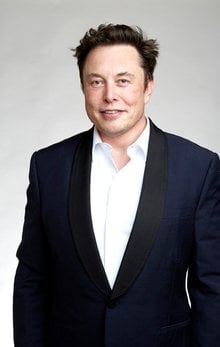
Elon Musk
Tesla CEO
Larry Fink
Chairman and Chief Executive Officer