
Ecolab: Do Consumers Know the Scale of AI's Water Problem?
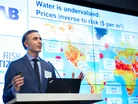
A report from Ecolab finds that public understanding of AI’s impact on water resources remains limited, with consumers far more conscious of the technology’s energy demands than its heavy reliance on water.
Now in its third year, the Ecolab Watermark Study surveyed adults across 15 countries and revealed that while many understand the electricity needed to power AI, few recognise how much water is consumed in cooling data centres.
In the US, only 41% of respondents acknowledged AI-related water usage, compared with 55% who were aware of its high energy consumption.
The disparity in awareness is even greater across Asia Pacific and Latin America, the research notes, based on data collected with Morning Consult in March 2025.

Reusing waste water is an untapped opportunity
These findings emerge amid a global surge in data centre construction, as demand accelerates and water supplies become increasingly strained.
"By 2050, the world will have nearly 30% more people and require 47% more energy. Water demand will continue to surge – yet by 2030, the world already faces a projected 56% water deficit," says Christophe Beck, Chairman and CEO at Ecolab.
Christophe further notes that while energy can be produced, water cannot be manufactured, making it an inherently limited factor in the growth of AI.
He adds that only about 20% of industrial wastewater is currently reused for data centre cooling, meaning most of the water sustaining AI infrastructure today could otherwise serve as potable supply.
"We see wastewater as an engineering flaw and a missed opportunity as a driver for business growth," Christophe says.
He believes that AI could play a key role in solving its own water challenges through data analytics, real-time monitoring, and dynamic temperature control – innovation that could lead to data centres “using less water than a car wash”.
Even so, the study reveals that consumers remain largely optimistic about AI's potential to drive positive societal change.
Why consumer trust in corporate water management has fallen
The research also highlights a clear trust gap between consumers and businesses when it comes to water stewardship.
While most respondents agreed that companies should invest in technologies to reduce AI’s strain on natural resources, majorities across all regions expressed doubt that businesses would handle water responsibly.
In fact, fewer than half of consumers in the US (43%), Europe (44%), Asia Pacific (48%) and Latin America (48%) believe that organisations are actively using smart water management practices such as reuse or recycling in their operations.
We see wastewater as an engineering flaw and a missed opportunity as a driver for business growth
Trust in government efforts was slightly lower across all surveyed regions, with only 42% of US consumers confident that authorities are effectively applying water reduction and recovery measures.
The contrast is notable, as 67% of respondents worldwide believe both businesses and governments should prioritise initiatives that mitigate the impacts of climate change.
"Global consumers recognise smart water management is essential for a resilient future, and they expect businesses to lead with both transformative technologies and transparent action to make it a reality," says Emilio Tenuta, CSO at Ecolab.
Emilio adds that businesses now have a clear opportunity to implement AI-powered water solutions that benefit local communities while advancing innovation.
The study further reveals that consumers are increasingly drawn to brands demonstrating environmental responsibility, with purchasing decisions tilting toward those embedding sustainable water practices.
The demand for water security
Water-related extreme weather events are heightening public concern, with respondents across all regions expressing fears of personal or family impact from droughts, floods or wildfires over the next five years.
Latin America recorded the highest short-term apprehension, though awareness of climate change’s role in intensifying water stress remains strong worldwide.
Despite rising unease about water quality and access, the study notes a decline in overall concern about water scarcity compared with previous years, indicating growing confidence in viable solutions.
More than 60% of consumers in every surveyed region believe water scarcity can be effectively mitigated, with optimism highest in IMEA (83%) and Latin America (84%).
Global consumers recognise smart water management is essential for a resilient future, and they expect businesses to lead with both transformative technologies and transparent action to make it a reality
The future of water governance
The study reinforces that addressing global water challenges requires collective action, as no single organisation can resolve them in isolation.
Strong collaboration among businesses, governments, and communities is seen as critical to developing effective solutions.
While agriculture remains the sector most associated with water consumption, the rapid expansion of AI and data centre infrastructure is emerging as a key area of concern demanding urgent focus.
The findings coincide with Ecolab’s ongoing efforts to deliver innovative water management solutions to industrial clients worldwide, supporting its broader sustainability agenda following annual sales of US$16bn.
Company portals
Executives
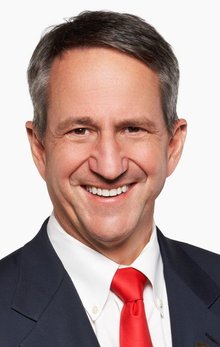
Christophe Beck
Chairman and CEO

Emilio Tenuta
Senior Vice President and Chief Sustainability Officer at Ecolab