Fujitsu's AI Push: Inside the Anthropic and OpenAI Deals

The era of a single, all-purpose AI vendor is coming to an end.
Tech giants are increasingly discovering that different business challenges require fundamentally different AI DNAs.
A prime example of this is when Fujitsu announced simultaneous, major partnerships with both Anthropic and OpenAI.
By embedding both frontier AI powerhouses into its tech stack, the Japanese technology equipment and services giant has a multi-LLM strategy that balances specialised cyber defence and mission-critical reliability against widespread enterprise transformation and industrial productivity.
Anthropic as the guard dog for mission-critical infrastructure
For domains where data sovereignty, strict regulatory compliance and security are non-negotiable – such as government, finance, healthcare, defence and critical infrastructure – Fujitsu is leaning heavily on Anthropic and its Claude model family.
Anthropic has long positioned itself as a safety-first AI organisation, a reputation rooted in its very origin.
The company was founded in 2021 by Dario and Daniela Amodei, alongside other senior researchers, who explicitly left OpenAI due to ideological differences regarding AI safety, security and the speed of commercialisation.
Fujitsu will use Anthropic tools to enable human expertise and AI to work in tandem for rapid cyber defence responses, collaborating with the Japanese government to scale these safety frameworks across society.
To prove the viability of this secure ecosystem, Fujitsu is stepping up as Customer Zero.
Approximately 100,000 Fujitsu Group employees will actively use Claude to validate safe, controllable AI usage in real-time, combining it with Fujitsu’s proprietary Takane LLM and Kozuchi AI platform.
As announced in February 2026, Fujitsu is already advancing AI-driven development platforms and working on automating large-scale system upgrade processes using AI agents based on its proprietary Takane LLM. By combining these efforts with the use of Claude, Fujitsu aims to further enhance development productivity.
Paul Smith, Chief Commercial Officer at Anthropic says: “The institutions that anchor Japanese society – its banks, its hospitals, its government, its critical infrastructure – hold AI to the highest standard.
“Fujitsu has been the technology partner to those institutions for decades, and they are now deploying Claude to 100,000 of their own employees and building a 1,000-person engineering team to bring it to their customers.
“This is one of the most consequential commitments to frontier AI in the Japanese market and we’re proud for Anthropic to be the partner Fujitsu trusts to deliver on that commitment.”
OpenAI as the engine for enterprise transformation
While Anthropic acts as the safeguard for critical infrastructure, OpenAI is being positioned as the engine for broad enterprise growth, particularly within commercial markets like manufacturing, pharmaceuticals and system integration.
By integrating ChatGPT Enterprise and Codex, Fujitsu aims to establish a collaborative model where humans and AI agents work side-by-side across commercial development, sales operations and delivery.
While cybersecurity remains an initiative here as well, the emphasis with OpenAI leans toward encouraging human creativity, optimising supply chains and changing the rules of corporate decision-making.
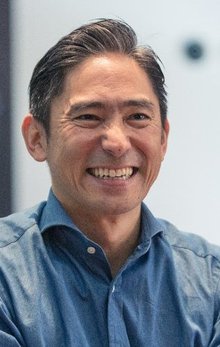
“OpenAI aims to bring the benefits of AI broadly to society and help build a future in which people and businesses can create greater value,” says Tadao Nagasaki, President of OpenAI Japan.
“Achieving this requires partners that can implement advanced AI in real-world settings across Japanese industry and society, and expand its use in ways that earn trust.
“With deep expertise and execution capabilities in critical fields including manufacturing, healthcare and pharmaceuticals, and cybersecurity, Fujitsu is well positioned to play an important role in advancing AI adoption in Japan.
“Through this collaboration, OpenAI will support Fujitsu in advancing its transformation and work together to help businesses and society in Japan unlock new opportunities for growth and build a more prosperous future with AI as a catalyst.”
The unifying thread
Despite the split implementation, both partnerships converge on a singular operational strategy: Fujitsu’s forward deployed engineer (FDE) model.
Instead of treating AI as a piece of software delivered off the shelf, Fujitsu sends FDEs directly onsite to work alongside clients, mapping specific industry challenges to custom AI solutions.
By feeding both Claude’s specialised reasoning and OpenAI’s automation tools into this FDE model, Fujitsu ensures that its clients are shifting toward better business models that result in high efficiency gains.

A blueprint for the post-AI era?
Fujitsu’s dual-track approach reflects a broader truth about enterprise AI in that there is no one LLM to rule them all.
By treating AI models as specialised components, Fujitsu can tailor its offerings to the exact regulatory, performance and security requirements of its diverse client base.
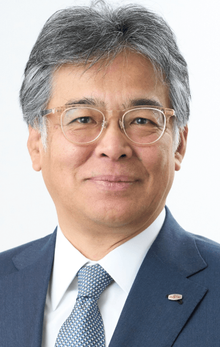
Summing up the vision behind this comprehensive strategy, Takahito Tokita, Representative Director, CEO of Fujitsu, says: “We see the rapid evolution and growth of AI as something that must be swiftly implemented in society and translated into value creation – this is a top priority for us as a technology company.
“Through this collaboration, we will combine Fujitsu’s deep expertise across industries and business functions – particularly its extensive know-how in mission-critical domains.
“In doing so, we aim to support the creation of new value across industries and realise a trustworthy, AI-driven society.”
Executives
Paul Smith
Chief Commercial Officer
Tadao Nagasaki
President - OpenAI Japan
Takahito Tokita
CEO