Will Generative Engine Optimisation Overtake SEO?

Generative engine optimisation (GEO) is fast becoming the benchmark for online visibility and is widely expected to surpass traditional search engine optimisation (SEO) by 2026.
That’s the view of LinkedIn’s Big Ideas 26 list, which highlights the trends set to shape the year ahead.
With AI-powered technologies – including chatbots, agentic workflows and answer engines – taking centre stage, brands are reassessing how they are found online.
Rather than chasing Google rankings, marketers are increasingly focused on being surfaced within AI-generated responses.
Michael King, founder and CEO of digital marketing agency iPullRank, says the shift is already underway – even if some in the industry remain hesitant.
"The SEO industry is being pulled reluctantly into the GEO era," he tells LinkedIn News.
While GEO still borrows tactics from SEO, the overlap is steadily diminishing.
Michael believes the future demands a more disciplined, structured approach: "That’s why we’ve shifted to a framework called ‘relevance engineering,’ which is a fusion of AI, information retrieval, content strategy, UX and digital PR. It’s designed to define this new era rather than be defined by it."
Search rankings give way to generative visibility
GEO is still taking shape – even when it comes to its terminology.
Google Trends points to “generative engine optimisation” as the most widely used label, though alternatives such as “answer engine optimisation” (AEO) and “generative search optimisation” (GSO) are beginning to gain momentum.

Whatever terminology the industry ultimately adopts, the effects are already being felt.
Traditional search rankings are built on web crawlers and keyword matching to surface content.
GEO redefines that model, with large language models – like those behind AI chatbots – generating answers directly from data and source documents.
As a result, appearing within AI-generated responses is becoming more valuable than securing a blue link on a search results page.
Sara Noggler, Founder and CEO of Future Blend, notes: "The shift from SEO to GEO shows how AI is redefining discovery and distribution of information."
This shift is strategic, pushing brands to look beyond metadata and keywords and focus on how AI interprets and delivers their content.
Daniel Hulme, Chief AI Officer at advertising group WPP, highlights the opportunity: "SEO will remain a crucial tool, but its dominance is ending. A move towards GEO is coming. It will be both a vital transition for established brands and a huge opportunity for newcomers and challengers."
The transition to generative discovery requires brands to optimise their presence across a range of AI platforms.
Content is now evaluated not just for query relevance but for how effectively it maps to the AI’s internal knowledge graph, training data and relevance algorithms.
Workflow integration
Oluwatobi Adekunle, Manager of Product Marketing & Campaign at Mobysoft, sees AI becoming embedded across operations.
"In 2026, I see AI going from a 'nice-to-have' to becoming organisations' new operating system. Local firms, from tech to property to manufacturing, will double down on AI implementation, automation and GEO/AEO-driven marketing."
The implication is that GEO won’t exist in isolation from broader business strategy.
Rather, it’s set to become a core element in how products, services and messaging are created and delivered.
Oluwatobi emphasises that success hinges on moving from standalone tools to fully integrated systems: "The businesses that win will be the ones that move beyond experimentation into full workflow integration."
More than just increasing visibility, GEO is shaping the very way organisations operate.
From content creation to customer support, AI is emerging as a channel in its own right – not just an add-on to existing platforms.
Malaika Ijaz, a Search Engine Optimisation Specialist at Elite IT Team, offers this advice: "If you are still relying solely on traditional SEO, this is the moment to set a new marketing goal. The future belongs to a blended approach that includes SEO, AEO, GEO, and AIO."
She warns that search behaviour has already changed: "Ask yourself: how often do you search only on Google anymore? Your customers are exploring multiple platforms for answers. It is time to optimise your business for how people actually search today.
"It is no longer just keyword research and backlinks. Modern SEO requires strong social presence, an optimised website, PR and a broader content ecosystem."



Executives
Daniel Hulme
Chief AI Officer
Michael King
Founder & Chief Executive Officer
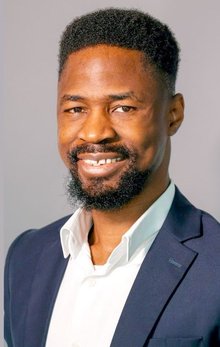
Oluwatobi (Tobi) Adekunle
Manager, Product Marketing & Campaign (SaaS B2B)