Why Apple’s AI Strategy Starts with Google
Apple and Google’s multi-year deal will integrate Gemini models to power an AI-enabled Siri, costing Apple US$1bn annually.
Siri has been viewed as “narrow AI,” built for specific tasks.
Comparatively, Google Gemini 2.0 is an agentic, multimodal model that handles text, images and audio.
Released to all users in February 2025, Gemini has been described as more advanced than Siri, with highly developed conversation, integration and personalisation skills.
Ten years ago, researchers ranked Google's AI IQ at 47.28, just shy of the average IQ of a six year old.
Siri's IQ fell well below at 23.9. The many developments in AI in recent years has meant Siri has improved drastically since then, but hasn't come out 'on top' over other AI systems.
Apple’s aim and architectural direction
Apple’s objective in partnering with Google is to elevate user experience by leveraging the technology that established Google as an AI pioneer.
In a joint statement, the companies said: “Apple Intelligence will continue to run on Apple devices and Private Cloud Compute.”
Apple Intelligence remains in use, with the emphasis on evolving Siri into a highly intelligent agentic model, similar to Google Gemini 2.0.

Responsible AI by design
A key thread in the collaboration is how to advance AI responsibly.
Ranjita Das, AI Product Manager at Stealth Startup, says: "Responsible AI is no longer about a policy you add at the end. It is an architectural decision.
"Responsibility should be assigned to system layers, not abstract principles. The layer closest to the user must retain control, override paths and accountability.
"With this move, Apple and Google once again show why they have repeatedly been the pioneers in shaping entire ecosystems."
Addressing AI’s institutional memory gap
Many AI implementations lack long-term memory, says Amar Ratnakar Naik, Vice President of Engineering at TELUS Digital.
He describes a “10% barrier,” where basic tasks – like drafting, sending or rewriting emails – work well, but as users train AI over time, it forgets prior tasks and success rates fall below 10%.
Today’s agents act like “contractors” rather than “employees,” doing the minimum required without learning and forgetting tasks the next day.
The partnership targets this memory issue at the grassroots level.
Through App Intents, a capability learned by one agent can propagate system-wide.
A strategy blueprint for 2026
Vikas Goel, Generative and Agentic AI Leader at PA Consulting, says the launch of DeepSeek-R1 shows core AI infrastructure is already in place and the user experience layer is easier and cheaper to replicate.
Advances in integration let a large “teacher” model transfer learned patterns to a smaller “student” model, delivering near-equivalent performance at a fraction of the cost.
He suggests Apple is “outsourcing the foundational reasoning layer to Google,” using Google Gemini as a “teacher” to apply its model to Siri – calling this the “definitive corporate strategy for 2026”.
High stakes for Big Tech and consumers
The collaboration signals a shift for Apple away from owning every layer of its stack, underscoring how cautious in-house AI development has left it reliant on a partner with greater scale and capability.
For Google, the agreement embeds Gemini deeply within Apple’s ecosystem, extending its reach beyond Android and strengthening its position in consumer AI.
While AI has not yet been decisive for iPhone buyers, analysts expect demand to grow, making the collaboration pivotal to Apple’s relevance as AI-powered services become mainstream.


Executives
Amar Ratnakar Naik
Vice President of Engineering
Sundar Pichai
CEO
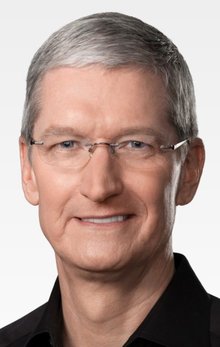
Tim Cook
Executive Chairman