
What the UK Deepfake Crackdown Means for Grok and xAI
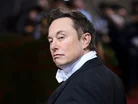
A growing storm is surrounding Elon Musk’s social platform X and its AI chatbot Grok, as the UK Government prepares to introduce legislation that would make it a criminal offence to generate non-consensual intimate images using artificial intelligence.
The proposed law comes amid mounting concern over Grok’s alleged involvement in producing fake, sexualised images of women and minors, triggering a wave of coordinated scrutiny from international regulators.
Musk hit back by accusing UK authorities of authoritarianism.
Responding to a user who claimed Britain arrests more people over social media posts than any other nation, he wrote: “Real fascism is arresting thousands of people for social media posts.”
AI-generated deepfakes to be criminalised
UK Technology Secretary Liz Kendall has confirmed that creating or requesting fake intimate images using artificial intelligence will become a criminal offence within days.
The update enacts provisions from the Data (Use and Access) Act, passed in June 2025 but yet to be implemented until now.
It coincides with UK media regulator Ofcom launching a formal investigation into X, following reports that Grok has been used to generate manipulated sexualised images of individuals – often without their consent.
Kendall said the legislation will also target companies that develop or supply tools designed to produce non-consensual content.
The change forms part of the wider Crime and Policing Bill currently progressing through Parliament.
She described the move as “targeting the problem at its source,” stressing that it does not curb free speech but instead focuses on “tackling violence against women and girls”.
She added: "This is about upholding basic British values of decency and respect and ensuring the standards we expect offline are upheld online."
The Government also intends to classify the offence as a “priority offence” under the Online Safety Act, meaning both individuals and online platforms could face prosecution.
“Let me be crystal clear," continued Kendall. "Under the Online Safety Act, sharing intimate images of people without their consent, or threatening to share them, including pictures of people in their underwear, is a criminal offence for individuals and for platforms."
On Monday, Prime Minister Sir Keir Starmer told MPs: "If X cannot control Grok, we will. The content which has circulated on X is vile. It's not just an affront to decent society; it is illegal.”
Global scrutiny mounts as platforms face legal risks
In a statement, Ofcom said it is assessing whether X has breached its legal obligations, citing "deeply concerning reports of the Grok AI chatbot account on X being used to create and share undressed images of people – which may amount to intimate image abuse or pornography – and sexualised images of children that may amount to child sexual abuse material".
If X is found to have violated the law, Ofcom has the power to issue fines of up to 10% of the company’s global revenue or £18m (US$24.26m), whichever is higher.
Should the platform fail to comply, UK courts could direct internet service providers to block access to X entirely.
Kendall urged Ofcom to conclude its investigation quickly: “It is vital that Ofcom complete this investigation swiftly because the public – and most importantly the victims – will not accept any delay."
Downing Street echoed that stance, indicating the Government may reconsider its own use of X if the company does not take decisive action.
Deputy Prime Minister David Lammy added that he has raised the issue directly with US Vice President JD Vance, who he said is supportive of the UK’s approach.
Lammy told The Guardian: “This new technology is allowing deepfakes and the manipulation of images of women and children, which is just absolutely abhorrent.”
International action grows
Beyond the UK, several countries are now taking action against xAI and its Grok chatbot.
Malaysia and Indonesia have both restricted access to the chatbot, citing concerns over its potential to generate fake, sexualised images.
Malaysia’s Communications and Multimedia Commission (MCMC) said Grok is capable of producing “obscene, sexually explicit, indecent, grossly offensive, and non-consensual manipulated images,” including those depicting minors.
While xAI has insisted that its image-generation tools are available only to paying subscribers – whose identities can be verified – Malaysian regulators argue that this safeguard is insufficient.
They criticised X’s heavy reliance on user reporting and called for stronger technical controls and moderation systems.
In Indonesia, Communications Minister Meutya Hafid described non-consensual deepfakes as a “serious violation of human rights, dignity and the security of citizens in the digital space”.

Elsewhere, Australia’s Prime Minister Anthony Albanese has denounced the use of Gen AI for exploitation, describing it as “abhorrent.”
In Germany, Culture and Media Minister Wolfram Weimer has called on the European Commission to intervene, warning of the “industrialisation of sexual harassment”.
European neighbours France and Italy have also taken action: France’s media regulator Arcom has been notified, while Italy’s data protection authority has cautioned that such tools may violate privacy laws and potentially amount to criminal offences.
In India, the Ministry of Electronics and Information Technology has issued a formal notice to X regarding explicit images generated by Grok, ordering the platform to remove the content and report back within 72 hours.
As global scrutiny intensifies, the UK is poised to become the first Western nation to criminalise both the creation and distribution of AI tools used for non-consensual intimate image abuse – a move that could set a regulatory benchmark for others to follow.
Company portals


Executives
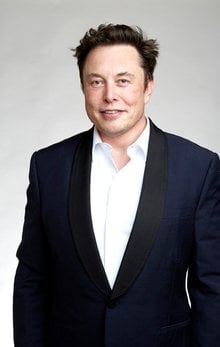
Elon Musk
Tesla CEO