Mitie: Introducing Heathrow's Tech-Powered Cleaning 'Cobots'
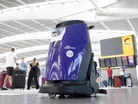
Passengers at Heathrow Airport won’t just see planes taking off this summer; they’ll also spot fleets of self-driving cleaning machines gliding through its terminals.
In a year when the airport is preparing to handle a record 84 million travellers, facilities management leader Mitie has introduced the largest cohort of collaborative cleaning robots – “cobots” – currently in service across the UK.
Mitie now operates 32 autonomous cobots at Heathrow, ranging from compact, R2-D2-sized models to robust, industrial-grade machines.

Cobots take on high-volume cleaning
Each unit is equipped with advanced LIDAR mapping, machine vision and IoT connectivity, allowing them to navigate dynamic spaces, avoid collisions and work seamlessly around passengers and airport staff.
Once deployed, the cobots can perform high-traffic cleaning tasks such as automated mopping, sweeping and polishing without disrupting passenger flow.
They are programmed to run cleaning cycles of up to three hours before autonomously returning to docking stations for smart recharging and maintenance updates.
Every cobot is fully electric, supporting Heathrow’s decarbonisation targets.
They also feature water recycling technology, reducing average daily usage to just 18 litres per machine and cutting operational waste.
On a performance level, each robot can clean an area of 4,800m² per day – equivalent to eight football pitches.
Their data-driven insights, collected through integrated sensors and performance dashboards, allow Mitie’s teams to continually optimise cleaning schedules, improving both efficiency and customer experience.
Heather Downes, Head of Innovation and Product Development at Mitie, says: “We’re proud to welcome our latest cobots to the fleet to support smarter operations, enhancing the travel experience for millions of people passing through Heathrow.
"By blending cutting-edge technology with human expertise, we’re creating cleaner, greener terminals and giving our teams more time to focus on the details that matter most to passengers."
Tech that blends sustainability with user engagement
While most of the automation is designed to quietly get the job done, cobots are also earning attention from passengers.
“It’s not just their sustainable credentials that are proving popular," Heather continues.
"The cobots have quickly established themselves as a favourite with families, with the machines providing an entertaining distraction to young travellers during the check-in process."
That visibility feeds into Heathrow’s broader commitment to innovation in passenger experience.
Mitie first won cleaning contracts at Heathrow in 2018, then expanded operations in 2022 to cover all terminals. This latest rollout forms part of the company's broader strategy of integrating smart technology into large-scale service environments.
Beyond cobots, Mitie has also introduced:
UV-disinfection robots that sanitise high-touch areas with hospital-grade UV-C light.
An IoT-enabled bin-monitoring system that alerts teams the moment a bin reaches 75% capacity, preventing overflow and ensuring faster response times.
“Working closely with our partners, Heathrow is proud to deliver innovative solutions to enhance passenger experience," adds Theo Baldwin-Evans, Soft Services and Hygiene Manager at Heathrow.
"Combining cutting-edge technology with excellent hygiene services, we are pleased to welcome the newest members of Mitie’s cobot fleet, which are already very popular with passengers and colleagues alike.”

Expanding cleaning automation beyond airports
Mitie isn’t limiting this approach to airports.
The same autonomous cleaning technology is already live across major UK transport hubs including King’s Cross, Waterloo, London Bridge and Liverpool Street.
This strategy highlights a broader shift: robotics and automation are becoming core tools in facilities management.
Instead of replacing human staff, cobots are augmenting them by automating high-volume, repetitive tasks while specialists focus on precision cleaning and hygiene-critical work.
Heather concludes: "This is just the start of how we’re harnessing technology to build brilliant places for people to work, live and commute."