How New Technology Is Transforming Spacecraft Manufacturing
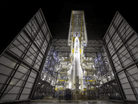
AI and technology are reshaping the landscape of aerospace manufacturing, with machine learning applications delivering significant improvements across critical production processes.
The European Space Agency (ESA), in partnership with German aerospace specialist MT Aerospace, has demonstrated how AI-driven technologies could transform the way rockets and spacecraft are built, offering lessons that extend far beyond the space sector.
The collaboration focuses on three distinct manufacturing processes where machine learning algorithms are being deployed to enhance precision, reduce production times and improve quality control. These applications represent a broader shift towards digitally enabled manufacturing that could influence industrial production across multiple sectors.
Machine learning optimises metal forming
Shot peen forming, a cold-forming process used to shape metal components, presents unique challenges due to the unpredictable nature of high-speed impacts.
Small balls are fired at metal surfaces to bend them into the desired shape without applying heat, preserving the material's strength and resistance to fatigue. This technique is currently employed to manufacture the dome heads of Ariane 6 rocket fuel tanks.
Daniel Chipping, ESA Project Manager for software-centred and digitalisation activities at the Future Launchers Preparatory Programme in Space Transportation, explains the technological shift taking place. "Artificial intelligence, such as machine learning, in combination with new digital technologies, is transforming launcher manufacturing. From automating complex analysis tasks to reducing tedious machine stop-starts, we are starting to see the benefits across all materials and shaping processes."
The unpredictability of each ball impact has traditionally made precise shaping difficult. Machine learning algorithms are now being applied to predict metal deformation patterns, enabling manufacturers to achieve the desired shape with a tolerance of two millimetres.
This is the first time such predictive technology has been deployed in this application. The advancement demonstrates how AI can solve manufacturing challenges that have long relied on trial-and-error approaches.
AI accelerates welding processes
Friction stir welding technology is replacing traditional arc welding methods in space industry applications. The process involves rotating a pin over the welding area at high speeds, using friction to heat and stir materials together. This creates stronger fusion points compared to conventional welding techniques, making it particularly suitable for constructing fuel tanks for vehicles like Ariane 6.
Machine learning integration is streamlining multiple aspects of this process. The technology helps with faster machine setup, supports documentation requirements and enables automatic verification of final weld geometry.
According to ESA, the automatic evaluation of weld seams has reduced analysis time by 95% compared to traditional methods, a substantial efficiency gain that could have significant cost implications. This dramatic reduction in analysis time allows manufacturers to increase production throughput while maintaining rigorous quality standards.

Sensor technology enhances composite production
Carbon-fibre reinforced plastic components offer weight and strength advantages over traditional materials. The Phoebus project is investigating carbon-fibre tank applications for Ariane 6, with production involving multiple layers of material placement.
MT Aerospace is incorporating laser sensor technology powered by machine learning models into its automated fibre placement processes. The system can detect and classify defects during production, allowing manufacturing to continue without interruption while reducing overall production timelines.
This real-time quality control approach could minimise waste and rework requirements. MT Aerospace employs more than 500 people and specialises in developing, manufacturing and testing components for launch vehicles, aircraft, satellites and automotive applications.
The company positions itself as having expertise in additive manufacturing, metalworking, carbon-fibre reinforced plastic and hydrogen technology. These AI applications emerge from ESA's Future Launchers Preparatory Programme, which is examining how artificial intelligence could improve materials processing across the space industry. The programme suggests that machine learning and digital technologies could enable better processes and potentially entirely new component geometries for future rockets and spacecraft.
Company portals

Executives
Daniel Chipping
Future Projects Systems Engineer