
Do Alibaba Quark AI Glasses Rival Meta’s Dominance?

The race for AI-powered wearable devices has escalated globally, with tech companies vying to establish footholds beyond the traditional smartphone.
Alibaba Group, a leader in Chinese e-commerce and cloud computing, officially joins this endeavor with the introduction of its Quark AI glasses in China.
Starting at 1,899 yuan (US$268), these glasses mark Alibaba’s first foray into consumer-grade AI wearables.
Powered by its Qwen large language model (LLM) –an AI system capable of natural language processing – the glasses stand apart from Meta’s virtual reality (VR) headsets, which focus on immersive experiences.
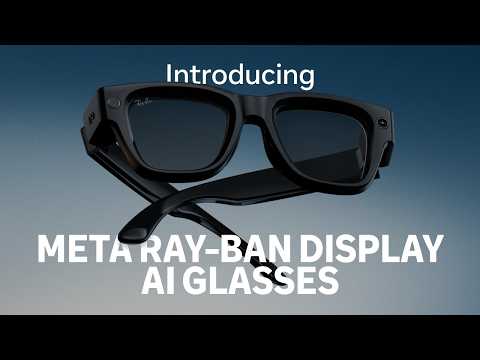
Unlike Meta’s bulkier devices, Quark glasses have a conventional black plastic frame that mimics everyday eyewear, reflecting a consumer demand for AI in a discreet and practical form.
The glasses are tightly integrated with Alibaba’s ecosystem.
Users can tap into Alipay, the company’s digital payment platform and Taobao, its e-commerce marketplace.
Quark offers hands-free applications such as real-time translation and instant price recognition, melding online shopping convenience with physical-world interaction.
Eddie Wu, CEO of Alibaba, highlights early user engagement: “We have seen exceptional user retention with this new release,” underlining confidence in a seamless consumer experience.
Alibaba’s focus on commerce and payments
Li Chengdong, an electronics analyst based in Beijing, contextualises the product by saying: “Alibaba’s strengths are shopping, payments and navigation, so its AI glasses function more like a life assistant.”
This echoes the strategic positioning of the glasses not merely as hardware but as a tool embedded in daily life.
Alibaba’s approach deviates from Meta’s virtual reality ambitions by enhancing existing business operations rather than chasing immersive worlds.
The company’s recent upgrade to its AI chatbot and the release of these glasses signify a wider push within the consumer AI space, where Alibaba aims to catch up to rivals.
Li notes the competitive context: “Alibaba is not a monopoly in e-commerce. It hopes AI can help it secure the next-generation traffic gateway.”

The term ‘traffic gateway’ refers to the digital entry points where consumers begin their online sessions – controlling these gateways is crucial for retaining consumer attention.
The Quark glasses are available on major Chinese platforms including Tmall, Alibaba’s premium marketplace and competitors JD.com and Douyin – the Chinese version of TikTok and an increasingly influential shopping arena.
Given the glasses’ recent launch, detailed sales data remains unavailable, leaving market response to be seen.
Meta’s lead and market context
Meta dominates with around 80% of the VR headset market.
The company, owner of Facebook and Instagram, invests heavily in devices supporting its metaverse vision.
Competing headsets include Apple’s Vision Pro, priced significantly higher than Quark and Samsung Electronics’ Galaxy XR, which incorporates AI features from Alphabet’s Google services.
These products fall under extended reality – a term encompassing virtual reality (VR), augmented reality (AR) and mixed reality (MR).
VR immerses users in fully digital environments, AR overlays digital elements onto the real world and MR blends the two, creating interactive experiences.
In China, several tech firms have introduced AI-enhanced glasses.
Xiaomi launched its model earlier this year and Baidu, a search engine and AI firm, already markets a comparable device.
This surge demonstrates intense competition within China’s technology market, where wearable adoption rates still lag smartphone ubiquity.
Alibaba’s venture is more than a gadget. It’s part of a broader effort to diversify beyond its core e-commerce operations, which face slowing growth and mounting competition.
The glasses’ integration with Alipay and Taobao suggests Alibaba views Quark as a device to deepen user engagement within its ecosystem, rather than a standalone product.
Li says: “Alibaba’s strengths are shopping, payments and navigation, so its AI glasses function more like a life assistant.”
The CEO reflects broader ambitions, stating: “In the future, every pair of glasses will be AI-enabled and everyone will need a pair of AI glasses.”
His words hint at Alibaba’s long-term vision for mainstream consumer adoption of AI wearables.
Company portals


Executives

Eddie Wu
CEO