
How Apple Robots are Closing the Waste Recycling Loop
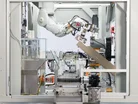
Apple has a workforce of more than 166,000 – but have you heard of its robot team member, Daisy?
Daisy lives in a warehouse in Austin, Texas and, with the precision of a surgeon, takes a battered old iPhone, freezes its battery with a blast of -80°C air and punches out the screws.
Within just 11 seconds, what was once a piece of electronic waste is now a tidy collection of high-quality components, ready for a new lease of life.
But Daisy is not the only robot member of Apple’s workforce with waste reduction as its number one focus.
She is the matriarch of a growing robotic workforce that includes Dave and Taz – machines designed by Apple to solve one of the tech industry’s most expensive and environmentally damaging problems: the graveyard of old devices.
Tackling the e-waste problem
For decades, the narrative of consumer electronics has had a straightforward approach to make, take and dispose.
With tech fans often vying for Apple’s latest release months before details of it even emerge, phones are often something that are now used for around two years before being upgraded – with Apple assuming a three-year lifecycle for the first owner for environmental modelling purposes.
But as the climate crisis intensifies, Apple is leveraging high-precision robotics to tackle the shortage of critical minerals head-on.
Traditionally, e-waste recycling consists of shredders crushing devices into a glass-plastic-metal mix, making it nearly impossible to recover trace amounts of rare earth elements.
Apple's Material Recovery Lab in Austin was built to prove there is a better way.
“Advanced recycling must become an important part of the electronics supply chain and Apple is pioneering a new path to help push our industry forward,” Lisa Jackson, Apple’s VP of Environment, Policy and Social Initiatives, said at Daisy’s launch.
“We work hard to design products that our customers can rely on for a long time. When it comes time to recycle them, we hope that the convenience and benefit of our programmes will encourage everyone to bring in their old devices.”
Daisy was introduced in 2018 as a successor to Apple’s first robot, Liam, and can disassemble 23 different models of iPhone at a rate of 200 per hour.
By carefully separating components rather than shredding them, Daisy recovers materials at a quality standard that traditional recyclers simply cannot match.
The copper it extracts is pure enough to be sold directly back into the market and the cobalt from the batteries is sent upstream to be used in brand-new Apple batteries – a true ‘closed-loop’ for one of the planet’s most scarce resources.
Apple’s robot recycling crew
While Daisy handles the heavy lifting, Dave and Taz are in charge of the more specialist work.
Dave was first deployed in 2020 and, once Daisy removes the Taptic Engine – the component vibrates when you press a button – Dave then secures the module and precisely cuts it open to recover rare earth magnets and tungsten.
Then, there’s Taz - the shredder.
Unveiled in 2022, Taz uses a shredder-like technology to separate magnets from audio modules.
Unlike standard shredders that pulverise everything, Taz is tuned to keep the magnetic material intact, preventing it from being lost so it can be reused.
The scale of the challenge
The impact of this robotic army is huge. A single Daisy robot can process 1.2 million iPhones a year and, thanks to these interventions, nearly 20% of all material used in Apple products in 2021 came from recycled sources.
Today, the company uses 99% recycled rare earth elements in its magnets – a figure that was almost zero just a few years ago.
For Daisy, Dave and Taz to work, they need phones – which is where Apple’s consumers come in.
Apple’s trade-in programmes are not a ploy to boost sales, but are the fuel supply for the Material Recovery Lab.
Every iPhone traded in at an Apple Store is a potential candidate for Daisy’s disassembly line.It is also part of Apple’s higher motive – to meet the goals of its Apple 2030 pledge.

The company has promised to be 100% carbon neutral across its entire supply chain and product life cycle by the end of the decade.
Recovering materials like aluminium and gold requires a fraction of the energy needed to mine them from the earth.
For instance, using recycled aluminium in the MacBook Air helped cut its carbon footprint by nearly half.
The future of tech is not just about building the next big thing – it’s about taking apart the last one.
Did you know?
Company portals

Executives

Lisa Jackson
Vice President, Environment, Policy and Social Initiatives